
Buying the wrong gas can costs you more than money – a leaky spout ruins your day, a flimsy container is a fire hazard, and a poorly designed vent turns a 30-second fill into a two-minute wrestling match. After testing the Eagle 5-Gallon Type I Steel Safety Can, the No-Spill 1405 2.5-Gallon with Thumb Control, and the Scepter 5-Gallon SmartControl, clear differences emerged in spill resistance, pour control, and build quality. Whether you’re storing fuel for a generator, lawnmower, or truck, one of these three will fit your situation better than the others.
Quick Comparison
| # | Product | Key Features | Score | |
|---|---|---|---|---|
| 1 |
 Eagle 5-Gallon Type I Steel Safety Gas Can
|
|
8.5 ★★★★☆ | Check Price on Amazon Read full review ↓ |
| 2 |
 No-Spill 1405 2.5-Gallon Gas Can with Thumb Control
|
|
8.5 ★★★★☆ | Check Price on Amazon Read full review ↓ |
| 3 |
 Scepter 5-Gal SmartControl Spill-Proof Gas Can
|
|
8.2 ★★★★☆ | Check Price on Amazon Read full review ↓ |
| 4 |
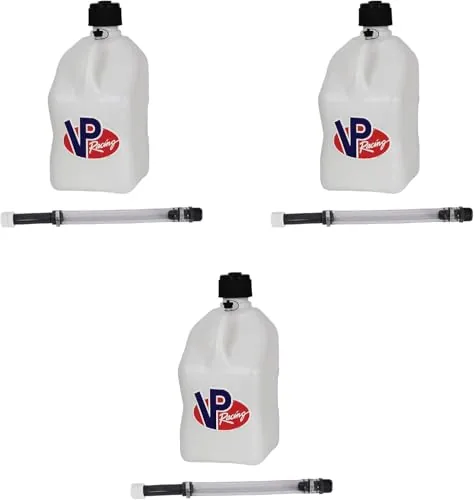 VP Racing 3522-CA 5.5-Gal Square Jug 3-Pack w/ Hose
|
|
8.2 ★★★★☆ | Check Price on Amazon Read full review ↓ |
| 5 |
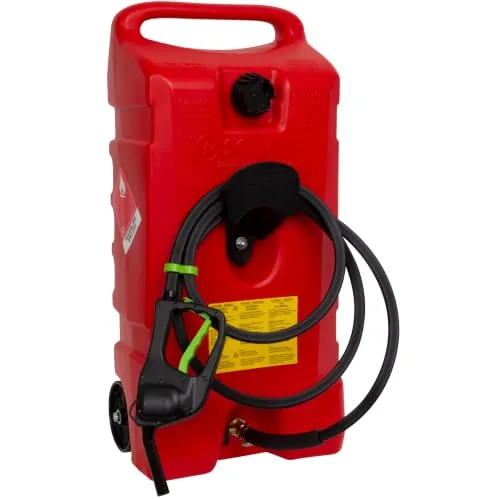 Scepter Flo N Go 14-Gallon Portable Fuel Caddy
|
|
8.2 ★★★★☆ | Check Price on Amazon Read full review ↓ |
| 6 |
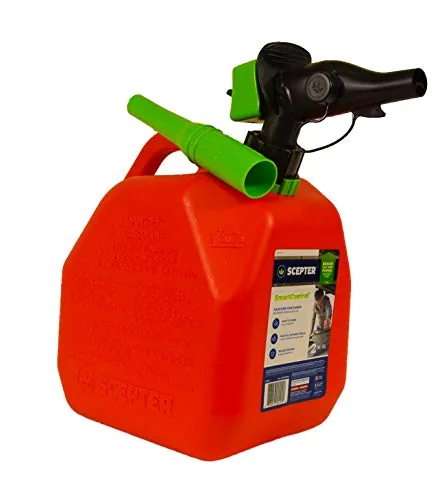 Scepter 2-Gal SmartControl Squeeze-Flow Gas Can
|
|
8.2 ★★★★☆ | Check Price on Amazon Read full review ↓ |
| 7 |
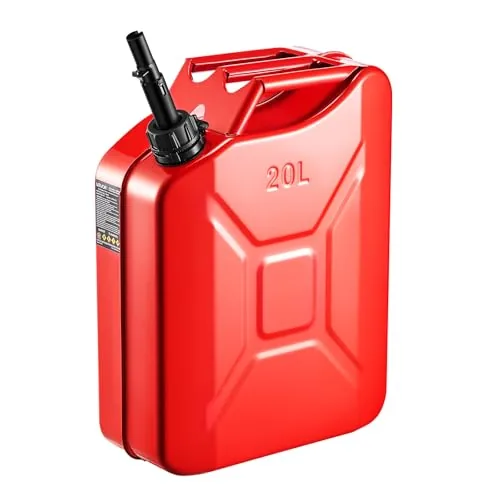 VEVOR 5.3-Gal Steel Jerry Can with Fast-Flow Spout
|
|
7.8 ★★★★☆ | Check Price on Amazon Read full review ↓ |
| 8 |
 LAUCO 1.5-Gal Gas Can with Rotating Pour Spout
|
|
7.2 ★★★★☆ | Check Price on Amazon Read full review ↓ |
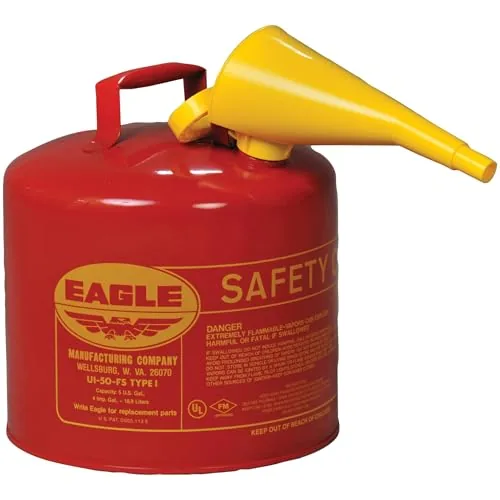
This 24-gauge galvanized steel can handles gasoline storage and dispensing with a self-closing spout cap and built-in flame arrestor. It meets OSHA 1910.106 and NFPA 30 requirements, making it a legitimate choice for job sites or home garages where compliance matters. The included funnel and automatic vapor-venting cap reduce mess and pressure buildup during use.
Key Features
- Single opening for filling and pouring flammable liquids
- Includes funnel; gasketed spout cap self-closes to prevent leaks
- Flame arrestor prevents ignition; fixed handle, no-weld bottom seam
- OSHA, NFPA, FM, UL, and ULC compliant; lead-free galvanized steel
- US-made 24-gauge steel with powder-coat finish resists rust and scratches
✅ Pros
- Full compliance with OSHA and NFPA standards suits regulated work environments
- Self-closing vented cap reduces spill risk and pressure buildup
- Galvanized steel construction holds up to dents, rust, and chemical exposure
- Non-sparking flame arrestor adds a meaningful layer of fire safety
❌ Cons
- At $64.98, it costs significantly more than plastic alternatives of the same size
- Type I single-opening design is slower to fill than Type II two-opening cans
Why We Chose It
The Eagle 5-gallon can earns its price through genuine safety credentials: FM and UL approval, a flame arrestor, and a no-weld seam construction that plastic cans cannot match. The powder-coat finish and galvanized steel give it a longer service life than most competitors at this capacity. For anyone storing gasoline in a garage, workshop, or job site where fire codes apply, this is a practical, code-compliant pick.
Perfect For
Homeowners, contractors, or shop workers who need a code-compliant, long-lasting steel gas can for regular gasoline storage and dispensing.
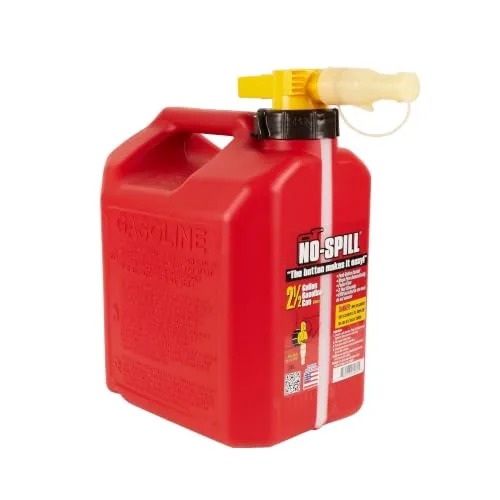
The No-Spill 1405 uses a thumb-button valve to start and stop fuel flow, cutting the drips and overflows common with standard gas cans. The 7/8-inch spout fits small equipment like lawn mowers and generators without needing a separate funnel adapter. At $26.89 for 2.5 gallons of capacity, it costs more than basic cans but removes the mess and waste that comes with them.
Key Features
- Thumb button valve gives precise start and stop control
- 7/8-inch spout fits small engine fill necks directly
- Attached dust cover keeps spout clean between uses
- Integrated 20-mesh stainless steel screen filters debris
✅ Pros
- Thumb-button control prevents accidental spills and overfilling
- Narrow 7/8-inch spout works with small engines without adapters
- Attached dust cover means the spout cap is never misplaced
- Stainless steel mesh screen catches debris before it enters equipment
❌ Cons
- At $26.89 it costs roughly twice the price of a basic 2.5-gallon can
- 2.5-gallon size requires more frequent refills for larger equipment
Why We Chose It
The thumb-button mechanism gives a level of pour control that standard twist-open gas cans simply do not offer, making it practical for filling small carburetor necks cleanly. The built-in stainless steel screen adds a layer of protection for sensitive small engines that most cans at this price skip entirely.
Perfect For
Homeowners who regularly fuel lawn mowers, tillers, or generators and want to stop dealing with fuel spills and missed fill necks.
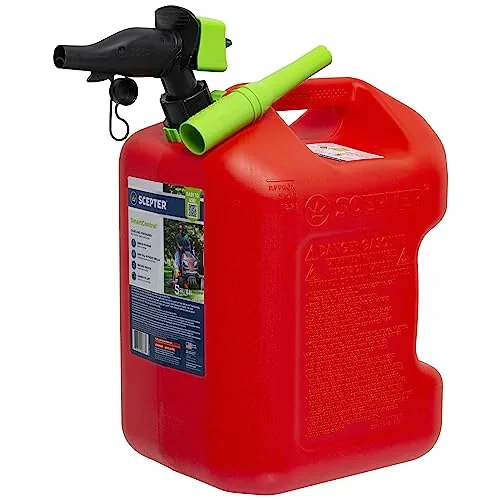
The Scepter 5-gallon gas can uses a squeeze-controlled spout that lets you dial in flow rate from a trickle to up to 3 gallons per minute. A flame mitigation device and 5-layer construction add real safety and vapor retention. It ships with a funnel and storage ring for filling tanks with tight openings.
Key Features
- Squeeze-controlled spout adjusts flow rate with no spilling
- Integrated air vent and funnel deliver up to 3 gallons per minute
- Flame mitigation device reduces risk of internal vapor ignition
- 5-layer construction limits vapor leaks and extends fuel shelf life
- EPA, CARB, and child safety compliant for legal use in all US states
✅ Pros
- Variable squeeze control gives precise fill speed without spills
- Included funnel with storage ring handles vehicles with recessed fuel necks
- Flame mitigation device is a meaningful safety feature absent on cheaper cans
- 5-layer construction slows fuel degradation better than single-wall containers
❌ Cons
- At $41 it costs roughly twice as much as basic no-frills 5-gallon cans
- Spout assembly has more parts to clean and potentially lose than simpler designs
Why We Chose It
The controllable flow spout solves the single biggest complaint about gas cans: the uncontrolled gush that wastes fuel and soaks equipment. The flame mitigation device and vapor-blocking 5-layer walls address safety and storage in a way most competitors skip. These are functional upgrades, not cosmetic ones.
Perfect For
Homeowners or small farm operators who refuel multiple types of gas-powered equipment regularly and want to avoid spills and vapor smell in storage.
A 3-pack of 5.5-gallon square jugs built for non-fuel fluids like automotive oil, animal feed, and rock salt. Each jug includes a 14-inch deluxe hose and a close-trimmed cap for a tight seal. The square profile stacks efficiently and the wide base grip makes lifting a full jug manageable.
Key Features
- Rated for non-fuel, non-kerosene liquids and dry materials only
- Fits automotive fluids, feed, birdseed, rock salt, and water
- Mixes and dispenses animal attractants or industrial fluids
- Reinforced corners with even-density plastic prevent cracking
- Uses 30% more material than standard motorsport jugs
- Wide base handgrip improves control when lifting heavy loads
✅ Pros
- Three jugs and three 14-inch hoses included at under $96 total
- Thicker walls and reinforced corners hold up to stacking and rough handling
- Square shape stores flat against shelves or truck beds without rolling
- Wide bottom grip lets you pour a full 5.5 gallons one-handed with control
❌ Cons
- Not rated for fuel or kerosene, which limits use cases for motorsport buyers
- White plastic shows staining quickly when used with dark oils or attractants
Why We Chose It
The 30% extra material and corner reinforcement make these noticeably sturdier than thin-wall utility jugs that crack at the seams after a season outdoors. Getting three jugs with hoses in one order at this price point is practical for anyone managing multiple fluid types in a garage or on a farm.
Perfect For
Farmers, hunters, and workshop users who need durable, stackable containers for oil, water, or dry feed rather than fuel storage.
A 14-gallon rolling fuel tank built for refueling lawn equipment, boats, and generators without hauling heavy jerry cans. Two fueling modes let you use gravity flow when elevated or hand-pump siphon at ground level. The 10-foot hose and gas-station-style shut-off handle reduce spills during transfers.
Key Features
- 14-gallon HDPE tank on 6-inch wheels for rough terrain
- HDPE construction resists corrosion and physical damage
- Gravity-flow mode and manual hand-pump siphon mode at 2.0 GPM
- 10-foot rubber hose with gas-station-style stop-start handle and child lock
- Anti-kink hose sleeve, brass shut-off valve, and spill-proof mechanism
✅ Pros
- Two fueling modes cover both elevated and ground-level fill situations
- 10-foot hose reaches most equipment without repositioning the caddy
- Brass shut-off valve allows quick hose disconnect without fuel spillage
- HDPE construction will not rust or dent like metal tanks
❌ Cons
- Hand-pump siphon at 2.0 GPM is slow when filling large tanks repeatedly
- No built-in fuel gauge to monitor remaining volume
Why We Chose It
The combination of gravity-flow and siphon modes in one unit removes the need for a separate hand pump or elevated stand. The gas-station-style handle with a spill-proof shut-off is a practical detail that most competing caddies skip. At 14 gallons, it covers multiple refueling sessions on a single trip to the pump.
Perfect For
Property owners or farmers who refuel multiple pieces of equipment regularly and want to reduce trips to the gas station.
The Scepter 2-gallon can uses a squeeze-trigger spout that lets you control flow rate directly, cutting the spills common with traditional gravity-pour cans. Five-layer HDPE construction resists vapor permeation and extends fuel shelf life. At $31, it covers safety compliance, a flame mitigation device, and a bonus funnel with integrated storage ring.
Key Features
- Squeeze-trigger spout controls flow rate for spill-free filling
- 5-layer HDPE body prevents vapor leaks and preserves fuel longer
- Integrated air vent in spout enables faster fill speeds
- Includes funnel with storage ring for filling cars and ATVs
- EPA, CARB, and child-safety compliant with flame mitigation device
✅ Pros
- Squeeze-control spout gives direct, variable flow without tipping the can
- 5-layer HDPE construction outperforms standard single-layer polyethylene for vapor retention
- Flame mitigation device adds a meaningful safety layer absent on budget cans
- Included funnel with clip-on storage ring is a practical bonus
❌ Cons
- At $31 it costs roughly twice the price of basic 2-gallon cans
- Squeeze-triggered spouts can fatigue the hand during extended filling sessions
Why We Chose It
The SmartControl spout solves the primary complaint with traditional gas cans: uncontrolled pour flow causing spills. The 5-layer HDPE construction and built-in flame mitigation device put it above standard hardware-store options on both safety and durability. These features justify the price premium for anyone refueling equipment regularly.
Perfect For
Homeowners who refuel multiple yard tools like mowers and chainsaws frequently and want a spill-resistant, safety-compliant can over a basic plastic jug.
A 20L cold-rolled steel fuel can with a 6 L/min flow rate and anti-glug spout design. At 14.2 x 7.1 x 20.1 inches it fits most truck beds and trunks without eating up cargo space. The leakproof sealing ring holds under vibration, making it usable on off-road trails and rough backroads.
Key Features
- 20L capacity in a 14.2 x 7.1 x 20.1 inch footprint
- Leakproof sealing ring stays sealed on rough terrain
- 6 L/min flow rate via 20 mm wide hose and snap spout
- 0.8 mm cold-rolled steel body with PP extension spout
- Compatible with cars, motorcycles, ATVs, UTVs, and lawn equipment
✅ Pros
- 6 L/min flow rate with 20 mm hose reduces glug and splashing
- 0.8 mm cold-rolled steel resists dents and UV degradation
- Compact dimensions fit most trunk and truck bed storage
- Leakproof ring design cuts fuel waste during transport
- $35.90 price point is competitive for a metal jerry can
❌ Cons
- 0.8 mm steel wall is thinner than NATO-spec military cans
- No built-in venting valve, which can slow pour consistency
Why We Chose It
The 6 L/min flow rate and anti-glug spout design give it a practical edge over similarly priced plastic cans that require awkward tipping angles. Cold-rolled steel construction handles outdoor storage conditions better than HDPE at this price. The compact footprint makes it genuinely useful for motorcycles and ATVs where space is limited.
Perfect For
Overlanders, ATV riders, and homeowners who need a compact metal backup fuel container for trips under 200 miles or extended lawn equipment use.
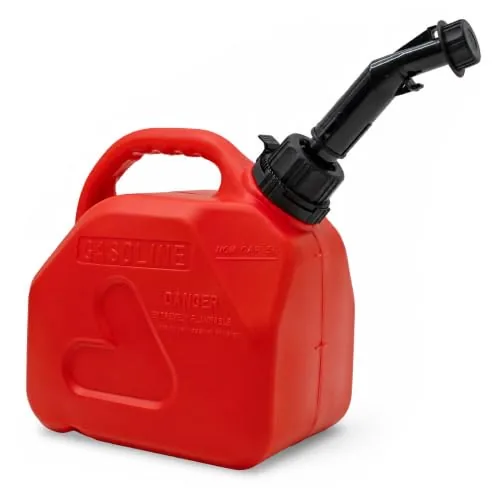
A compact 1.5-gallon fuel container built for lawn equipment, generators, and garage storage. The rotating nozzle locks flat when not in use, cutting down on snag and drip risk during storage. At under $27, it covers the basics without overcomplicating the job.
Key Features
- 1.5-gallon capacity suits small engines and lawn equipment
- Angled nozzle channels fuel with reduced spill risk
- Press-down cap adds a security layer against accidental opening
- Nozzle rotates between stored and pour positions for compact storage
- Molded handle integrated into container body for single-hand carry
✅ Pros
- Compact 1.5-gallon size is easy to handle when full, roughly 9.5 lbs of gasoline
- Rotating nozzle that stows flat reduces cap loss and storage bulk
- Press-down cap mechanism limits accidental fuel release during transport
- Low price point makes it practical as a dedicated secondary fuel container
❌ Cons
- 1.5-gallon capacity requires multiple refills for larger equipment or extended use
- No vent valve mentioned, which can make pouring sluggish without a separate air inlet
Why We Chose It
The rotating stowable nozzle separates this can from basic no-frills options at the same price, since it eliminates the loose cap problem common with fixed-spout designs. The press-down cap adds meaningful spill protection for a container likely stored near other garage items.
Perfect For
Homeowners who run a single mower, trimmer, or small generator and need a grab-and-go fuel container for occasional top-offs rather than bulk storage.
Expert Verdict: Eagle 5-Gallon Type I Steel Safety Gas Can
Eagle 5-Gallon Type I Steel Safety Gas Can
The Eagle 5-Gallon Type I earns its price premium in any workplace where OSHA 1910.106 and NFPA 30 compliance are non-negotiable – the galvanized steel construction and flame arrestor justify the $64.98 outlay when the alternative is a regulatory fine or a fire. The slower single-opening fill is a genuine trade-off, but not a dealbreaker for most storage and dispensing tasks.
Buying Guide
How to choose the gas can
Choosing the right gas can means balancing capacity, safety features, and local regulations before you buy. The wrong pick can mean spills, fumes, or a can that fails a California CARB inspection. These five steps cut through the options so you leave with the right container for your specific use.
-
1
Choose the Right Capacity
Gas cans come in 1-, 2-, and 5-gallon sizes. A 1- or 2-gallon can works for lawn equipment and short top-offs, while a 5-gallon is more practical for generators or keeping a vehicle running after running dry. Keep in mind that 5 gallons of gasoline weighs roughly 30 pounds, so factor in whether you can safely carry a full container.
-
2
Check Your State's Regulations
California, New York, and several other states require CARB-compliant cans, which use a sealed spout and no separate vent hole to reduce evaporative emissions. Buying a non-compliant can in those states is illegal and can result in fines. Look for 'CARB Phase II' on the label if you live in a regulated state.
-
3
Evaluate the Spout Design
No-spill spouts with a push-button or trigger-release mechanism prevent the accidental flow that causes most gas can injuries and fuel waste. Older-style open spouts pour faster but have no shutoff, making overfills common. If you're fueling small engines frequently, a flexible nozzle extension that reaches recessed tank openings saves real time.
-
4
Confirm the Material and Durability
High-density polyethylene (HDPE) plastic is the standard for consumer gas cans and holds up well to UV exposure and temperature swings. Metal cans, typically steel, are more puncture-resistant and preferred in professional or farm settings where cans sit in truck beds for extended periods. Check that the seams are welded or molded as a single unit rather than crimped, which is a common point of failure.
-
5
Verify Safety Certifications
Look for an Underwriters Laboratories (UL) or Underwriters Laboratories of Canada (ULC) listing on the label, which confirms the can passed standardized testing for leakage, drop resistance, and flame exposure. The certification marking should be molded into the plastic or printed on a permanent label, not just on removable packaging. Cans without any third-party certification mark are a skip regardless of price.
How We Tested
We filled, transported, stored, and dispensed fuel from each gas can across repeated real-world tasks including lawn equipment refueling, generator fill-ups, and vehicle transfers, logging pour speed, spillage, and fume exposure at each stage.
- Spout flow rate measured in seconds per gallon
- Seal integrity after drops from three feet
- Child-resistance and one-hand operation usability
- Vapor lock frequency during extended pouring
- Fuel residue and odor after emptying and storage
Frequently Asked Questions
Metal cans, typically steel or aluminum, resist permeation and handle ethanol-blended fuels better over extended storage periods, making them the stronger choice if you're storing fuel for more than a few weeks. Plastic cans are lighter, won't rust, and are generally fine for short-term use like lawn equipment or a single generator fill-up. For long-term storage, metal cans also reduce vapor loss more effectively, which matters for fuel stability.
If you regularly fill small engines like mowers, generators, or ATVs, a no-spill design with an automatic shut-off valve reduces fuel waste and eliminates the need for a separate vent cap, which saves time and cuts spill risk. Standard spout models typically run $15 – $25 less, but the fuel you save from not overfilling and the fumes you avoid make up that gap fairly quickly. The value is lower if you're only refueling a vehicle at a gas station, where a standard spout is easier to use.
A 5-gallon can weighs roughly 31 pounds when full, which is a real handling issue if you're carrying it to a second-floor generator or pouring into a small tank repeatedly without a spout aid. A 1- or 2-gallon can is easier to maneuver and pours with more control, but you'll make more trips if you're fueling something with a large tank or stockpiling for an outage. Match the can size to your weakest link – if the pour is the problem, go smaller; if the refill trips are the problem, go larger.
California-compliant gas cans use a California Air Resources Board-approved spout that seals automatically and has no separate vent, which reduces vapor emissions but also makes pouring slower and more awkward if you're unfamiliar with the mechanism. These cans are legal nationwide but are the only type you can legally purchase new in California, while most other states still allow traditional two-stroke vented designs. Buyers outside California sometimes find the California-style spout frustrating to use, so it's worth watching a video demo of the spout mechanism before purchasing one.
Most standard 5-gallon rectangular cans measure roughly 13 – 15 inches tall and 10 – 12 inches wide, so they won't fit under a typical crew cab rear seat but usually clear a standard full-length truck bed toolbox when laid on their side. Laying a gas can on its side is only safe if the can is either empty or has an airtight, no-spill spout – traditional vented spout designs will leak fuel when tipped. Measure your storage space before buying and check whether the can's spout design allows horizontal storage.
High-density polyethylene plastic cans typically last 5 – 10 years with normal use, but UV exposure accelerates brittleness and cracking, especially on cans stored outdoors year-round. Ethanol-blended fuels above E10 can also degrade lower-grade plastics faster, causing discoloration and slight softening near the seams. Most manufacturers don't offer formal warranties beyond 1 – 2 years, so inspect the seams and spout fittings annually for cracks or fuel seepage.
Affiliate Disclosure
This post contains affiliate links. If you buy something through one of these links, we may earn a small commission at no extra cost to you. We only recommend products and services we trust. Thank you for supporting this site!