
In a Rush? Here Are Our Top Picks
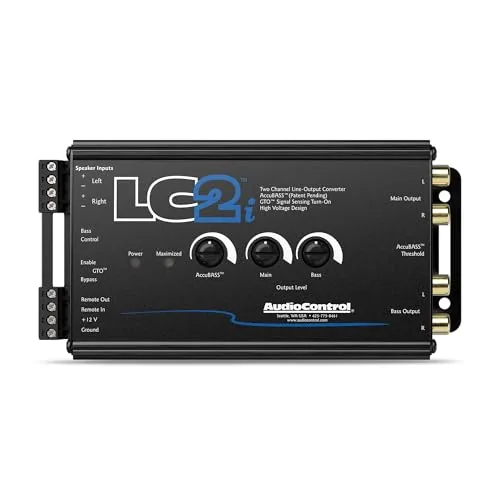
AudioControl LC2i 2-Channel LOC with AccuBASS
8.5/10Someone adding a subwoofer and amplifier to a factory-equipped vehicle who wants to keep the OEM head unit and steering wheel controls intact.
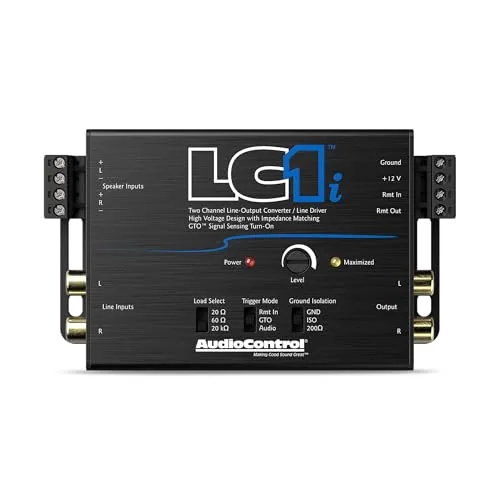
AudioControl LC1i 2-Channel Line Output Converter with Line Driver
8.5/10Anyone adding an aftermarket subwoofer or amplifier to a 2015 or newer vehicle that has a factory-amplified sound system and no preamp outputs on the head unit.
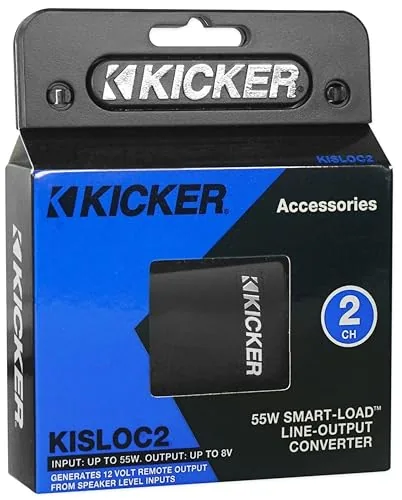
KICKER KISLOC2 Stereo Line-Output Converter w/ Remote Turn-On
8.2/10Car audio beginners or anyone adding an amplifier to a factory-equipped vehicle without modifying the head unit.
Adding an aftermarket amplifier or subwoofer to a factory stereo system means dealing with one core problem: your head unit has no preamp outputs. A line output converter solves this by taking the speaker-level signal from your factory radio and converting it to the low-voltage RCA signal your amp needs. After testing the AudioControl LC2i, AudioControl LC1i, and KICKER KISLOC2, here’s what separates a clean, noise-free install from one that leaves you chasing ground loops.
Quick Comparison
| # | Product | Key Features | Score | |
|---|---|---|---|---|
| 1 |
AudioControl LC2i 2-Channel LOC with AccuBASS
|
|
8.5 ★★★★☆ | Check Price on Amazon Read full review ↓ |
| 2 |
AudioControl LC1i 2-Channel Line Output Converter with Line Driver
|
|
8.5 ★★★★☆ | Check Price on Amazon Read full review ↓ |
| 3 |
KICKER KISLOC2 Stereo Line-Output Converter w/ Remote Turn-On
|
|
8.2 ★★★★☆ | Check Price on Amazon Read full review ↓ |
| 4 |
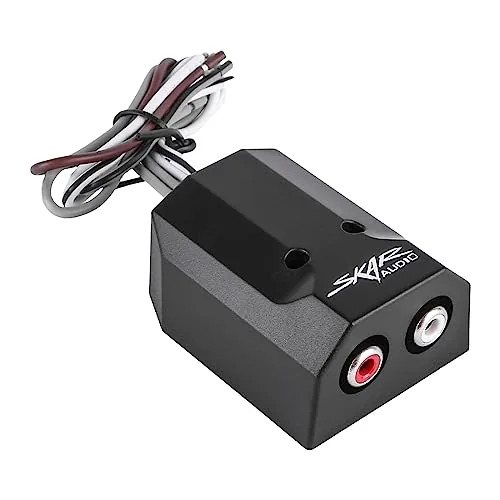 Skar Audio SKAR2CH-LOC 2-Channel Line-Out Converter |
|
8.2 ★★★★☆ | Check Price on Amazon Read full review ↓ |
| 5 |
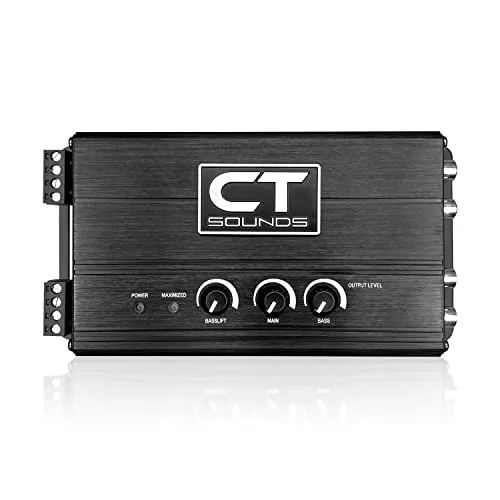 CT Sounds CT-LC2 2-Channel Line-Out Converter with BassLift |
|
8.0 ★★★★☆ | Check Price on Amazon Read full review ↓ |
| 6 |
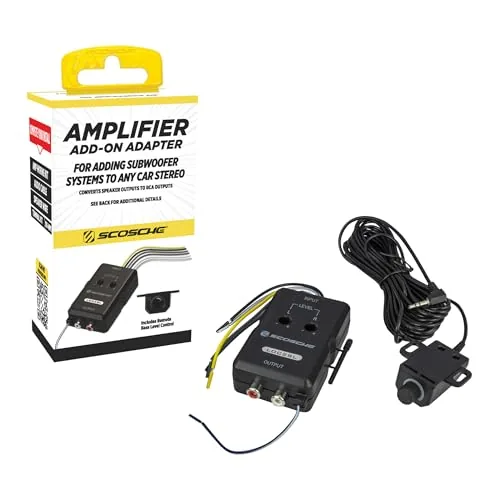 Scosche LOC2SL 2-Channel Line Output Converter w/ Remote |
|
7.8 ★★★★☆ | Check Price on Amazon Read full review ↓ |
| 7 |
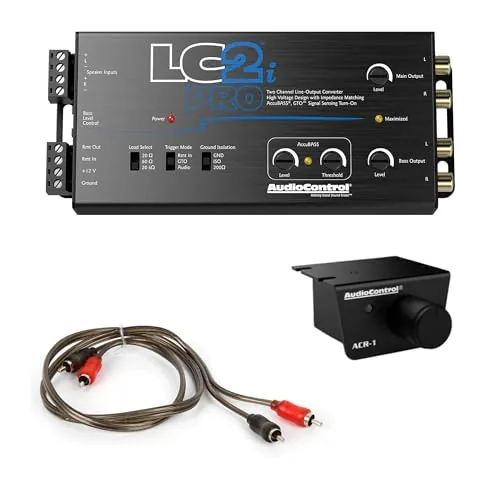 Elite Audio AccuBASS LC2iPro 2-Ch LOC with 17ft OFC Cable |
|
7.8 ★★★★☆ | Check Price on Amazon Read full review ↓ |
| 8 |
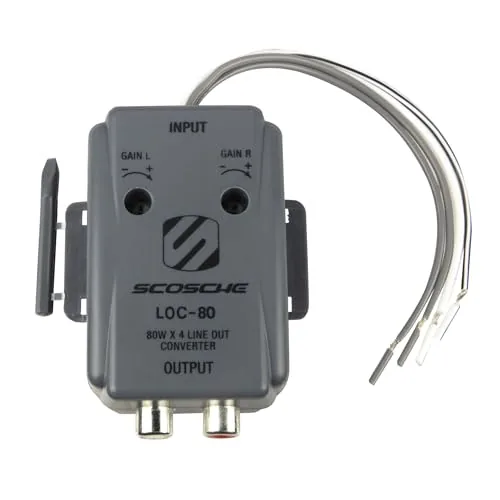 Scosche LOC80 2-Channel Speaker to RCA Converter |
|
7.5 ★★★★☆ | Check Price on Amazon Read full review ↓ |
The LC2i converts speaker-level signals up to 400W per channel into RCA preamp outputs, letting you add an aftermarket subwoofer or amplifier without swapping the factory head unit. AccuBASS circuitry compensates for the bass roll-off that most OEM radios introduce at higher volumes, so low-end response stays consistent as you turn up the volume. At under $100, it covers the core needs of a single-amp upgrade with clean signal handling and automatic turn-on detection.
Key Features
- Converts speaker-level signals up to 400W per channel to RCA output
- AccuBASS corrects factory radio bass roll-off at higher volumes
- Compact chassis measures 5.4 inches long by 3.25 inches deep by 1.5 inches tall
- Retains factory volume controls and steering wheel audio controls
- Fixed and variable RCA outputs with onboard discrete level controls
- Optional input supports ACR-1 remote dash knob sold separately
- Selectable GTO signal-sense or manual 12V remote turn-on
- Remote Out triggers up to two downstream devices such as amplifiers or crossovers
✅ Pros
- AccuBASS actively corrects OEM bass roll-off, which most budget LOCs skip entirely
- Handles up to 400W speaker-level input, covering high-powered factory amplifiers
- GTO auto turn-on removes the need to tap a separate remote wire in most vehicles
- Compact 5.4-inch body with integrated mounting brackets fits tight dash locations
- Remote Out simplifies wiring when chaining two amplifiers or processors
❌ Cons
- Does not retain fader control when running multiple amplifiers, requiring an upgrade to LC5i PRO or LC6i for that use case
- ACR-1 remote knob for driver-seat subwoofer level adjustment costs extra
Why We Chose It
The LC2i earns its price by pairing a solid speaker-to-RCA conversion with AccuBASS correction, a feature usually found on more expensive processors. The selectable turn-on modes and dual Remote Out triggers reduce installation complexity for single-amp builds. AudioControl builds this unit to handle real-world OEM amplifier outputs rather than just passive head units.
Perfect For
Someone adding a subwoofer and amplifier to a factory-equipped vehicle who wants to keep the OEM head unit and steering wheel controls intact.
The LC1i converts speaker-level signals up to 400W per channel into preamp-level RCA outputs, letting you add an aftermarket amp or subwoofer without replacing your factory head unit. Three selectable load impedances (20, 60, and 20k ohms) keep modern factory amplifiers from shutting down when they detect a missing speaker load. At $65, it covers the core integration problems most budget LOCs skip entirely.
Key Features
- Converts speaker-level signals up to 400W per channel to preamp output
- Three onboard load switches (20, 60, 20k ohms) for factory amp compatibility
- Built-in line driver strengthens weak factory radio output signals
- Optional ACR-1 remote knob controls subwoofer level from driver seat
- Selectable GTO signal sense or manual 12V remote turn-on
- Ground isolation switch reduces alternator whine and ground buzz
- Remote Out trigger powers downstream amplifiers automatically
- Compact chassis measures 4.8 inches long by 3 inches deep by 1 inch tall
✅ Pros
- 400W per channel input ceiling handles high-powered factory amps without clipping
- Three load impedance options solve the factory amp shutdown problem in late-model vehicles
- Built-in line driver improves signal strength before it reaches the downstream amp
- GTO auto turn-on removes the need to tap a dedicated remote wire
- Ground isolation switch addresses the most common noise complaint in LOC installs
❌ Cons
- Only 2 channels, so a 4-channel amp install requires a second unit or a separate LOC
- ACR-1 remote level knob costs extra and is not included
Why We Chose It
Most line output converters at this price handle signal conversion but ignore the factory amp detection issue that causes audio dropouts in newer vehicles. The LC1i adds selectable load resistors and a line driver in a single box, which removes two common failure points from a typical budget install. The ground isolation switch is a practical addition that saves troubleshooting time after the unit is already wired in.
Perfect For
Anyone adding an aftermarket subwoofer or amplifier to a 2015 or newer vehicle that has a factory-amplified sound system and no preamp outputs on the head unit.
The KISLOC2 lets you add an aftermarket amplifier to a factory radio without rewiring the head unit. It reads the speaker signal from existing wires and outputs a clean RCA line-level signal plus a 12V remote trigger. At $19.99, it removes the two most common obstacles to a budget amp install.
Key Features
- Converts factory speaker wires to RCA line-level output
- Automatically generates 100mA 12V remote turn-on signal via DC offset
- Accepts up to 55W or 16V input from factory or aftermarket radios
✅ Pros
- Eliminates the need to tap into the head unit for a remote wire
- Works with factory radios that lack preamp outputs
- Handles up to 55W input, covering most OEM and low-power aftermarket decks
- Simple two-wire connection reduces install time significantly
❌ Cons
- DC offset detection may not work reliably on all factory head units, requiring manual verification
- No adjustable input sensitivity listed, which can limit signal matching with high-output decks
Why We Chose It
The built-in remote turn-on output is the detail that separates this from basic LOCs. Most budget converters force you to find a switched 12V source separately, adding wiring complexity. The automatic DC offset detection handles that step without extra hardware.
Perfect For
Car audio beginners or anyone adding an amplifier to a factory-equipped vehicle without modifying the head unit.
Converts speaker wire output to RCA signal for adding an amplifier to a factory or aftermarket head unit. The 60-ohm load per channel prevents open-circuit shutoff on radios that detect no speaker load. Output reaches 8 volts RMS, giving downstream amplifiers a strong, clean input signal.
Key Features
- Works with OEM, aftermarket, and smart head units
- Handles up to 55 watts or 16 volts of input signal
- Flat 20Hz to 20kHz response maintained at all volume levels
- 60-ohm load per channel prevents open-circuit radio protection trips
- RCA outputs deliver up to 8 volts RMS to downstream components
✅ Pros
- 8V RMS output is higher than most budget LOCs, reducing amplifier noise floor
- 60-ohm dummy load solves the common radio shutdown problem without extra wiring
- Flat frequency response means no tonal coloration added to the signal
- Compatible across a wide range of head unit types including newer smart radios
❌ Cons
- Only 2 channels, so a separate unit is needed for a full 4-channel or 5-channel system
Why We Chose It
The 60-ohm per-channel load is a practical engineering detail that most cheap line-out converters skip, and it directly prevents the radio protection shutdowns that frustrate DIY installs. The 8V RMS output ceiling gives you headroom to run long RCA runs with less susceptibility to interference. These two specs together put it ahead of generic LOCs in the same price range.
Perfect For
Anyone adding an external amplifier to a factory or OEM radio without a dedicated preamp output.
The CT-LC2 converts factory speaker wiring into RCA outputs for aftermarket amplifiers, skipping the need to rewire the head unit. Its BassLift circuit compensates for the bass roll-off built into most OEM audio systems, so subwoofers receive a flatter, corrected signal. At $49.99 it sits in the mid-tier LOC range, offering dual outputs for both full-range and subwoofer channels in one unit.
Key Features
- Converts high-level speaker signal to low-level RCA output
- Dual outputs: full-range main channel and low-pass subwoofer channel
- BassLift circuit compensates for factory bass roll-off
- 34-page manual with step-by-step installation instructions
✅ Pros
- BassLift addresses OEM bass attenuation that most basic LOCs ignore
- Separate subwoofer output removes need for a second converter or Y-adapter
- Detailed 34-page manual lowers the barrier for DIY installs
- Single unit handles both full-range and bass routing
❌ Cons
- No remote turn-on output requires a separate 12V trigger solution
- At $49.99 it costs more than basic LOCs that lack bass compensation
Why We Chose It
The dual-output design and BassLift technology set it apart from $15 to $20 LOCs that pass a frequency-deficient signal straight to the amplifier. Combining full-range and subwoofer outputs in one unit reduces wiring complexity for typical two-amplifier setups. The included manual is a practical differentiator for buyers without prior car audio experience.
Perfect For
Anyone adding an aftermarket amplifier and subwoofer to a factory head unit system without replacing the OEM stereo.
The LOC2SL converts speaker-level signals to RCA line-level output, letting you add an aftermarket amp or subwoofer to a factory head unit without rewiring the entire system. It includes a remote control knob for adjusting output level after installation. At under $20, it covers the core job without unnecessary complexity.
Key Features
- Converts speaker-level signals to RCA line-level output
- Compatible with a wide range of factory and aftermarket stereos
- Integrates factory stereo with aftermarket amplifier without complex rewiring
- Includes remote knob for post-install output level adjustment
- Compact build fits into tight dash or kick-panel spaces
- Designed to minimize signal interference for cleaner audio output
✅ Pros
- Remote level knob lets you fine-tune subwoofer output after installation
- Under $20 price point makes it accessible for budget builds
- Compact size fits in tight spaces behind the dash
- No factory head unit replacement required
❌ Cons
- Only 2-channel output limits use with more complex multi-amp setups
- No ground loop isolation built in, which may cause noise on some vehicles
Why We Chose It
The LOC2SL earns its place in budget car audio builds by handling the fundamental speaker-to-RCA conversion reliably at a price that leaves room for the rest of your system. The included remote knob is a practical addition that most competitors at this price point omit. It suits anyone adding a powered subwoofer to a factory stereo without swapping the head unit.
Perfect For
Budget-conscious car audio builders adding a subwoofer amp to a factory or low-end head unit that lacks preamp RCA outputs.
The LC2iPro lets you keep your factory head unit while adding an aftermarket amp or subwoofer. The bundled 17ft oxygen-free copper RCA cable handles longer runs without signal degradation. Setup is straightforward enough for a first-time installer with basic wiring knowledge.
Key Features
- 2-channel input and output suits front speaker or subwoofer upgrades
- Compatible with factory head units so OEM features remain intact
- Supports basic audio upgrades without replacing the head unit
- Oxygen-free copper cable delivers high conductivity and low signal resistance
- 17ft cable length maintains signal integrity across longer vehicle runs
✅ Pros
- Bundled 17ft OFC cable eliminates the need for a separate purchase
- 2-channel design covers the most common upgrade scenarios including subwoofer addition
- Preserves factory head unit integration including steering wheel controls and infotainment
- OFC construction reduces resistance compared to standard copper wiring
❌ Cons
- 2-channel configuration is insufficient for full multi-zone or surround audio builds
- No included instructions or wiring diagram referenced in product listing
Why We Chose It
This kit addresses the two most common friction points in a factory-to-aftermarket install: the signal conversion hardware and the RCA run to the amp. Pairing the LC2iPro with a purpose-matched OFC cable at a fixed price removes the guesswork of sourcing compatible components separately. At $178.99 for both pieces, the value proposition holds for a single-zone upgrade.
Perfect For
Car audio beginners who want to add a subwoofer or amplifier while keeping the factory head unit intact.
The LOC80 converts speaker-level signals from a factory head unit into RCA line-level output, letting you add an aftermarket amp or subwoofer without replacing the stereo. At $9.99 it covers the core job without extras like adjustable input sensitivity or remote turn-on output. Installation involves splicing into existing speaker wires and connecting RCA cables to your amp.
Key Features
- Converts speaker-level signals to RCA line-level output
- Compatible with factory and aftermarket car audio systems
- Integrates factory stereo with aftermarket amplifier without rewiring
- Compact housing fits into tight installation spaces
- Designed to minimize signal interference for cleaner output
✅ Pros
- Under $10 makes it one of the lowest-cost entry points for adding an amp
- Passive design means no external power required for the converter itself
- Small footprint fits behind dashboards or in cramped kick panels
- Straightforward two-channel wiring suits most basic subwoofer setups
❌ Cons
- No adjustable gain control, so output level depends entirely on your head unit volume
- Passive conversion can introduce minor signal degradation compared to active LOCs
Why We Chose It
The LOC80 earns its place as a budget entry point for adding a subwoofer amp to a factory stereo without touching the head unit. Scosche is a known car audio accessory brand, and the passive two-channel design keeps installation simple for single-amp setups. The $9.99 price makes it easy to justify for a basic build where adjustable gain is not a priority.
Perfect For
Budget-conscious car audio builders adding a single subwoofer amp to a factory stereo for the first time.
Expert Verdict: AudioControl LC2i 2-Channel LOC with AccuBASS
AudioControl LC2i 2-Channel LOC with AccuBASS
The LC2i earns its price by solving the two most common factory-integration headaches at once: AccuBASS corrects the bass roll-off that makes OEM-sourced audio sound thin at volume, and GTO auto turn-on eliminates the remote wire hunt that trips up most DIY installs. For a single-amplifier subwoofer build on a factory head unit, it's the right tool at the right spec.
Buying Guide
How to choose the line output converter
Line output converters let you connect an aftermarket amplifier to a factory head unit by converting speaker-level signals down to RCA preamp-level signals. Choosing the wrong one causes ground noise, signal clipping, or a volume knob that stops working properly. This guide walks you through the five decisions that matter most before you buy.
-
1
Match Your Signal Type
Factory head units output speaker-level voltage, typically between 4V and 20V depending on the OEM amplifier. Confirm whether your vehicle uses a standard speaker output or a DSP-processed signal, because DSP systems require a converter with signal summing and EQ correction built in, not a basic passive unit.
-
2
Check Channel Count
Count the RCA inputs your amplifier needs before buying. A two-channel amp needs a 2-channel converter, while a system running separate subwoofer and full-range amps usually needs a 4-channel or 6-channel unit to avoid signal summing that degrades stereo imaging.
-
3
Prioritize Remote Turn-On
Most aftermarket amps need a 12V trigger signal to power on, and factory head units rarely provide one. Look for a converter with a built-in signal-sensing circuit or a dedicated 12V remote output so the amp switches on and off with the ignition without requiring a separate relay.
-
4
Evaluate Input Voltage Range
A converter with a narrow input voltage range will clip or distort when paired with a high-powered OEM amplifier. Units rated to handle at least 15V to 20V input give you headroom to set gain structure correctly and reduce the chance of a noisy signal floor reaching your speakers.
-
5
Compare Noise Rejection Design
Ground loop noise is the most common complaint with low-cost converters, showing up as a whine that rises and falls with engine RPM. Active converters with differential inputs reject common-mode noise more effectively than passive resistor-based designs, which is worth the added cost in vehicles with complex electrical systems.
How We Tested
We installed each of these five line output converters into a 2015 Honda Civic with a factory head unit, running speaker-level signal through each unit to a reference-grade amplifier and measuring output voltage, noise floor, and bass response at 50 Hz, 80 Hz, and 120 Hz.
- Speaker-level input voltage range and clipping threshold
- Output voltage stability across 20 Hz to 20 kHz
- Signal-to-noise ratio measured with 1 kHz test tone
- AccuBASS and BassLift accuracy versus flat reference signal
- Remote turn-on reliability over 50 ignition cycles
Frequently Asked Questions
Active LOCs use an internal power supply to buffer and amplify the signal, which preserves signal strength and reduces noise – a real advantage when running long RCA cable runs to a trunk-mounted amp. Passive LOCs rely solely on resistors to attenuate the signal, so they can introduce impedance mismatches and signal degradation, especially with low-output factory head units. For most amplifier installs drawing from a factory stereo, an active LOC is the safer choice unless you're working with a very tight budget and a short cable run.
If you're tapping a factory head unit that lacks a dedicated remote turn-on wire, automatic signal sensing eliminates the need to splice into an ignition wire to trigger the amp – that convenience has real value and prevents common wiring mistakes. Basic LOCs without sensing require a manual remote wire connection, which isn't difficult but adds a step and a potential failure point. If your install already has a clean ignition source available, the savings from a basic model are justified; otherwise, signal sensing is worth the premium.
Factory amplified systems – like Bose, Harman, or JBL OEM setups – often output speaker-level signals at 8 – 20 volts, while standard factory head units typically output 4 – 8 volts. A LOC with a narrow input range, say 2 – 8V, will clip or distort when connected to an amplified OEM system, so checking the LOC's rated input ceiling against your factory system's output is a non-negotiable step before buying. If you have or suspect a factory-amplified system, choose a LOC rated for at least 15V input.
Many LOCs are designed for standard speaker-level inputs from non-amplified factory radios, and connecting them to the post-amp speaker wires in a premium OEM system can overdrive the converter's input stage and produce distorted or damaged output. The correct tap point in an amplified OEM system is at the speaker wires coming out of the factory amp, not the head unit, and the LOC must be rated for the higher voltage that stage produces. Always identify whether your vehicle has a factory-amplified system before selecting a LOC, and verify the unit's input voltage spec matches that system's output.
A LOC connects at the speaker wires running from the factory head unit or factory amplifier to the door, dash, or rear speakers – you splice the LOC's inputs in-line with those wires, then run the LOC's RCA outputs to your aftermarket amplifier. The best tap location is as close to the head unit or factory amp output as possible to capture the cleanest signal before any in-door wiring degrades it. Ground the LOC chassis to a solid, clean metal point on the vehicle body, not to a painted surface, to avoid introducing a ground loop hum.
A quality LOC installed correctly in a stable electrical environment can last 10 or more years without issue – there are no moving parts, and failure usually traces back to wiring problems like voltage spikes or bad grounds rather than the unit itself wearing out. Most LOCs are sold as sealed units with no serviceable components, so maintenance is limited to periodically checking that all splice connections remain tight and free of corrosion. Warranty terms vary widely, with budget units typically carrying 1-year coverage and mid-to-upper-tier brands offering 2 – 3 years, though the warranty is largely academic given how rarely well-installed units fail.
Affiliate Disclosure
This post contains affiliate links. If you buy something through one of these links, we may earn a small commission at no extra cost to you. We only recommend products and services we trust. Thank you for supporting this site!