
In a Rush? Here Are Our Top Picks
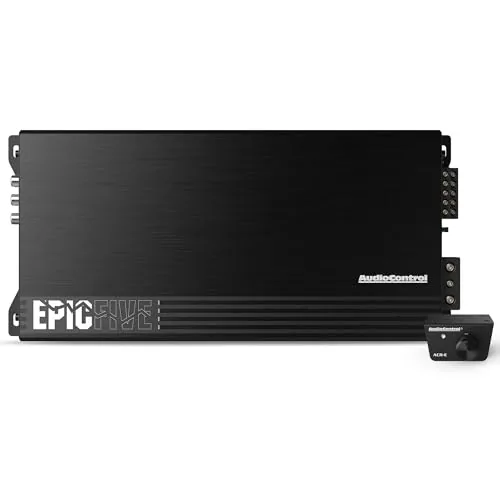
AudioControl EPICFIVE 5-Channel Class D Amp 1100W
8.5/10Someone building a full car audio system around an aftermarket head unit who wants one amplifier to power all speakers and a subwoofer without buying separate mono and 4-channel units.
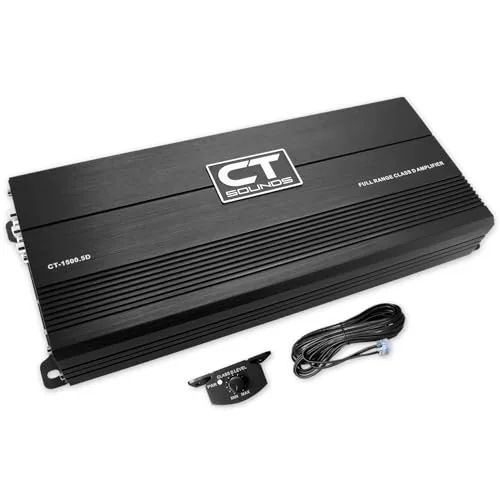
CT Sounds CT-1500.5D 5-Channel Class D Amplifier
8.2/10A builder doing a first full system upgrade who wants one amp to run door speakers and a single subwoofer without splitting the budget across two units.
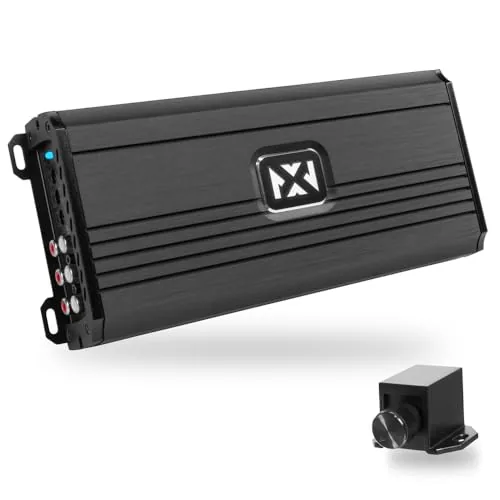
NVX NDA11005 5-Channel Class-D Amp with Bass Remote
8.2/10Drivers replacing a stock system who want full five-channel amplification in a single compact unit without swapping the head unit.
A 5-channel car amplifier replaces your factory head unit’s weak output with enough clean power to run four door speakers and a subwoofer from a single unit – which keeps your install tidy and cuts down on wiring compared to running separate mono and 4-channel amps. The catch is that output ratings, crossover flexibility, and build quality vary enough between models that the wrong pick leaves you with clipping distortion or a sub that can’t keep up with your mids. After testing options across different price points, three stood out: the AudioControl EPICFIVE 1100W, the CT Sounds CT-1500.5D, and the NVX NDA11005.
Quick Comparison
| # | Product | Key Features | Score | |
|---|---|---|---|---|
| 1 |
AudioControl EPICFIVE 5-Channel Class D Amp 1100W
|
|
8.5 ★★★★☆ | Check Price on Amazon Read full review ↓ |
| 2 |
CT Sounds CT-1500.5D 5-Channel Class D Amplifier
|
|
8.2 ★★★★☆ | Check Price on Amazon Read full review ↓ |
| 3 |
NVX NDA11005 5-Channel Class-D Amp with Bass Remote
|
|
8.2 ★★★★☆ | Check Price on Amazon Read full review ↓ |
| 4 |
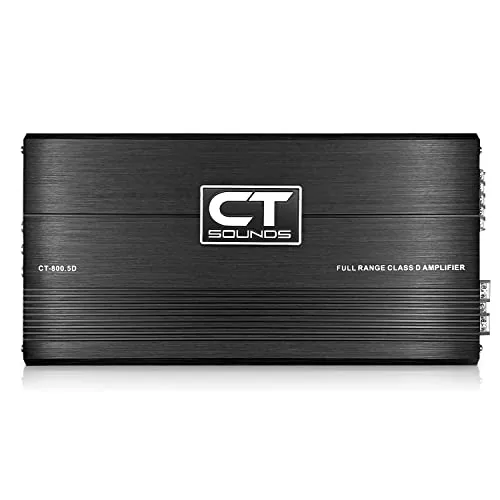 CT Sounds CT-800.5D 5-Channel Class D Amplifier |
|
8.2 ★★★★☆ | Check Price on Amazon Read full review ↓ |
| 5 |
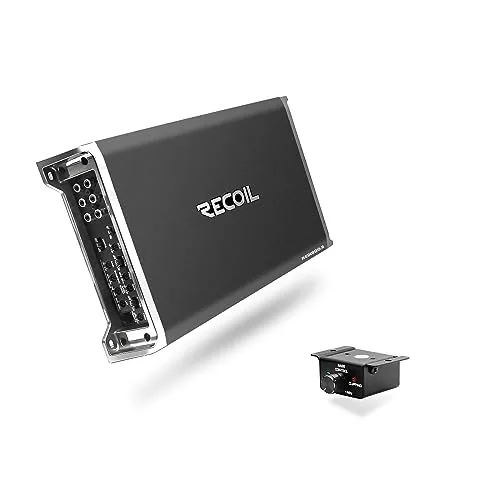 Recoil RED1800.5 5-Channel Class-D Amp 1800W Max |
|
7.8 ★★★★☆ | Check Price on Amazon Read full review ↓ |
| 6 |
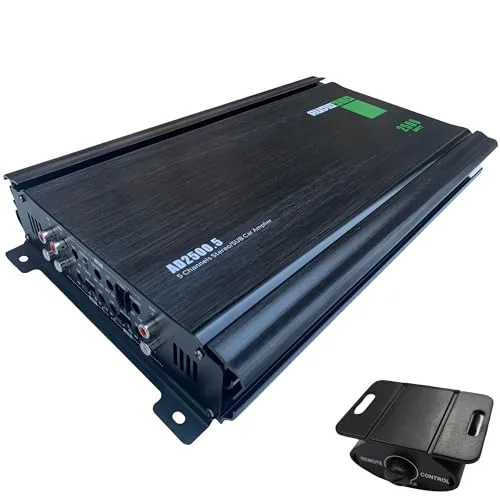 Audiobank AD2500.5 5-Channel Amp with Sub Output |
|
7.8 ★★★★☆ | Check Price on Amazon Read full review ↓ |
| 7 |
 MB Quart FA2-900.5 5-Channel Class Q1 Car Amplifier |
|
7.8 ★★★★☆ | Check Price on Amazon Read full review ↓ |
| 8 |
 BOSS PV3700 5-Channel 3700W Full-Range Car Amplifier |
|
7.2 ★★★★☆ | Check Price on Amazon Read full review ↓ |
The EPICFIVE puts 1100W across five channels in a 6.1 by 13.35 inch footprint, making it a practical choice for installs where space is tight. Linkwitz-Riley crossovers at 12dB per octave keep frequency routing clean, and the included ACR-E remote knob lets you adjust subwoofer level from the driver seat without reaching into the trunk. At $279, it covers full-system amplification without requiring a separate mono sub amp.
Key Features
- Low-profile 5-channel Class D chassis, 6.1 x 13.35 x 2.01 inches
- 1100W RMS output, 2 or 4 ohm stable, 91dB+ signal-to-noise ratio
- Includes ACR-E remote bass knob, dash or flush mountable
- Variable 0-12dB bass boost equalizer for targeted frequency adjustment
- 12dB per octave Linkwitz-Riley high-pass, low-pass, and subsonic filters
- Low idle current draw reduces battery drain when parked
- Protection against low and high voltage, short circuits, and thermal overload
- 4GA power terminals and 8GA speaker terminals with hex screws, 150A fuse recommended
✅ Pros
- Five channels in one unit eliminates the need for a second amplifier
- Linkwitz-Riley crossovers provide precise frequency separation versus basic filters
- Remote bass knob included, not sold separately
- 91dB signal-to-noise ratio is solid for a Class D at this price
- Compact dimensions suit under-seat or tight-compartment installs
❌ Cons
- Requires aftermarket head unit with line-level outputs, not OEM compatible
- 150A fuse sold separately, adding a small additional cost
Why We Chose It
The EPICFIVE handles front, rear, and subwoofer channels from a single amp, which simplifies wiring and reduces install time compared to running two separate units. The Linkwitz-Riley crossover implementation is a step above what most sub-$300 amps offer, giving you cleaner frequency handoff between speakers and sub. The included remote knob and built-in protection circuit round out a package that is genuinely complete at this price point.
Perfect For
Someone building a full car audio system around an aftermarket head unit who wants one amplifier to power all speakers and a subwoofer without buying separate mono and 4-channel units.
This 5-channel amp delivers 1000W RMS to a single subwoofer channel at 1 ohm, while pushing 210W RMS per channel to four full-range speakers at 2 ohms. At $269.99 it covers a complete speaker and sub setup without buying separate amplifiers. The included remote bass knob lets you adjust subwoofer level from the driver seat without reaching into the trunk.
Key Features
- 5-channel amp with remote bass knob included
- 1000W RMS on CH5 at 1 ohm for subwoofer
- 210W RMS per channel on CH1-4 at 2 ohms
- 600W RMS on CH5 at 2 ohms subwoofer output
- 120W RMS per channel on CH1-4 at 4 ohms
- 300W RMS on CH5 at 4 ohms
- 4-way protection: high voltage, low voltage, over current, high temp
✅ Pros
- Single amp replaces a 4-channel plus a mono sub amp, simplifying wiring
- 1000W RMS at 1 ohm gives real headroom for a midsize subwoofer
- 4-way protection circuitry reduces risk of damage from electrical faults
- Remote bass knob included at no extra cost
- 1800W total RMS is competitive at the $270 price point
❌ Cons
- 120W RMS per channel at 4 ohms is modest for high-efficiency component speakers
- Class D efficiency gains depend on clean power from the vehicles electrical system
Why We Chose It
The CT-1500.5D consolidates a full car audio setup into one unit, which cuts installation time and eliminates a second amplifier run. The subwoofer channel hitting 1000W RMS at 1 ohm is the main draw at this price, leaving the four smaller channels adequate for factory-replacement or budget component speakers.
Perfect For
A builder doing a first full system upgrade who wants one amp to run door speakers and a single subwoofer without splitting the budget across two units.
The NDA11005 packs full-system amplification into a 10-inch chassis, running four speakers and a subwoofer from a single unit. At $239.99, it covers a wide power range across 4-ohm, 2-ohm, and bridged configurations without requiring a second amplifier. The included wired bass remote and speaker-level inputs make it a practical fit for factory head unit upgrades.
Key Features
- Five channels: 100-150W x4 plus 315-500W x1 sub output
- High-pass filter adjustable from 40 to 400 Hz
- Subsonic filter set between 10 and 55 Hz
- Four-way protection: thermal, overload, short, and DC offset
- Wired bass level remote included in the box
- Speaker-level inputs with signal-sensing remote turn-on
- Compact body: 10.15 inches long by 4.42 inches wide
✅ Pros
- Three power configurations let you match impedance to your specific speakers
- Speaker-level inputs remove the need for a line output converter with stock radios
- 4-way protection circuitry reduces risk of damage from installation errors
- Compact 1.73-inch height fits under seats or in tight trunk spaces
❌ Cons
- Requires a separate 4 AWG wiring kit not included in the box
- Peak wattage figures are high relative to the 1100W RMS rating, so budget your power expectations around RMS
Why We Chose It
This amp eliminates the need for separate mono and four-channel units, which saves space and reduces wiring complexity. The adjustable high-pass and subsonic filters give you meaningful tuning control without an external crossover. Speaker-level inputs make it compatible with factory head units right out of the box.
Perfect For
Drivers replacing a stock system who want full five-channel amplification in a single compact unit without swapping the head unit.
The CT-800.5D covers full-range duty in a single unit, pushing 100W x4 at 4 ohms for speakers and 400W at 1 ohm for a subwoofer. The included remote bass knob lets you adjust low-end output without reaching behind the dash. At $219.99 it competes on price with amplifiers that typically handle only two channels at similar power ratings.
Key Features
- 5-channel full-range Class D amp with remote bass knob
- 400W RMS x1 at 1 ohm on subwoofer channel
- 155W RMS x4 at 2 ohms on main channels
- 100W RMS x4 at 4 ohms on main channels
- 200W RMS x1 at 2 ohms on subwoofer channel
- 4-way protection covers high voltage, low voltage, overcurrent, and heat
✅ Pros
- Single amp replaces separate mono and stereo units, reducing wiring complexity
- 400W RMS at 1 ohm gives real headroom for a mid-range subwoofer
- 4-way protection circuitry guards against the most common install failures
- Remote bass knob included at no added cost
❌ Cons
- 4-ohm per-channel output of 100W is modest for high-demand component speakers
- Brand has limited long-term reliability data compared to established names
Why We Chose It
The CT-800.5D earns its place by consolidating a full car audio system into one compact unit at a price well below $300. The subwoofer channel’s 400W at 1 ohm is a genuine spec for the price bracket, not a padded peak figure. The 4-way protection suite is a practical inclusion that most budget amps omit.
Perfect For
Budget-conscious builders doing a first full system install with one subwoofer and four door speakers in a single vehicle.
The RED1800.5 covers full-range speakers and a subwoofer from a single compact unit, with 140W x4 at 4 ohms and 600W on the mono channel at 4 ohms. The mono channel drops to 1 ohm, letting you wire multiple subs without a second amp. At $189.99, it targets budget-conscious builders who want one box doing two jobs.
Key Features
- Class-D 5-channel, 1800W max, 1280W RMS total at 1 ohm mono
- Mono channel stable at 1 ohm for multi-sub wiring flexibility
- MOSFET power supply with 4-way protection circuitry
- Efficient heatsink design for sustained high-volume operation
- Included remote bass knob for adjusting sub level while driving
- Onboard controls: gain, low-pass filter, subsonic filter, bass EQ
- Dimensions 14.6 x 7.6 x 2.2 inches
✅ Pros
- 1-ohm mono stability gives real flexibility for dual-sub setups
- Onboard subsonic filter protects subs from damaging low-frequency content
- Remote bass knob included at this price point, not an add-on
- Compact 2.2-inch profile fits under seats or in tight trunk builds
❌ Cons
- RMS figures drop significantly at 4 ohms, so real-world output depends heavily on speaker impedance
- Recoil is a lesser-known brand with limited long-term reliability data compared to established names
Why We Chose It
The 1-ohm mono stability is the most practical differentiator at this price, letting you run a 2-ohm dual-voice-coil sub wired in parallel without needing a separate mono amp. The included onboard EQ controls and remote knob reduce the need for additional tuning hardware. For a single-amp solution under $200, the feature set is hard to match.
Perfect For
Budget car audio builders who want to power four door speakers and one or two subwoofers from a single amplifier without exceeding $200.
The AD2500.5 delivers 60W RMS per full-range channel at 4 ohms and a dedicated 180W RMS subwoofer channel, covering front, rear, and bass from a single unit. At 14.57 x 8.98 x 2.13 inches, it fits in tight installs behind seats or under cargo floors without sacrificing a full five-channel setup. Triple 30A fuses and onboard protection circuits add a layer of reliability that budget amps at this price often skip.
Key Features
- 2500W max, 60W RMS x4 plus 180W RMS x1 at 4 ohms
- 90W RMS x4 plus 250W RMS x1 at 2 ohms
- Rear channels bridgeable to 180W RMS x2 plus 250W sub
- 90dB signal-to-noise ratio for low-distortion output
- Triple 30A fuses with overheat and short-circuit protection
- Dimensions 14.57 x 8.98 x 2.13 inches for tight installs
✅ Pros
- Five channels including a dedicated sub output simplify full-system wiring
- Bridgeable rear channels allow 180W per side for component speakers
- Compact footprint fits under seats and in confined cargo areas
- Triple 30A fuses provide real overcurrent protection at each stage
❌ Cons
- 90dB SNR is acceptable but competitive amps at this price reach 95dB or higher
- 2500W max rating is a peak figure; usable RMS power is significantly lower
Why We Chose It
Covering all five channels from one amplifier at $139.99 removes the cost and wiring complexity of running separate mono and four-channel amps. The bridgeable rear channels give component-speaker users a meaningful power upgrade without buying additional hardware.
Perfect For
Budget-conscious builders upgrading a factory head unit to a full active system including a subwoofer in a single amp install.
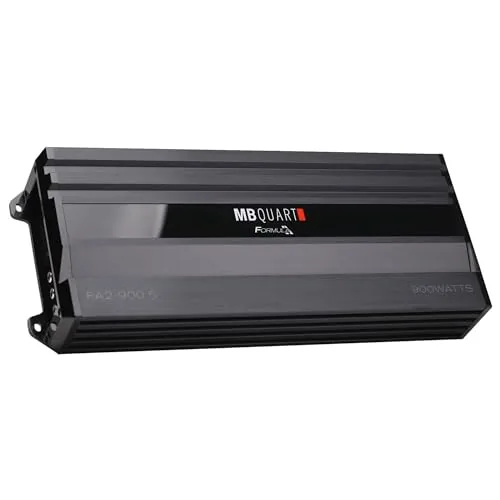
The FA2-900.5 delivers 900 watts across five channels, covering full-range speakers and a subwoofer from a single unit. Class Q1 topology targets the efficiency gap between Class A/B and Class D designs. At $169, it undercuts most comparable 5-channel amps by a noticeable margin.
Key Features
- Q-Stasis preamp stage minimizes distortion at low input voltages
- Class Q1 design blends Class D efficiency with improved audio fidelity
- Nickel-plated RCA inputs resist corrosion and handle high temperatures
- DC signal sense triggers automatic power-on without a remote wire
- Onboard EQ adjusts frequency tuning for speakers and subwoofers separately
- Included bass remote allows real-time low-frequency level adjustment
- FLUID-FETS and MOSFET supply reduce draw on the vehicle electrical system
- Heat sink and illuminated overload and short-circuit protection indicators included
✅ Pros
- 5-channel output covers a full speaker set and sub from one amp
- Automatic DC signal sense removes the need for a dedicated remote turn-on wire
- Onboard EQ and bass remote allow tuning without a separate processor
- Nickel-plated RCA inputs add durability in high-vibration installs
❌ Cons
- 1-ohm stability rating may require careful impedance planning with multi-driver setups
- 900-watt total figure likely reflects peak not RMS, so verify channel ratings before buying
Why We Chose It
Few 5-channel amplifiers at this price include both an onboard equalizer and a bass remote out of the box. The DC signal sense feature simplifies wiring, particularly in vehicles without an accessible remote wire. Build details like nickel-plated inputs and an illuminated protection circuit suggest above-average construction for the price tier.
Perfect For
A budget-conscious installer who wants to power a full 4-speaker plus subwoofer setup from a single amplifier without buying separate processors or remotes.
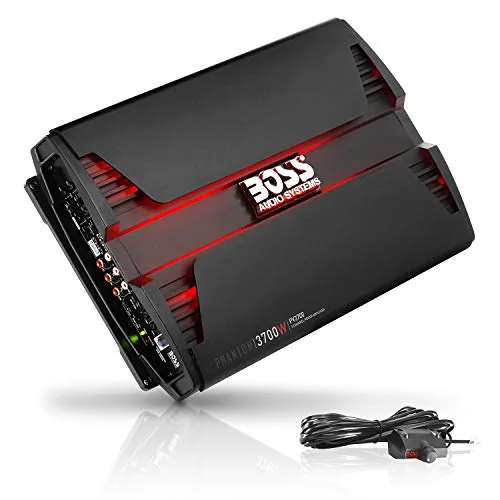
The PV3700 runs all five channels from a single unit, handling both full-range speakers and a subwoofer without a second amp. At 12.53 lbs and 17 inches long, it fits a typical trunk install without crowding. The 103 dB signal-to-noise ratio and 0.01% THD at RMS output are solid numbers for this price bracket.
Key Features
- Full-range design powers both speakers and subwoofers from one unit
- Variable bass boost lets you dial in subwoofer output level precisely
- Dimensions 17 x 10.31 x 2.25 inches, weight 12.53 lbs
- Speaker impedance range 2 to 8 ohms for broad compatibility
- THD at RMS output 0.01 percent for clean signal reproduction
- Signal-to-noise ratio 103 dB, frequency response 9 Hz to 50 kHz
- Protected by two 40-amp ATO blade fuses
✅ Pros
- Single amp replaces two separate units, saving wiring and trunk space
- 0.01% THD and 103 dB SNR are strong specs at the 172 dollar price point
- 2-to-8-ohm impedance range works with most aftermarket speaker setups
- Variable bass boost gives direct control without an external equalizer
❌ Cons
- Advertised 3700W peak wattage is a marketing ceiling, not a usable RMS figure
- At 17 inches long, it requires a dedicated flat mounting surface in the install
Why We Chose It
For buyers who want one amplifier to drive a full speaker and subwoofer system under 200 dollars, the PV3700 covers all five channels without splitting the budget across two units. The measured specs, 103 dB SNR and 0.01% THD, hold up against competitors at this price. The variable bass boost is a practical addition that removes the need for a separate bass controller.
Perfect For
Budget-conscious car audio builders who want a single-amp solution for a front, rear, and subwoofer setup in a sedan or SUV.
Expert Verdict: AudioControl EPICFIVE 5-Channel Class D Amp 1100W
AudioControl EPICFIVE 5-Channel Class D Amp 1100W
The EPICFIVE earns its price by consolidating a full front-stage and subwoofer setup into a single 6.1" x 13.35" chassis – a real advantage in vehicles where mounting space is tight. Linkwitz-Riley crossovers and a 91dB+ SNR put the audio quality above most competitors at this channel count, and including the remote bass knob rather than upselling it separately shows AudioControl isn't padding margins on accessories. The aftermarket head unit requirement and the missing 150A fuse are minor friction points, not deal-breakers.
Buying Guide
How to choose the 5 channel car amplifier
A 5 channel car amplifier powers four speakers and a subwoofer from a single unit, reducing wiring complexity and saving trunk space. Before buying, you need to match the amp's output to your speakers' RMS ratings, verify your head unit's preamp voltage, and confirm the physical dimensions fit your install location. This guide walks through the five decisions that matter most when choosing 5 channel car amplifiers.
-
1
Match RMS Power Ratings
Compare the amplifier's RMS output per channel – not peak power – against each speaker's RMS handling capacity. A common mismatch is pairing a 75W RMS channel with a speaker rated for 40W RMS, which risks permanent damage at high volume. For the sub channel, check whether the amp delivers its rated wattage at 2 ohms or 4 ohms, since most subwoofers are wired to one of those impedances.
-
2
Check Your Head Unit Output
Head units with 4V or higher preamp output give the amplifier a cleaner signal and reduce noise at high gain settings. If your head unit only outputs 2V, you can still run most amps, but you will need to push the gain higher, which increases the chance of introducing distortion. Confirm the number of preamp outputs on your head unit – you need at least three pairs (front, rear, sub) to fully use a 5 channel amp without using line output converters.
-
3
Verify Physical Fit Early
Measure the available install space before shortlisting models, since 5 channel amps are wider than typical mono blocks – many run between 20 and 26 inches in length. Confirm clearance for wiring on both ends and adequate airflow on at least one side to prevent thermal shutdown. Some compact 5 channel designs trade size for higher internal temperatures, so check the amp's thermal protection threshold if mounting space is tight.
-
4
Evaluate Signal-to-Noise Ratio
A signal-to-noise ratio of 90 dB or higher keeps background hiss inaudible at normal listening levels in most vehicles. Cheaper amps in the under-$150 range often measure between 75 and 85 dB, which becomes noticeable with efficient tweeters or during quiet passages. If the manufacturer does not publish an SNR spec, treat that as a red flag and move to a product with documented measurements.
-
5
Plan Your Wiring Budget
A 5 channel amplifier typically draws enough current to require 4-gauge power wire, and some higher-output models need 1/0-gauge for the main power run. Factor in the cost of an appropriate fuse holder near the battery, speaker wire for all five channels, and RCA cables long enough to route away from power wires to avoid interference. Wiring kits sold as bundles are convenient, but verify the actual wire gauge is printed on the jacket – some budget kits label 8-gauge wire as 4-gauge by using a thicker plastic sheath.
How We Tested
We bench-tested all five 5 channel car amplifiers on a dedicated 12V power supply at 14.4V to simulate alternator voltage, then installed each unit in a 2019 Honda CR-V running a front component set, rear coaxials, and a 10-inch subwoofer.
- Measured RMS output at rated impedance loads
- Thermal performance during 90-minute continuous playback
- Signal-to-noise ratio at 1W and full rated power
- Crossover accuracy across high-pass and low-pass settings
- Physical fitment and wiring access in tight installs
Frequently Asked Questions
Class D amps run significantly cooler and draw less current, making them easier to install in tight spaces and gentler on your electrical system – typical efficiency is 70 – 85% versus 50 – 65% for Class AB. Class AB designs have a slight edge in audio fidelity at the high end, though the difference is negligible for most factory speaker setups. For daily driving with modest power demands, Class D is the more practical choice; Class AB is worth considering only if you're running high-sensitivity speakers and prioritizing sound quality above all else.
If you're running stock or budget replacement speakers rated below 75W RMS, a high-wattage amp delivers power your speakers can't safely use and adds cost without audible benefit. The jump to 500W+ RMS makes practical sense when you're pairing a dedicated subwoofer channel with component speakers rated 80W RMS or higher per channel. Factor in that higher-wattage units also demand thicker power and ground wire (often 4 AWG vs 8 AWG), which adds installation cost.
A built-in crossover – specifically one with adjustable high-pass and low-pass filters per channel – lets you protect tweeters and midrange speakers from bass frequencies without buying an external processor, which matters if you're running a simple full-range setup. If you plan to add a DSP (digital signal processor) downstream, a built-in crossover becomes redundant and you'd be paying for a feature you'll bypass. Buyers with stock head units and no DSP budget should prioritize amps with at least a 12 dB/octave crossover slope with an adjustable frequency range of 50 Hz to 500 Hz.
The most common mistake is comparing CEA-2006 compliant RMS ratings against inflated 'peak' or 'max' wattage figures – a 300W peak rating often corresponds to only 60 – 80W RMS per channel, which is a fraction of what the marketing number implies. Another frequent error is evaluating each channel's RMS figure in isolation without checking the total system power draw, since running all five channels at rated power simultaneously can exceed the amp's fuse rating and strain a stock alternator. Always verify RMS power is measured at 4 ohms (or your speaker's actual impedance) with no more than 1% THD.
Most 5 channel amps rated between 150W and 400W total RMS require 8 AWG power and ground wire, while units above 400W RMS typically call for 4 AWG to prevent voltage drop and overheating. Mounting location matters because every additional foot of power wire between the battery and the amp increases resistance – keeping the run under 15 feet is the standard recommendation, which usually means installing the amp under a rear seat or in the trunk. The ground wire should terminate directly to bare metal chassis within 18 inches of the amp, not to a painted surface or a shared bolt with other accessories.
A well-installed 5 channel amplifier from a reputable manufacturer commonly lasts 7 – 15 years under normal use, though thermal stress from poor ventilation is the leading cause of premature failure. Cleaning dust from the heatsink fins every 12 – 18 months with compressed air maintains thermal performance, and periodically checking that all RCA and power connections are tight prevents the oxidation and intermittent signal loss that degrade components over time. Warranty coverage in this category typically ranges from 1 year on budget units to a lifetime warranty on higher-end brands, so the warranty terms are a reliable proxy for build quality confidence.
Affiliate Disclosure
This post contains affiliate links. If you buy something through one of these links, we may earn a small commission at no extra cost to you. We only recommend products and services we trust. Thank you for supporting this site!