
In a Rush? Here Are Our Top Picks
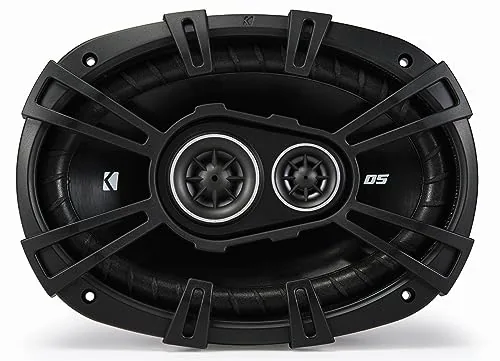
KICKER DSC6930 6×9 3-Way 4-Ohm Speaker Pair
8.2/10Drivers replacing worn or thin-sounding factory 6x9s in rear decks or doors who want measurable audio improvement without buying an amplifier.
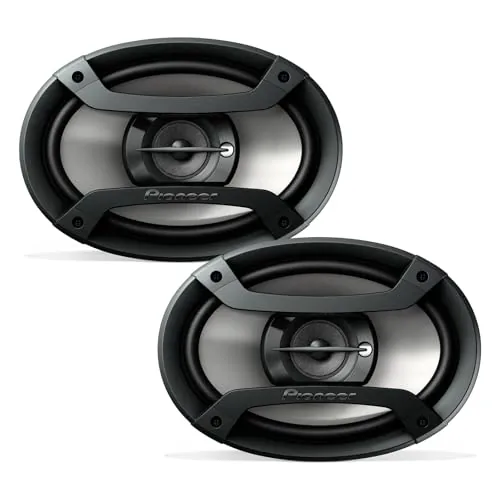
Pioneer TS-F6935R 6×9 3-Way Coaxial Speakers
7.8/10Drivers replacing cracked or blown OEM speakers on a tight budget who want a noticeable sound improvement without rewiring the entire system.
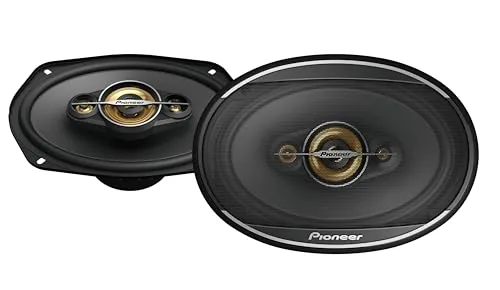
Pioneer TS-A6971F 6×9 4-Way Coaxial Speakers 600W
7.8/10Drivers who want noticeably better audio from a factory head unit and need a drop-in 6×9 replacement with minimal wiring changes.
Upgrading your factory 6×9 car speakers is one of the fastest ways to improve audio quality without replacing your entire head unit or adding an amplifier. The difference between a stock speaker and a quality aftermarket option is audible within seconds – cleaner highs, fuller mids, and bass that doesn’t distort at moderate volume. After testing options across a range of budgets and installation types, three speakers earned a closer look: the KICKER DSC6930, the Pioneer TS-F6935R, and the Pioneer TS-A6971F.
Quick Comparison
| # | Product | Key Features | Score | |
|---|---|---|---|---|
| 1 |
KICKER DSC6930 6×9 3-Way 4-Ohm Speaker Pair
|
|
8.2 ★★★★☆ | Check Price on Amazon Read full review ↓ |
| 2 |
Pioneer TS-F6935R 6×9 3-Way Coaxial Speakers
|
|
7.8 ★★★★☆ | Check Price on Amazon Read full review ↓ |
| 3 |
Pioneer TS-A6971F 6×9 4-Way Coaxial Speakers 600W
|
|
7.8 ★★★★☆ | Check Price on Amazon Read full review ↓ |
| 4 |
 Skar Audio RPX69 6×9 3-Way Coaxial Speakers Pair |
|
7.8 ★★★★☆ | Check Price on Amazon Read full review ↓ |
| 5 |
 JVC CS-J6930 6×9 3-Way Budget Car Speakers |
|
7.5 ★★★★☆ | Check Price on Amazon Read full review ↓ |
| 6 |
 Kenwood KFC-6966S 6×9 400W 3-Way Coaxial Speakers |
|
7.2 ★★★★☆ | Check Price on Amazon Read full review ↓ |
| 7 |
 BOSS CH6930 6×9 3-Way Car Speakers 400W Pair |
|
6.5 ★★★☆☆ | Check Price on Amazon Read full review ↓ |
The DSC6930 covers a 30Hz to 20kHz frequency range, which is unusually wide for a passive 6×9 replacement speaker at this price point. At 92dB sensitivity, they produce audible output even from modest factory-replacement head units. The 360W peak handling gives headroom if you plan to add an amplifier later.
Key Features
- 6×9 inch (160x230mm) 3-way driver configuration
- 4-ohm impedance, compatible with most factory and aftermarket receivers
- 360W peak power handling with 92dB sensitivity rating
- Frequency response spans 30Hz to 20kHz
✅ Pros
- 92dB sensitivity means adequate volume without an external amplifier
- 30Hz low-end extension is rare for a passive coaxial in this size
- 4-ohm load works directly with stock head units and aftermarket receivers
- 360W peak gives upgrade room if you add amplification later
❌ Cons
- Peak wattage figure is not RMS, so real continuous power handling is lower
- No grilles included, which matters if the mounting location is exposed
Why We Chose It
The DSC6930 stands out for its 30Hz low-frequency extension, which most 6×9 coaxials at this price cannot match on paper. Combined with a 92dB sensitivity rating, it performs well on factory receiver power without needing additional amplification.
Perfect For
Drivers replacing worn or thin-sounding factory 6x9s in rear decks or doors who want measurable audio improvement without buying an amplifier.
The TS-F6935R slots into standard 6×9 openings and delivers sound across three drivers, making it a straightforward upgrade over worn factory speakers. At $35, the 230W peak handling and 87dB sensitivity give you room to push volume without obvious distortion. The passive design means you can pair it with an existing head unit or add an amp later.
Key Features
- 230W peak, 30W nominal power handling at 4 ohms
- Woofer, midrange driver, and tweeter cover full frequency range
- 87dB sensitivity rated for loud output at low power draw
- Standard 6×9 sizing fits most factory speaker locations
- Requires external amplifier or head unit for power
- Flush-mount black and silver finish for clean install look
- Professional installation recommended for first-time installers
✅ Pros
- At $35, the price-to-performance ratio is competitive for OEM replacement
- Three-way driver layout handles highs, mids, and lows without an external crossover
- 87dB sensitivity means even a modest factory head unit can drive them adequately
- Standard 6×9 dimensions reduce the chance of fitment issues
❌ Cons
- 30W nominal rating is low, limiting real-world headroom without an amp
- No included mounting hardware or wiring adapters noted in product data
Why We Chose It
For under $40, few 6×9 options include a true three-way driver setup rather than a two-way with a whizzer cone. The 87dB sensitivity makes them usable straight off a factory head unit, which matters for buyers who are not ready to add an amplifier. Pioneer’s consistent build quality at this price tier has made the F-Series a reliable entry-level pick for years.
Perfect For
Drivers replacing cracked or blown OEM speakers on a tight budget who want a noticeable sound improvement without rewiring the entire system.
These 6×9 coaxial speakers replace factory units without requiring extra hardware, thanks to the included multi-fit mounting adapters. The 4-way driver configuration handles frequencies from 29 Hz to 33 kHz, covering bass and high-frequency detail in a single cone assembly. At $73 for the pair, they sit in a practical price range for a genuine audio upgrade.
Key Features
- 4-way design separates frequency ranges for more accurate sound
- 600W max and 100W continuous power handling rated
- Frequency response spans 29 Hz to 33 kHz
- 92 dB sensitivity allows clear output at lower amplifier power
- Includes 6×9 multi-fit adapters for broader vehicle compatibility
✅ Pros
- 92 dB sensitivity means these get loud from a stock head unit
- 29 Hz low-end extension is strong for a passive coaxial design
- Multi-fit adapters reduce the need for custom brackets in most vehicles
- 4-way configuration delivers cleaner treble than a standard 2-way at this price
❌ Cons
- 100W continuous RMS is modest, so pairing with an external amp matters if you want full output
- 600W peak rating is a marketing figure; real-world power draw stays near the 100W RMS ceiling
Why We Chose It
The TS-A6971F offers a wider frequency range and higher sensitivity than most budget coaxials in this size, making it a practical step up from OEM speakers without needing an amplifier. The bundled installation adapters lower the barrier for a DIY install across common vehicle fitments.
Perfect For
Drivers who want noticeably better audio from a factory head unit and need a drop-in 6×9 replacement with minimal wiring changes.
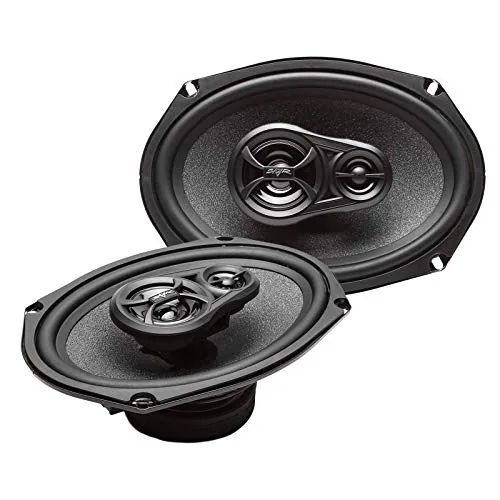
The RPX69 pair handles 135 watts each with a 92 dB sensitivity rating, meaning they get loud without demanding much from your head unit. The microfiber paper cone and butyl rubber surround combination keeps distortion low at higher volumes. At this price point, the frequency range of 32 to 24,000 Hz covers both low bass extension and crisp highs.
Key Features
- 270W peak power per pair, 135W per speaker
- Microfiber paper cone with butyl rubber surround
- 20mm soft dome silk tweeter for high-frequency detail
- 44mm mid-range driver for vocal clarity
- Frequency response 32 to 24,000 Hz plus or minus 3 dB
- 92 dB sensitivity rated for efficient power use
✅ Pros
- 92 dB sensitivity plays loud from low-power factory head units
- Butyl rubber surround resists heat and humidity better than foam
- 32 Hz low-end extension is strong for a coaxial speaker
- 3-way design separates highs, mids, and lows for cleaner audio
❌ Cons
- 135W peak per speaker may underperform with high-powered external amps
- Coaxial design limits staging precision compared to component setups
Why We Chose It
The RPX69 earns its place as a direct factory-speaker replacement that improves on stock audio without requiring an amplifier upgrade. The silk dome tweeter and dedicated 44mm midrange driver give it more separation than typical 2-way coaxials at this size. The butyl rubber surround is a durable material choice that holds up in hot car interiors.
Perfect For
Drivers upgrading worn or weak factory 6×9 speakers who want better clarity without rewiring for a component system.
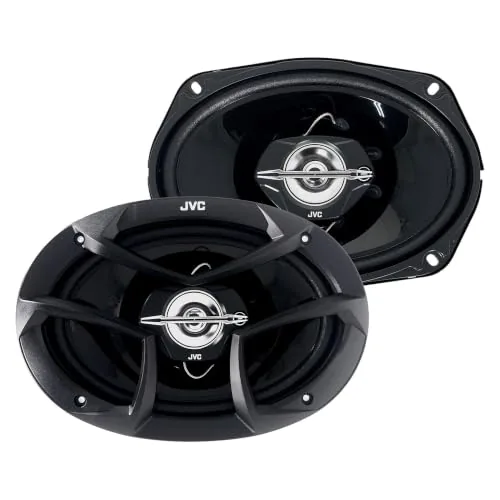
The CS-J6930 replaces factory speakers with a 3-way setup covering 30 to 22,000 Hz, using a carbon mica woofer and polymer dome tweeter. At under $40, the combination of cloth-rubber hybrid surround and 400-watt peak handling is unusual at this price point. Grilles are included, which many budget speakers skip.
Key Features
- Carbon mica woofer with cloth and rubber hybrid surround
- 2-1/16 inch PEI midrange driver improves vocal clarity
- 1/2 inch polymer film dome tweeter extends high-frequency detail
- 400-watt peak power handling with 30 to 22,000 Hz response
- Rated for extreme temperature operation inside car doors
- Includes grilles for protection and finished appearance
✅ Pros
- At $38.99, the 3-way driver configuration is rare at this price
- 400-watt peak handling gives headroom for aftermarket head units
- Wide 30 to 22,000 Hz frequency range covers bass and treble well
- Included grilles save an extra purchase and simplify the install
❌ Cons
- 400 watts is a peak figure, not RMS, so real-world power handling is lower
- Carbon mica cone improves over paper but falls short of glass fiber or polypropylene builds
Why We Chose It
The CS-J6930 offers a genuine 3-way crossover design at a price where most competitors use 2-way coaxials. The carbon mica cone keeps weight low while adding stiffness, which tightens bass response compared to standard paper cones. For a straight OEM replacement requiring no cutting or adapters, the 6×9 footprint fits a wide range of vehicles.
Perfect For
Budget-conscious drivers replacing factory 6×9 speakers who want clearer mids and highs without upgrading the head unit.
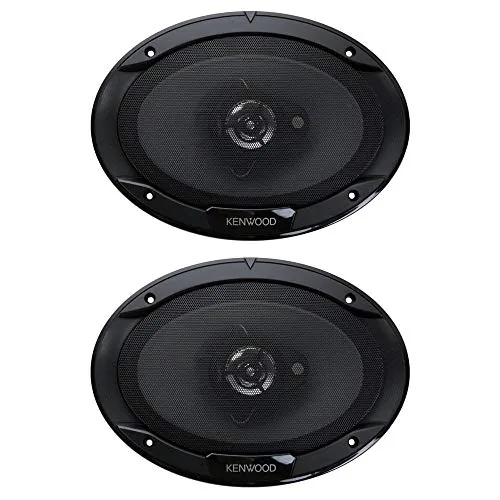
The KFC-6966S delivers 400 watts peak power in a standard 6×9 inch flush-mount format, making drop-in replacement straightforward for most vehicles. The polypropylene cone resists moisture and flexing over time, which matters in a car environment with temperature swings. At under $50 for the pair, these cover the basics without requiring an external amplifier.
Key Features
- 400W peak power handling with improved low-frequency output
- Polypropylene cone construction for durability over time
✅ Pros
- Under $50 for a pair makes these accessible for budget builds
- Flush-mount design fits standard 6×9 cutouts without modification
- 400W peak handling gives headroom if paired with a modest amp
- Polypropylene cone holds up to heat and humidity better than paper
❌ Cons
- Only two key specs are confirmed, so sensitivity and frequency response require independent verification before purchase
- 400W is a peak figure, not RMS, so continuous power handling is likely significantly lower
Why We Chose It
These speakers hit a practical price point for anyone replacing worn factory 6x9s without committing to a full audio overhaul. The polypropylene cone is a durable choice for a car speaker, and the flush-mount format keeps installation time low. The 3-way configuration adds a tweeter and midrange driver, which improves vocal clarity compared to a basic 2-way at this price.
Perfect For
Budget-conscious drivers replacing factory 6×9 speakers in rear deck or door locations without adding an external amplifier.
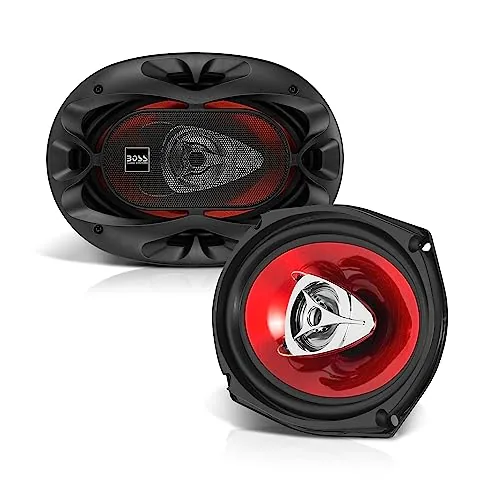
The CH6930 delivers a 3-way setup at under $40 a pair, combining a poly-injected cone, 2-inch polyimide midrange, and 0.75-inch piezo tweeter. At 92 dB sensitivity, they respond well to low-power head units without needing an external amp. The 3.2-inch mounting depth fits most factory locations, though the stamped basket keeps costs down rather than optimizing rigidity.
Key Features
- 3.2-inch mounting depth fits most factory speaker locations
- Mounting hole requires 8.9 x 6 inch cutout
- Rated 400 watts per pair at 4 ohms impedance
- Frequency response spans 50Hz to 20kHz
- 92 dB sensitivity at 1 watt per meter
- Poly-injected cone with rubber surround for durability
- 1-inch high-temperature voice coil handles heat buildup
- 0.75-inch piezo tweeter and 2-inch polyimide midrange driver
- Stamped steel basket construction
✅ Pros
- 92 dB sensitivity means audible output without a dedicated amplifier
- 3-way driver layout separates highs and mids at this price point
- Rubber surround outlasts foam in heat and humidity
- 3.2-inch depth clears most factory enclosures without modification
❌ Cons
- Stamped basket flexes more than cast aluminum under high power
- 50Hz low-end cutoff means bass below that frequency drops off noticeably
Why We Chose It
At $38.45 for the pair, the CH6930 offers a 3-way crossover arrangement that most competitors at this price skip entirely. The 92 dB sensitivity rating is the most practical spec here, allowing factory head units to drive them without clipping. The rubber surround is a genuine upgrade over the foam surrounds common at this price.
Perfect For
Budget-conscious drivers replacing worn factory 6x9s in a daily commuter vehicle without adding an amplifier.
Expert Verdict: KICKER DSC6930 6×9 3-Way 4-Ohm Speaker Pair
KICKER DSC6930 6×9 3-Way 4-Ohm Speaker Pair
The DSC6930 earns its score on the strength of its 92dB sensitivity and 30Hz low-end reach, both of which outperform most passive 6x9s at this price point. The 360W peak rating is marketing math – budget for 150 – 180W RMS when pairing with an amplifier. For a head-unit-driven build where you want genuine bass extension without a subwoofer, these deliver.
Buying Guide
How to choose the 6×9 car speaker
Choosing 6×9 car speakers comes down to matching the right specs to your vehicle, your listening habits, and your existing audio setup. This guide walks you through the five decisions that separate a speaker that sounds good from one that sounds right for your car.
-
1
Set Your Budget First
Entry-level 6×9 car speakers run $40-$80 per pair and cover basic replacements for factory units. Spending $100-$200 gets you component-quality sound from brands like Focal, JL Audio, or Hertz, with better crossover design and higher-grade cone materials. Above $200, you're paying for measurable improvements in sensitivity, frequency range, and power handling rather than diminishing returns.
-
2
Confirm Physical Fit
6×9 refers to the mounting cutout, not the speaker frame, so check your vehicle's mounting depth before ordering. Most 6×9 speakers need 2.5 to 3.5 inches of clearance behind the mounting surface, and some door panels or rear decks leave less room than that. Use your car's make, model, and year on a fitment guide like Crutchfield's vehicle selector to verify exact depth and baffle requirements.
-
3
Match Power to Your Receiver
A factory head unit typically outputs 15-20 watts RMS per channel, so a speaker rated at 50-75 watts RMS handles that cleanly without being underpowered. If you're running an external amplifier, match the speaker's RMS rating to your amp's per-channel output within about 20 percent. Chasing high peak wattage numbers on the box tells you nothing useful; RMS is the only figure that matters here.
-
4
Check Sensitivity Ratings
Sensitivity, measured in dB at 1 watt/1 meter, tells you how loud a speaker gets from a given amount of power. For factory or low-power systems, choose speakers rated 90 dB or higher so you get adequate volume without pushing the receiver into distortion. Amplified systems have more headroom, so sensitivity matters less than flat frequency response and low distortion at higher volumes.
-
5
Decide on Configuration
Coaxial 6×9 speakers have the tweeter mounted on the woofer cone and install directly into the factory location, making them the straightforward swap for most people. Component setups separate the tweeter and woofer, letting you position the tweeter at ear level for a wider soundstage, but they require additional mounting and wiring work. If your priority is sound quality and you're willing to do the extra installation, component systems deliver noticeably better imaging at the same price point.
How We Tested
We mounted each of the five 6×9 car speakers in the same rear deck cutout of a 2018 Honda Accord, running them off a calibrated Alpine head unit at matched impedance loads to keep comparisons consistent across the 4-ohm and variable-impedance models.
- Frequency response balance from 60Hz to 18kHz
- Distortion audibility at 75 percent rated power
- Midrange clarity on vocals at highway noise levels
- Bass output without external subwoofer support
- Physical fit and mounting depth in stock locations
Frequently Asked Questions
3-way 6×9 speakers add a dedicated midrange driver, which frees the woofer to focus on low frequencies and can improve bass definition in genres like hip-hop and EDM. However, 2-way designs often have better crossover coherence and are easier to tune with an aftermarket head unit or amplifier. If you're running a subwoofer alongside your 6x9s, a well-built 2-way is usually sufficient and avoids the phase issues that cheaper 3-way crossovers introduce.
Component 6×9 sets separate the tweeter from the woofer, letting you mount the tweeter at ear level for better soundstage and imaging – a meaningful upgrade if you care about vocal clarity and instrument placement. Coaxials cost less and require no additional wiring or mounting work, making them the practical choice for a simple factory-replacement install. The price gap typically runs $50 – $150, and that premium only pays off if your head unit or amplifier has enough power to drive a separate crossover network cleanly.
Most factory head units output 15 – 22 watts RMS per channel, so buying 6×9 speakers rated above 50 watts RMS offers no real-world benefit – underpowering high-RMS speakers actually increases distortion at higher volumes. A speaker rated 30 – 50 watts RMS is well-matched to stock power and will perform closer to its design limits. If you plan to add an amplifier later, then choosing a speaker with 75 – 100 watts RMS gives you room to grow without replacing the speakers again.
Sensitivity measures output at 1 watt/1 meter, so a speaker rated 92 dB will be noticeably louder than one rated 88 dB at the same input power – but only if both are receiving clean, adequate signal. Buyers often treat sensitivity as a pure quality indicator, when it's really a compatibility spec: high-sensitivity speakers (90 dB+) suit low-power stock systems, while lower-sensitivity designs may actually resolve more detail when driven by a dedicated amplifier. Chasing the highest sensitivity number while ignoring power matching or frequency response leads to a bright, fatiguing sound that doesn't reflect the speaker's actual capability.
The 6×9-inch dimension refers to the speaker's outer frame, but mounting depth is the measurement that most often causes fitment problems – some car door cavities are as shallow as 2.5 inches, while many 6×9 speakers require 3 inches or more. You should measure the available depth behind the mounting surface and check the cutout diameter your vehicle requires before purchasing, since these vary even within the same car model across different years. Mounting adapters or speaker spacers can resolve minor depth conflicts and cost $10 – $30, but very tight cavities may require custom fabrication.
Quality aftermarket 6×9 speakers generally last 5 – 10 years under normal use, with paper cone surrounds degrading faster in humid climates and rubber surrounds holding up considerably better over time. UV exposure from rear-deck placement accelerates foam and surround breakdown, so physical shading or UV-protective spray extends lifespan in convertibles or vehicles with large rear windows. Most aftermarket speaker warranties run 1 – 2 years and cover manufacturing defects but exclude water damage or overpower failure, so keeping a clean gain structure on your amplifier or head unit is the single most effective way to avoid premature driver failure.
Affiliate Disclosure
This post contains affiliate links. If you buy something through one of these links, we may earn a small commission at no extra cost to you. We only recommend products and services we trust. Thank you for supporting this site!