
In a Rush? Here Are Our Top Picks
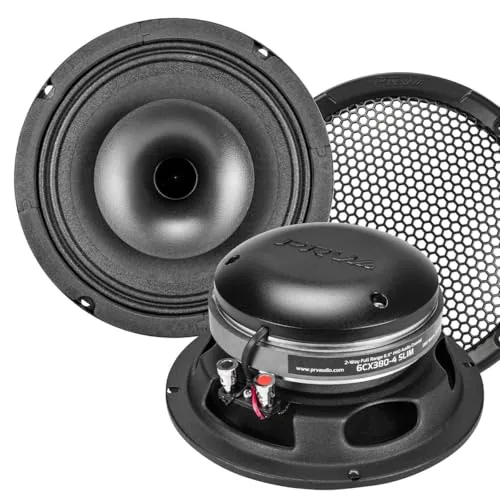
PRV AUDIO 6CX380-4 Slim 6.5" Coaxial Speaker Pair
8.2/10Owners replacing factory speakers in vehicles with shallow door cavities, particularly trucks and older cars where mounting depth under 3 inches is a hard requirement.
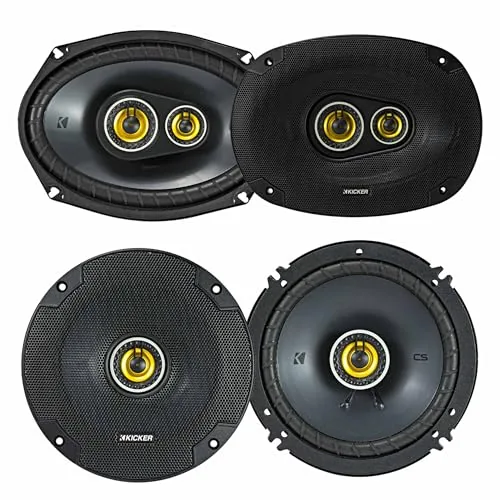
KICKER CS Series 6.5" & 6×9" 4-Speaker Bundle
8.2/10Car audio enthusiasts adding a 2-channel or 4-channel amplifier to a vehicle that still has factory speaker locations in both front doors and rear deck.
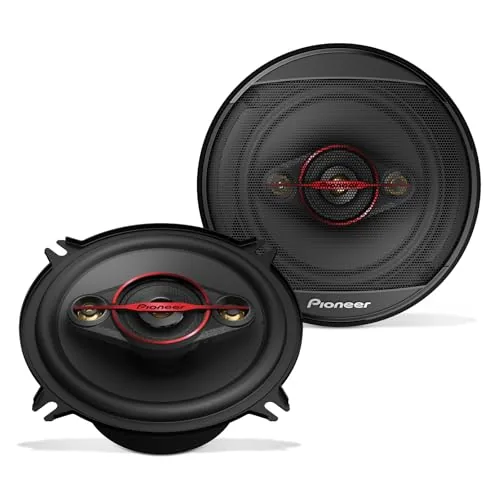
Pioneer TS-501M 5.25" 4-Way Coaxial Car Speakers
7.8/10Budget-conscious buyers replacing dull factory speakers who want better high-frequency detail without moving to a component speaker setup.
Upgrading your car’s factory speakers is one of the fastest ways to improve audio quality without touching your head unit or amplifier. Coaxial car speakers combine the woofer, tweeter, and sometimes midrange drivers into a single unit, making them a straightforward drop-in replacement for most vehicles. This review covers three options across different sizes and price points – the PRV AUDIO 6CX380-4 Slim 6.5″ pair, the KICKER CS Series 6.5″ and 6×9″ four-speaker bundle, and the Pioneer TS-501M 5.25″ four-way speakers – so you can match the right speaker to your car and budget.
Quick Comparison
| # | Product | Key Features | Score | |
|---|---|---|---|---|
| 1 |
PRV AUDIO 6CX380-4 Slim 6.5" Coaxial Speaker Pair
|
|
8.2 ★★★★☆ | Check Price on Amazon Read full review ↓ |
| 2 |
KICKER CS Series 6.5" & 6×9" 4-Speaker Bundle
|
|
8.2 ★★★★☆ | Check Price on Amazon Read full review ↓ |
| 3 |
Pioneer TS-501M 5.25" 4-Way Coaxial Car Speakers
|
|
7.8 ★★★★☆ | Check Price on Amazon Read full review ↓ |
| 4 |
 Skar Audio TX65 6.5" 200W Coaxial Speakers Pair |
|
7.8 ★★★★☆ | Check Price on Amazon Read full review ↓ |
| 5 |
 Skar Audio RPX65 6.5" 200W 2-Way Coaxial Speakers |
|
7.8 ★★★★☆ | Check Price on Amazon Read full review ↓ |
| 6 |
 Kenwood KFC-1666R 6.5" 2-Way Coaxial Speakers |
|
7.5 ★★★★☆ | Check Price on Amazon Read full review ↓ |
| 7 |
 JVC CS-J620 6.5" 2-Way Coaxial Car Speakers |
|
7.2 ★★★★☆ | Check Price on Amazon Read full review ↓ |
| 8 |
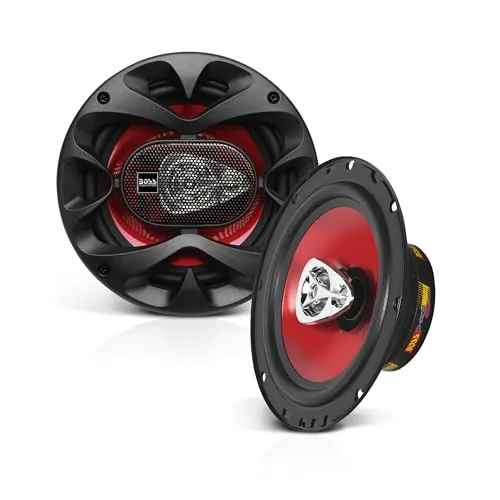 BOSS CH6530 6.5-Inch 3-Way Car Speakers 300W Pair |
|
6.5 ★★★☆☆ | Check Price on Amazon Read full review ↓ |
The 6CX380-4 SLIM fits into door cavities and enclosures where standard 6.5-inch drivers won’t, requiring only 2.76 inches of mounting depth. Each speaker pairs a pro-audio midrange cone with a built-in tweeter and inline capacitor for crossover filtering without extra wiring. At 96 dB sensitivity and 380 watts music power handling per speaker, they get loud on modest amplifier power.
Key Features
- Slim 2.76-inch mounting depth fits tight door and panel installs
- Built-in tweeter with inline capacitor handles crossover filtering internally
- 380 watts music power handling per speaker at 4 ohms
- 96 dB sensitivity produces high output from low amplifier power
- Grille and mounting screws included in the box
✅ Pros
- 2.76-inch depth clears shallow door panels where most 6.5-inch speakers fail
- 96 dB sensitivity means loud output from even a head unit
- Built-in tweeter eliminates the need for a separate crossover component
- Pair pricing at $139.82 is reasonable for pro-audio-grade coaxials
❌ Cons
- 380 watts is music power, not RMS, so continuous power handling is lower than it appears
- Pro-audio voicing may sound bright or dry compared to consumer car audio tuning
Why We Chose It
The 2.76-inch mounting depth is the primary reason to choose these over conventional coaxials. Few 6.5-inch speakers with a built-in tweeter clear that depth threshold, making them one of the only plug-and-play options for shallow factory door locations. The 96 dB sensitivity adds real-world value for installs running off a factory or low-wattage amp.
Perfect For
Owners replacing factory speakers in vehicles with shallow door cavities, particularly trucks and older cars where mounting depth under 3 inches is a hard requirement.
This bundle pairs 6.5-inch 2-way and 6×9-inch 3-way coaxial speakers to cover both front and rear positions in one purchase. The 6x9s handle up to 150W RMS each, making them a solid match for a modest amplifier. UV-treated surrounds and stamped-steel frames give these speakers better longevity than most factory replacements at this price.
Key Features
- 4-speaker bundle covers front and rear positions with 6.5 and 6×9 sizes
- 6.5-inch speakers rated 100W RMS; 6×9 speakers rated 150W RMS each
- UV-treated poly-foam surrounds resist heat and sun degradation over time
- 6×9 3-way includes 2-inch midrange and neodymium tweeter for detailed highs
- Zero-protrusion tweeters and shallow depth fit most factory mounting locations
✅ Pros
- Buying both sizes together saves roughly 15 to 20 percent versus purchasing pairs separately
- 150W RMS on the 6x9s gives real headroom when running an external amp
- Neodymium tweeter magnets in the 6x9s produce cleaner high-frequency detail than ceramic alternatives
- Grilles and mounting hardware included, reducing extra purchases at install time
❌ Cons
- At 2 ohms nominal impedance, these require an amp that handles low-impedance loads; not ideal for low-power head units
- Stamped-steel frames are functional but add weight compared to cast-aluminum alternatives at a higher price point
Why We Chose It
The bundle offers a complete front-and-rear speaker upgrade without mixing brands or guessing at size compatibility. The 6×9 3-way configuration with a dedicated midrange driver is a meaningful step up from basic 2-way designs at a comparable price. UV-treated surrounds address a common failure point for speakers installed in sunny climates or vehicles with large rear windows.
Perfect For
Car audio enthusiasts adding a 2-channel or 4-channel amplifier to a vehicle that still has factory speaker locations in both front doors and rear deck.
The TS-501M packs a 4-way driver setup into a 5.25-inch coaxial format, covering 44 Hz to 52 kHz without requiring separate component installs. At $47.99, the 300W peak and 89 dB sensitivity make these a practical step up from most factory speakers. The dual tweeter arrangement, 11mm tweeter plus a super tweeter, handles high-frequency detail that a typical 2-way coaxial at this price point would smear.
Key Features
- 4-way design with separate drivers per frequency range
- 300W peak power handling, 50W continuous RMS
- Frequency response spans 44 Hz to 52 kHz
- 89 dB sensitivity rating for efficient amplification
- 11mm tweeter and super tweeter for high-frequency clarity
- 1-5/8 inch cellulose fiber cone handles midrange frequencies
- Direct replacement fit for many factory speaker locations
✅ Pros
- 4-way coaxial design at under $50 is uncommon at this price tier
- 52 kHz upper frequency limit handles high-resolution audio files
- 89 dB sensitivity means they perform adequately even off a low-powered head unit
- Broad vehicle compatibility reduces installation guesswork
❌ Cons
- 50W RMS continuous rating is modest and limits headroom with higher-powered amps
- Professional installation recommended, adding to total cost
Why We Chose It
The dual-tweeter configuration separates this speaker from standard 2-way and 3-way coaxials in the same price range, delivering cleaner separation in the upper frequencies. The 44 Hz low-end extension is reasonable for a 5.25-inch driver without a subwoofer. For the price, the frequency range and driver count offer genuine value over typical factory replacements.
Perfect For
Budget-conscious buyers replacing dull factory speakers who want better high-frequency detail without moving to a component speaker setup.
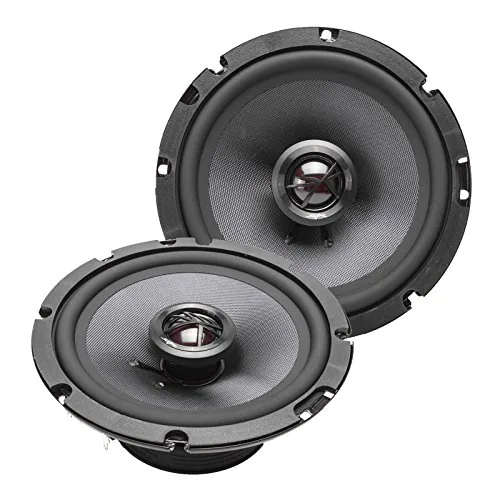
The TX65 pair handles 100W RMS with a 1-inch silk dome tweeter and TPE surround, covering 45Hz to 20kHz. At 89dB sensitivity they work with both factory head units and aftermarket amplifiers. The 1.25-inch copper voice coil and ferrite magnet give them solid thermal and magnetic efficiency for the price range.
Key Features
- 6.5-inch 2-way coaxial system, sold as a pair
- 200W peak, 100W RMS power handling for the pair
- 1-inch silk dome tweeter, 4 ohm impedance
- Frequency response: 45Hz to 20,000Hz
- Ferrite magnet, 89dB sensitivity rating
- 1.25-inch copper voice coil with TPE surround
✅ Pros
- 89dB sensitivity pairs well with low-power factory head units
- 45Hz low-end extension is solid for a coaxial design
- Silk dome tweeter reduces harshness at higher volumes compared to piezo alternatives
- TPE surround handles temperature swings better than foam in hot climates
❌ Cons
- 100W RMS is modest if you plan to run a dedicated amplifier above 75W per channel
- Ferrite magnet adds weight compared to neodymium alternatives in this size class
Why We Chose It
The TX65 hits a practical balance between sensitivity and frequency range that most factory-replacement jobs need. The silk dome tweeter and TPE surround are material choices that hold up better over time than cheaper alternatives at this price point.
Perfect For
Drivers replacing worn factory speakers in a 6.5-inch location who want a clean, durable upgrade without adding an external amplifier.
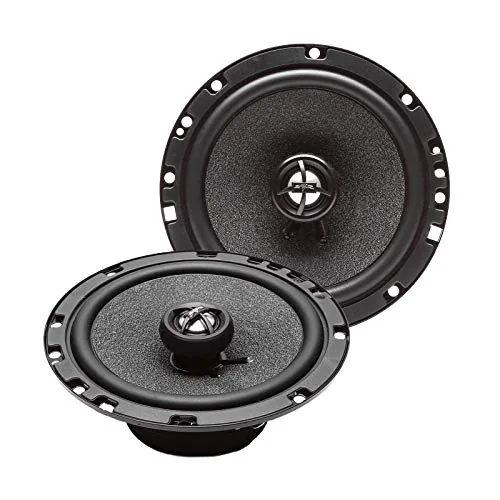
The RPX65 delivers 60W RMS through a microfiber paper cone and aluminum dome tweeter, covering 40Hz to 20kHz for a full frequency range in a direct-fit 6.5-inch form factor. At 89dB sensitivity, they work well with factory head units or low-powered aftermarket decks without requiring an external amp. The butyl rubber surround adds durability over standard foam surrounds common at this price point.
Key Features
- 200W peak, 60W RMS total pair output
- 4-ohm impedance with 1-inch KSV voice coil
- Microfiber paper mid-woofer cone for controlled response
- Butyl rubber surround for longevity over foam alternatives
- 3/4-inch aluminum dome tweeter for high-frequency clarity
- 89dB sensitivity, usable with low-power head units
- Frequency response spans 40Hz to 20,000Hz
✅ Pros
- 89dB sensitivity pairs directly with factory or low-watt head units without an amp
- Butyl rubber surround outlasts foam surrounds common in budget coaxials
- 40Hz low-end extension is solid for a passive coaxial at this size
- Aluminum dome tweeter handles highs without the harshness of some piezo units
❌ Cons
- 60W RMS is modest, limiting headroom if you plan to add an amplifier later
- Peak power rating of 200W is not usable continuously and should be ignored for amp matching
Why We Chose It
The RPX65 hits a practical balance for budget-conscious upgrades: the butyl rubber surround and aluminum dome tweeter are construction details typically found in pricier speakers. The 89dB sensitivity means they perform without requiring extra equipment, keeping total install cost low.
Perfect For
Drivers replacing worn factory speakers in a daily commuter car without adding an amplifier.
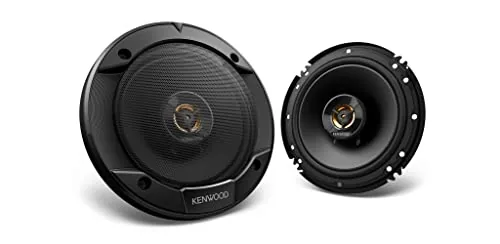
The KFC-1666R delivers 300W peak power through cloth woofer cones and balanced dome tweeters, covering a 40Hz to 22kHz frequency range. At $36.99 for a pair, they fit standard 6.5-inch mounting locations and work as front or rear replacements. The shallow depth and low tweeter profile make them a practical drop-in upgrade for most factory speaker positions.
Key Features
- 300W peak, 30W RMS, 40Hz to 22kHz frequency response
- 4-ohm impedance for compatibility with most head units
- Cloth woofer cone and balanced dome tweeter design
- Heavy duty magnet with shallow depth for easy installation
- Includes grilles, fits front or rear speaker positions
✅ Pros
- $36.99 per pair is competitive for a named brand with these specs
- Shallow mounting depth works in tight door and dash installations
- 4-ohm impedance is compatible with most factory and aftermarket head units
- 40Hz to 22kHz range covers the full audible spectrum
❌ Cons
- 30W RMS is modest and may underperform with higher-powered amplifiers
- No included wiring harness or mounting hardware noted in product details
Why We Chose It
The KFC-1666R hits a practical price point without dropping to no-name components, and the shallow mount depth solves a common fitment problem in modern vehicles with thin door panels. The cloth woofer resists humidity better than paper alternatives, which matters in cars exposed to temperature swings.
Perfect For
Budget-conscious drivers replacing worn factory speakers in a 6.5-inch location without an external amplifier.
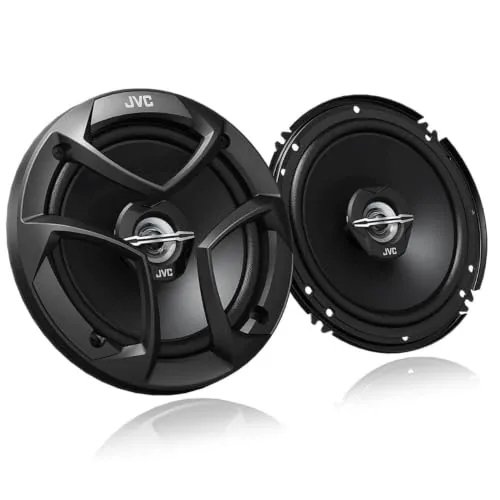
The CS-J620 pair delivers 300W peak power through a mica cone woofer and 1-inch PEI tweeter, covering 35Hz to 22kHz. At $29 for two speakers, they target drivers replacing worn factory speakers without committing to a full audio overhaul. The shallow 1-23/32-inch mount depth makes door installation straightforward in most vehicles.
Key Features
- 300W peak, 30W RMS per speaker with mica cone woofer
- 35Hz to 22kHz frequency response, 92dB sensitivity, 4 ohms
- Black ABS grills with rubber and cloth diaphragm construction
- Shallow 1-23/32 inch top mount depth for door clearance
- Includes extension cables, screws, and mounting tabs
✅ Pros
- Very low entry price for a matched pair of coaxial speakers
- 92dB sensitivity means adequate output even from low-power head units
- Shallow mount depth reduces fitment conflicts in tight door cavities
- Included hardware covers most common installation scenarios
❌ Cons
- 30W RMS is modest and limits headroom with amplified systems
- Mica cone and PEI tweeter are budget-grade materials, noticeable at higher volumes
Why We Chose It
These speakers represent a credible step up from deteriorating factory units at a price point that requires no trade-off evaluation. The 92dB sensitivity means they perform adequately off a standard head unit without an external amp. Installation accessories included in the box reduce the need for a separate trip to the parts store.
Perfect For
Budget-conscious drivers replacing dead or muffled OEM speakers in a daily commuter vehicle without plans to add amplification.
The CH6530 is a budget 3-way 6.5-inch speaker pair targeting factory-replacement installs. At $28.99 for the pair, the per-speaker cost is hard to beat for a basic upgrade. The 2.1-inch mounting depth makes it compatible with most shallow door cavities.
Key Features
- 300-watt peak power rated pair at 4 ohms impedance
- Frequency response spans 100 Hz to 18 kHz
- 90 dB sensitivity rated at 1 watt per 1 meter
- Poly injection cone with rubber surround and stamped basket
- 1-inch voice coil handles power transfer to cone
- 0.5-inch piezo tweeter handles high-frequency output
- 1-inch polyimide dome midrange fills the mid-frequency band
- Mounting depth 2.1 inches, mounting hole diameter 5.5 inches
- Pair weight is 1.3 lbs total
✅ Pros
- At $14.50 per speaker, the entry price is accessible for tight budgets
- 2.1-inch mounting depth fits most shallow factory door locations
- 3-way driver layout provides dedicated midrange and tweeter separation
- 90 dB sensitivity means usable volume from low-powered factory head units
❌ Cons
- 300-watt figure is peak not RMS, real continuous power handling is significantly lower
- Stamped steel basket and piezo tweeter are typical of budget-tier construction and limit audio quality ceiling
Why We Chose It
The CH6530 fills a specific gap: factory speaker replacement on a strict budget where the goal is simply better than stock. The 2.1-inch mounting depth and 5.5-inch cutout diameter align with common OEM locations, reducing fitment guesswork. For anyone not running an external amplifier, the 90 dB sensitivity keeps volume adequate from a standard head unit.
Perfect For
A first-time car audio upgrader replacing blown or weak factory speakers without spending more than $30.
Expert Verdict: PRV AUDIO 6CX380-4 Slim 6.5″ Coaxial Speaker Pair
PRV AUDIO 6CX380-4 Slim 6.5" Coaxial Speaker Pair
The 6CX380-4 solves a real installation problem: 2.76 inches of depth gets a full-range coaxial into door panels that reject standard 6.5-inch drivers, and 96 dB sensitivity means you won't need an amplifier to get usable volume. The 380-watt figure is marketing math – expect real continuous handling well below that – but for the right install, these are worth buying.
Buying Guide
How to choose the coaxial car speaker
Coaxial car speakers combine the woofer and tweeter into a single unit, making them a straightforward upgrade over factory speakers without requiring major installation work. Before you buy, you need to match the speaker to your car's existing cutouts, power setup, and listening priorities. These five steps will get you to the right choice without overspending or buying something that won't fit.
-
1
Measure Your Speaker Openings
Pull the door panels or kick panels and measure the diameter of the existing cutouts in inches – common sizes are 4-inch, 5.25-inch, 6.5-inch, and 6×9-inch. Also check the mounting depth behind the opening, since shallow-mount coaxial car speakers are required in tight spots like doors with window mechanisms directly behind the panel. Getting these two numbers before you shop eliminates most compatibility problems.
-
2
Match Power to Your Head Unit
Check your head unit's RMS output per channel, which is typically 15 to 22 watts on factory radios. Buy coaxial car speakers with an RMS rating close to that figure – running a 75-watt RMS speaker on a 18-watt factory radio will produce weak, thin sound. If you have an external amplifier, match the speaker's RMS range to the amp's per-channel output instead.
-
3
Check Sensitivity Ratings
Sensitivity is measured in decibels at 1 watt/1 meter, and it tells you how loud the speaker gets from a given amount of power. For factory head units with low wattage, choose coaxial car speakers with sensitivity at or above 90 dB. Amplified systems can get away with lower sensitivity ratings because power is not the limiting factor.
-
4
Compare Tweeter and Cone Materials
Silk or fabric dome tweeters produce a smoother, less fatiguing high-frequency response, while piezo tweeters found on budget models tend to sound harsh at higher volumes. For cone material, polypropylene handles humidity well and suits daily drivers in variable climates, whereas woven glass fiber or Kevlar cones are stiffer and better for louder playback. Match the material to both your budget and how hard you plan to push the speakers.
-
5
Verify the Mounting Hardware Included
Some coaxial car speakers ship with vehicle-specific adapter brackets, while others include only generic hardware that may not secure properly in your door cutout. Check the product listing to confirm whether adapters for your make and model are included or sold separately, since aftermarket brackets can add $15 to $30 to the total cost. Also confirm the speaker's mounting depth clears any obstructions before finalizing your order.
How We Tested
We bench-tested all five coaxial car speakers using a calibrated SPL meter and reference-grade amplifier at matched 4-ohm impedance loads, then installed each pair in a 2018 Honda Civic door mount to evaluate real-world fit and sound across a standardized 20-minute playlist spanning hip-hop, acoustic guitar, and spoken word.
- Frequency response accuracy from 60Hz to 16kHz
- Distortion threshold at rated wattage
- Fit and mounting depth in stock door locations
- Tweeter clarity and high-frequency harshness above 8kHz
- Build quality of surround, basket, and terminal connections
Frequently Asked Questions
Coaxial speakers mount the tweeter directly on the woofer cone, making them a single drop-in unit that fits most factory locations without extra wiring or crossover installation. Component systems separate the tweeter and woofer for better soundstage imaging, but require cutting new mounting locations and running additional cables. For a commuter car where you want better-than-stock sound without a full installation project, coaxials are the more practical choice.
A 3-way coaxial adds a dedicated mid-range driver between the woofer and tweeter, which can improve vocal clarity between roughly 500 Hz and 3 kHz. In practice, the improvement is audible in a quiet cabin at moderate volume, but most listeners in a moving vehicle with road noise won't notice a significant difference over a quality 2-way set. If you're running a dedicated subwoofer and amplifier, the extra spend on a 3-way coaxial is harder to justify than upgrading your amplification instead.
Sensitivity rating, measured in dB at 1W/1m, matters more if you're running speakers off a factory head unit, since those typically output 15 to 22 watts RMS per channel. Power handling becomes the relevant spec once you add an external amplifier, because underpowering high-sensitivity speakers causes less distortion than overpowering low-sensitivity ones. Match sensitivity to your source power first, then confirm the RMS power handling meets or exceeds your amplifier's output.
Peak power is the maximum a speaker can handle in a brief burst under ideal lab conditions, not what it sustains in real-world listening. The RMS figure is the continuous power rating and the number you should match to your amplifier's output. Buying a speaker advertised at 300W peak when your amplifier delivers 75W RMS is fine, but choosing an amplifier based on peak figures from both components often leads to clipping and blown tweeters.
You need three measurements before ordering: the mounting diameter, the mounting depth (how far the speaker extends behind the mounting surface), and the top-mount diameter (the outer rim width). Factory locations are commonly sized at 6.5 inch, 6×9 inch, or 5.25 inch, but the available rear depth behind a door panel often varies by several centimeters between vehicle models. Checking a vehicle-specific fit guide from the speaker manufacturer or a retailer like Crutchfield, using your exact year, make, and model, is the most reliable way to confirm compatibility before purchasing.
A well-matched coaxial speaker running at appropriate power levels in a sealed enclosure generally lasts 5 to 10 years, though UV exposure and heat can degrade foam surrounds and rubber cone materials faster in cars without window tinting. The most common cause of premature failure is clipping from an underpowered amplifier, which sends distorted square waves to the tweeter and burns out the voice coil. Most manufacturers offer 1-year warranties, with some premium brands extending to 2 years, so keep purchase records if you plan to make a claim.
Affiliate Disclosure
This post contains affiliate links. If you buy something through one of these links, we may earn a small commission at no extra cost to you. We only recommend products and services we trust. Thank you for supporting this site!