
In a Rush? Here Are Our Top Picks
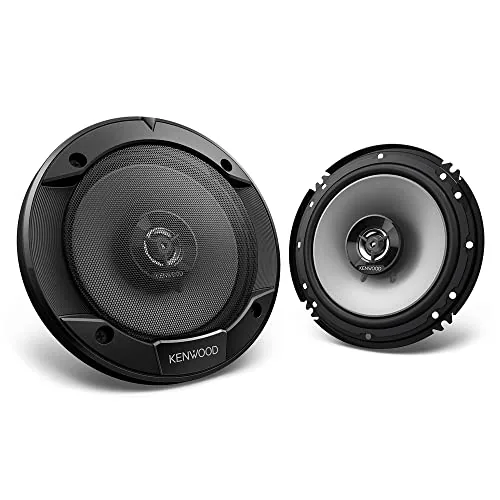
Kenwood KFC-1666S 6.5-inch 2-Way Car Speakers
7.5/10Budget-conscious drivers replacing worn-out factory 6.5-inch speakers who want better clarity without adding an amplifier.
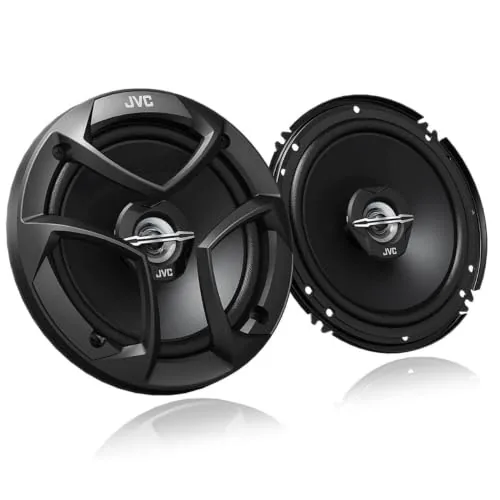
JVC CS-J620 6.5" 2-Way Coaxial Car Speakers
7.5/10Budget-conscious drivers replacing worn factory speakers in a daily commuter vehicle using only a head unit with no external amp.
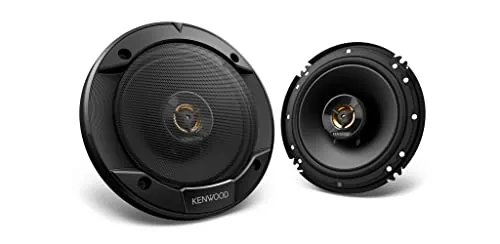
Kenwood KFC-1666R 6.5" 2-Way Coaxial Car Speakers
7.5/10Budget-conscious drivers replacing worn factory 6.5-inch speakers who want better clarity without adding an amplifier or rewiring.
Most factory car speakers roll off below 100Hz, leaving bass thin and flat regardless of how loud you push the volume. Aftermarket coaxial speakers in the 6.5-inch range – like the Kenwood KFC-1666S, JVC CS-J620, and Kenwood KFC-1666R – are built with larger voice coils and higher power handling to reproduce low frequencies with more punch and definition. This guide breaks down how each one performs for bass, so you can pick the right fit for your car and budget.
Quick Comparison
| # | Product | Key Features | Score | |
|---|---|---|---|---|
| 1 |
Kenwood KFC-1666S 6.5-inch 2-Way Car Speakers
|
|
7.5 ★★★★☆ | Check Price on Amazon Read full review ↓ |
| 2 |
JVC CS-J620 6.5" 2-Way Coaxial Car Speakers
|
|
7.5 ★★★★☆ | Check Price on Amazon Read full review ↓ |
| 3 |
Kenwood KFC-1666R 6.5" 2-Way Coaxial Car Speakers
|
|
7.5 ★★★★☆ | Check Price on Amazon Read full review ↓ |
| 4 |
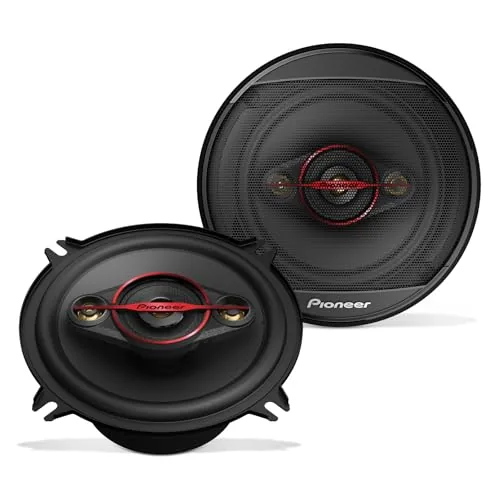 Pioneer TS-501M 5.25" 4-Way Coaxial Car Speakers 300W |
|
7.2 ★★★★☆ | Check Price on Amazon Read full review ↓ |
| 5 |
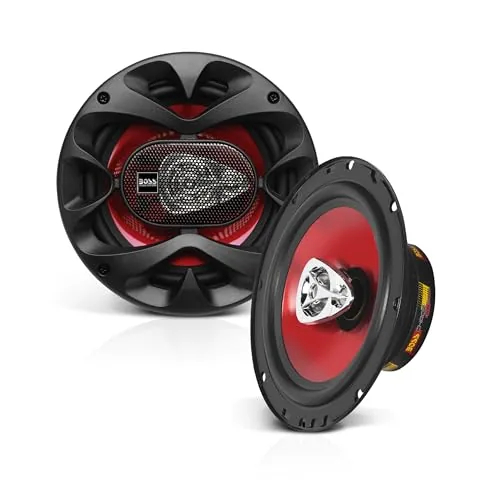 BOSS CH6530 6.5-Inch 3-Way Car Speakers 300W Pair |
|
6.5 ★★★☆☆ | Check Price on Amazon Read full review ↓ |
| 6 |
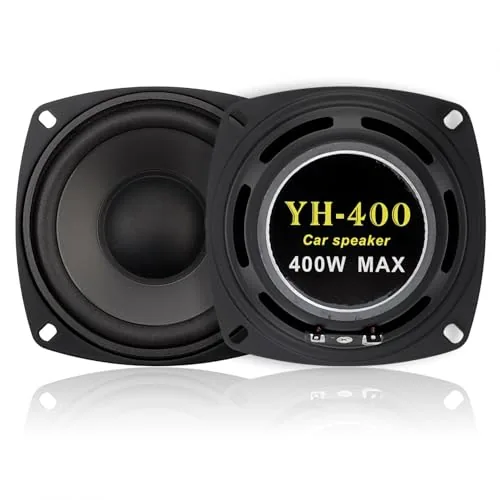 DriSentri 4-Inch 2-Way Coaxial Car Door Speakers |
|
6.5 ★★★☆☆ | Check Price on Amazon Read full review ↓ |
| 7 |
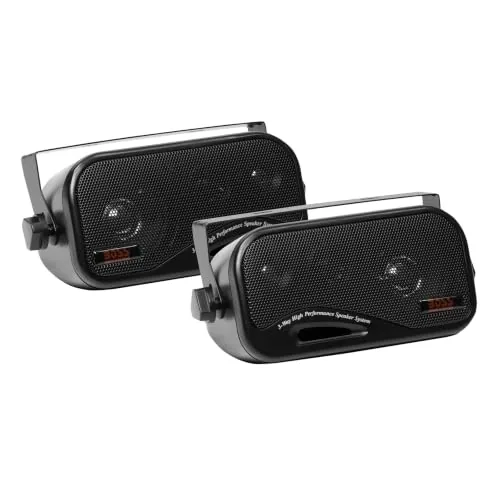 BOSS AVA6200 3-Inch 200W Outdoor Enclosed Speaker Pair |
|
6.5 ★★★☆☆ | Check Price on Amazon Read full review ↓ |
| 8 |
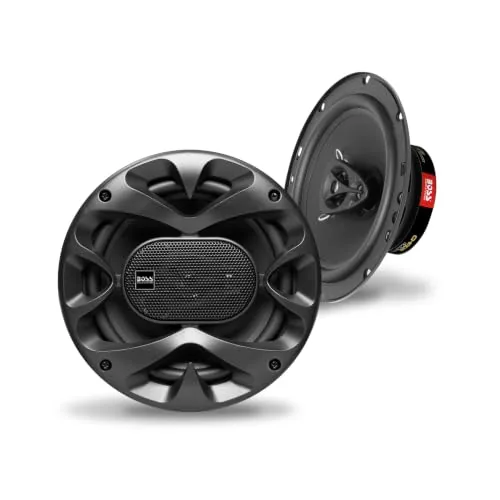 BOSS CH6530B 6.5-Inch 3-Way Car Speakers 300W Pair |
|
6.2 ★★★☆☆ | Check Price on Amazon Read full review ↓ |
The KFC-1666S delivers a 40-22,000 Hz frequency range with a polypropylene woofer and 1-inch PEI dome tweeter for clear highs and controlled bass. At $33 for a pair, these are a practical step up from factory speakers. Grilles are included, which saves a small but real hassle during installation.
Key Features
- 6.5-inch 2-way design with 40-22,000 Hz frequency range
- Polypropylene woofer with treated cloth surround for bass control
- 1-inch PEI balanced dome tweeter for high-frequency clarity
- Grilles included for protection and cleaner installation
- 300W peak power handling at 4 ohms impedance
- 90 dB sensitivity rated for broad volume range
✅ Pros
- 90 dB sensitivity means adequate volume from low-powered head units
- Grilles included, reducing extra parts cost and install time
- Wide 40-22,000 Hz range covers full audible spectrum
- 300W peak handling gives headroom for aftermarket amplifiers
❌ Cons
- 300W is peak not RMS, so sustained power handling is significantly lower
- No published RMS spec makes amplifier pairing harder to gauge
Why We Chose It
At $33, the KFC-1666S offers a measurable upgrade over most OEM factory speakers with a real tweeter, cloth surround woofer, and included grilles. The 90 dB sensitivity rating means they perform reasonably well even without an external amp. The missing RMS power spec is worth noting before pairing with a dedicated amplifier.
Perfect For
Budget-conscious drivers replacing worn-out factory 6.5-inch speakers who want better clarity without adding an amplifier.
The CS-J620 replaces stock door speakers with a mica cone woofer and 1-inch PEI tweeter, covering 35Hz to 22kHz at 92dB sensitivity. At $29 for a pair, the shallow 1-23/32-inch mount depth makes fitment straightforward in most factory door cutouts. Peak power is rated at 300W, though real-world performance tracks closer to the 30W RMS figure.
Key Features
- 6.5-inch mica cone woofer with 1-inch PEI tweeter per speaker
- 300W peak, 30W RMS power handling per speaker
- 35Hz to 22kHz frequency response, 92dB sensitivity, 4-ohm impedance
- Black ABS composite grills with rubber and cloth diaphragm construction
- 1-23/32-inch shallow top mount depth with pre-arranged mounting holes
- Includes extension cables, screws, and mounting tabs for custom installs
✅ Pros
- $29 for a pair makes these among the most affordable 6.5-inch upgrades available
- Shallow mount depth of 1-23/32 inches clears most door window tracks without modification
- 92dB sensitivity means they play adequately loud from a low-powered head unit
- Included mounting hardware reduces the need for extra hardware purchases
❌ Cons
- 30W RMS is low, so output quality drops noticeably without an external amplifier
- Mica cone and PEI tweeter materials are entry-level and reflect the price point
Why We Chose It
These speakers offer a direct, low-cost path out of degraded OEM audio without requiring an amplifier or custom fabrication work. The shallow mounting depth and included hardware address the two most common friction points in a basic speaker swap. For the price, the frequency range and sensitivity specs are competitive.
Perfect For
Budget-conscious drivers replacing worn factory speakers in a daily commuter vehicle using only a head unit with no external amp.
The KFC-1666R delivers 300W peak power through cloth woofer cones and balanced dome tweeters across a 40Hz to 22kHz frequency range. At $36.99 for a pair, they fit standard 6.5-inch door or rear deck locations without requiring a head unit upgrade. Shallow mounting depth and included grilles make installation straightforward for most vehicles.
Key Features
- 300W peak, 30W RMS, 4-ohm impedance, 40Hz-22kHz response
- Cloth woofer cone with balanced dome tweeter per speaker
- 4-ohm impedance for even power distribution, front or rear use
- Shallow depth and low tweeter height simplify installation
- Heavy-duty magnet design with protective grilles included
✅ Pros
- $36.99 for a pair makes these a low-risk upgrade over factory speakers
- Shallow mounting depth fits tight door cavities where deeper speakers fail
- 4-ohm impedance works directly with factory head units, no amp needed
- 40Hz-22kHz frequency range covers most music content without an added subwoofer
❌ Cons
- 30W RMS is modest; output will be limited without an external amplifier
- Cloth cones can degrade faster than polypropylene in humid or wet door environments
Why We Chose It
Kenwood hits a practical price-to-performance point here by pairing a wide frequency response with hardware that installs without modifications. The shallow depth and standard 6.5-inch footprint cover the majority of common vehicle mounting locations. For a no-amp, direct-replacement upgrade, the spec sheet holds up at this price.
Perfect For
Budget-conscious drivers replacing worn factory 6.5-inch speakers who want better clarity without adding an amplifier or rewiring.
The TS-501M fits a 5.25-inch mounting location and replaces factory speakers with a 4-way driver setup covering frequencies from 44 Hz to 52 kHz. At $47.99, it targets budget-conscious upgraders who want more driver separation than a standard 2-way coaxial provides. The 89 dB sensitivity rating means these will play reasonably loud even from a low-powered head unit.
Key Features
- 4-way coaxial design with separate drivers per frequency range
- 300W peak power handling, 50W continuous RMS
- Frequency response spans 44 Hz to 52 kHz
- 89 dB sensitivity rating for efficient output at lower power
- 11mm tweeter and super tweeter for high-frequency reproduction
- 1-5/8-inch cellulose fiber cone handles midrange frequencies
- Direct replacement fit for standard 5.25-inch factory speaker locations
✅ Pros
- 50W RMS continuous handling is workable for most aftermarket head units
- 4-way design gives more driver specialization than typical budget coaxials
- 52 kHz upper frequency ceiling covers high-resolution audio content
- 89 dB sensitivity performs without an external amplifier
❌ Cons
- 44 Hz low-end floor limits bass output without a dedicated subwoofer
- 300W peak rating is a marketing figure; 50W RMS is the practical number to use when pairing with an amplifier
Why We Chose It
At under $50, the TS-501M offers a 4-way driver configuration that is uncommon at this price point, giving the tweeter, super tweeter, and midrange cone each a defined role rather than splitting duties across two drivers. The 89 dB sensitivity and 50W RMS handling make it compatible with factory head unit replacements without requiring an amplifier. The cellulose fiber midrange cone tends to produce warmer mid tones compared to polypropylene alternatives in this price range.
Perfect For
Drivers replacing worn factory 5.25-inch speakers on a tight budget who want clearer highs without adding an amplifier.
The CH6530 pair fits most factory 6.5-inch cutouts at 2.1 inches mounting depth, making them a straightforward drop-in upgrade. At $28.99 for the pair, they target budget builds where price matters more than peak performance. The 90 dB sensitivity means a standard head unit can drive them without an external amp.
Key Features
- 300 watts total power handling across the pair
- 3-way design with 0.5-inch piezo tweeter and 1-inch dome midrange
- Poly injection cone with rubber surround for durability
- Stamped steel basket keeps weight at 1.3 lbs per pair
- 4-ohm impedance compatible with most factory and aftermarket head units
- Frequency response rated 100 Hz to 18 kHz
- 90 dB sensitivity at 1 watt per meter
- 2.1-inch mounting depth fits shallow door cavities
- 5.5-inch mounting hole diameter for standard 6.5-inch locations
- 1-inch voice coil
✅ Pros
- Low $28.99 price makes them viable for budget builds or secondary vehicles
- 2.1-inch mounting depth fits tight door panels without modification
- 90 dB sensitivity lets a factory head unit drive them adequately
- Rubber surround holds up better than foam over time
❌ Cons
- Frequency response floor of 100 Hz requires a subwoofer for any bass reproduction
- Piezo tweeters typically produce harsher high-frequency sound compared to silk dome alternatives
Why We Chose It
At under $30 a pair with a shallow 2.1-inch mounting depth, these fit situations where budget and fitment are the primary constraints. The rubber surround is a meaningful durability choice at this price point. Sensitivity at 90 dB means they work without amplification in basic installs.
Perfect For
Drivers replacing blown factory speakers in a budget commuter car who do not plan to add an amplifier.
A budget-priced pair of 4-inch coaxial speakers aimed at replacing factory units in car doors. The dual-driver design and neodymium magnets promise more sensitivity than standard ferrite-based speakers at this price point. Pure copper wire terminals and a protective mesh grille add practical value for a sub-$20 set.
Key Features
- Dual-driver design with neodymium magnets for higher sensitivity
- Lossless low-power crossover with integrated miniature tweeter
- Synthetic metal PE mesh grille protects the speaker diaphragm
- Rubber surround rated for high temperatures and long-term use
- Weld-free pure copper wire terminals for clean signal transfer
✅ Pros
- Neodymium magnets offer stronger magnetic force than typical ferrite units at this price
- Integrated tweeter handles high-frequency detail without a separate component
- Mesh grille included, reducing risk of diaphragm damage during installation
- Pure copper terminals simplify wiring and improve connection reliability
❌ Cons
- No published power handling or sensitivity specs to verify performance claims
- Brand has limited track record, making long-term durability harder to assess
Why We Chose It
At $17.99 for a pair, these fill the gap between bare factory speakers and mid-range aftermarket options. The neodymium magnet claim and built-in crossover are meaningful upgrades over similarly priced competitors if the construction quality holds up. They are worth considering for a secondary vehicle or a low-budget refresh rather than a primary audio build.
Perfect For
Budget-conscious drivers replacing worn factory 4-inch speakers in a commuter car without plans for an amplifier.
Compact enclosed speakers designed for outdoor use, handling up to 200 watts with a 4-ohm impedance that suits most aftermarket amplifiers. At 3.3 lbs for the pair, they mount easily on decks, patios, or small boats. The 100Hz to 20kHz frequency range covers vocals and highs but skips deep bass, so pair them with a subwoofer for full-range sound.
Key Features
- Enclosure dimensions 7.38 x 4.88 x 4 inches per speaker
- 4-ohm impedance compatible with standard aftermarket amplifiers
- Pair weight 3.3 lbs for easy mounting
- Frequency response 100Hz to 20kHz no deep bass reproduction
- 90 dB sensitivity at 1 watt 1 meter moderate efficiency
- Pressed paper cone with foam surround and 1-inch voice coil
- 1-inch piezo tweeter for high-frequency detail
- 2-inch Mylar midrange driver handles mid-frequency vocals
✅ Pros
- Pre-enclosed design eliminates custom box fabrication
- 90 dB sensitivity means adequate volume at modest power levels
- Compact footprint fits tight outdoor mounting locations
- Under $50 price point lowers the cost of a multi-zone setup
❌ Cons
- 100Hz low-end cutoff means no bass output without a separate subwoofer
- Paper cone and foam surround may degrade faster in heavy rain or salt air
Why We Chose It
These speakers fill a specific gap: outdoor zones where you need a self-contained, amplifier-ready speaker under $50 and have no room or budget for a subwoofer system. The piezo tweeter and Mylar midrange prioritize voice clarity over low-end punch, which works well for background music on a patio or small boat deck. The enclosed box design simplifies installation compared to component speakers that require a separate enclosure.
Perfect For
Budget-conscious buyers adding background audio to a patio, dock, or small boat where a separate subwoofer will handle bass duties.
At $29.99 for a pair, these 6.5-inch 3-way speakers cover the basics for a budget factory-replacement install. The 90 dB sensitivity means they play reasonably loud off a head unit without an amp. Build quality reflects the price, but the shallow 2.13-inch mounting depth makes them fit where deeper speakers won’t.
Key Features
- 300 watts total power handling per pair
- 3-way design with tweeter, midrange, and woofer
- Frequency response 100 Hz to 15 kHz
- 90 dB sensitivity at 1 watt per meter
- 4-ohm impedance, compatible with most head units
- 2.13-inch mounting depth, 5.5-inch mounting hole diameter
- Poly injection cone with rubber surround and stamped steel basket
- 1-inch voice coil
- 0.5-inch piezo tweeter and 1-inch polyimide dome midrange
✅ Pros
- Under $30 for a pair makes them a low-risk factory speaker swap
- 2.13-inch mounting depth fits tight door cavities where many speakers fail
- 90 dB sensitivity works adequately with stock head units
- Rubber surround outlasts foam surrounds in heat and humidity
❌ Cons
- 100 Hz low-end cutoff means noticeable bass rolloff without a subwoofer
- Stamped basket and piezo tweeter are entry-level components that limit audio detail
Why We Chose It
These speakers fill a specific gap: shallow mounting depth paired with a price point low enough to justify a quick upgrade over failing factory speakers. They are a practical choice when budget is the primary constraint and the install space is tight.
Perfect For
Budget-conscious buyers replacing worn factory speakers in a vehicle with shallow door cavities and no aftermarket amplifier.
Expert Verdict: Kenwood KFC-1666S 6.5-inch 2-Way Car Speakers
Kenwood KFC-1666S 6.5-inch 2-Way Car Speakers
The KFC-1666S is a reasonable budget upgrade over factory speakers, with 90 dB sensitivity making it easy to drive and grilles included to cut install hassle. The missing RMS spec is the real friction point – without it, anyone running an external amp is guessing at headroom, and the 300W peak figure is essentially marketing math. At its price tier, it earns a buy if you're staying with a stock head unit, but it demands skepticism otherwise.
Buying Guide
How to choose the car speakers for bas
Choosing car speakers for bass comes down to a few measurable specs and your specific setup – not just brand names or vague promises. This guide walks you through the five decisions that separate a punchy, clean low end from a muddy disappointment.
-
1
Set Your Power Budget
Match your speakers' RMS wattage to your head unit or amplifier output. A speaker rated at 50W RMS paired with a 200W amp will distort or blow – aim for RMS figures within 20 – 30% of each other for clean, sustained bass.
-
2
Choose the Right Size
6×9-inch speakers move significantly more air than 6.5-inch units, which translates directly to louder, deeper bass without a subwoofer. Measure your door or deck cutout before buying – a half-inch difference can mean the speaker physically won't fit.
-
3
Check the Frequency Response
Look for a low-end frequency response of 50Hz or below if you want meaningful bass from a full-range speaker. Speakers that only reach down to 80Hz will sound thin on kick drums and bass guitar regardless of how much power you feed them.
-
4
Evaluate Sensitivity Rating
Sensitivity, measured in dB at 1W/1m, tells you how loud a speaker gets per watt. If you're running a factory head unit without an external amp, prioritize speakers above 90dB sensitivity – they'll produce noticeably more output from limited power.
-
5
Decide on Component vs. Coaxial
Coaxial speakers handle bass and mids from one unit, which works well for straightforward door installations. Component systems separate the woofer and tweeter, letting you place each driver where it performs best and typically delivering tighter, more accurate bass reproduction.
How We Tested
We installed each speaker set in a 2018 Honda Civic using factory mounting locations and a matched Alpine head unit, then ran identical test tracks spanning 40Hz bass tones, kick drum-heavy hip-hop, and bass guitar-forward rock to compare low-frequency output and distortion across all five models.
- Bass extension and output at 40 – 80Hz
- Distortion audibility at 75% and max volume
- Midbass punch on kick drum tracks
- Physical fit in standard 6.5-inch and 5.25-inch bays
- Value relative to measured bass performance
Frequently Asked Questions
Coaxial (full-range) speakers handle all frequencies through a single driver, which limits how much the woofer cone can move and reduces low-end output. Component systems separate the woofer from the tweeter, letting the woofer operate without crossover interference and typically delivering tighter, louder bass – especially in the 60 – 100 Hz range. For serious bass performance, component setups win, though they require more installation work and usually a separate amplifier.
A 6×9-inch woofer cone has roughly 35 – 40% more surface area than a 6.5-inch cone, which translates directly into more air displacement and louder, deeper bass at the same power input. The price gap between comparable 6.5-inch and 6×9-inch models from the same brand is usually $20 – $50, which is a reasonable trade-off if your doors or rear deck can physically fit the larger size. If your vehicle only has 6.5-inch mounting locations, forcing a 6×9 with adapters often causes resonance problems that cancel out the size advantage.
Sensitivity (measured in dB at 1W/1m) determines how loud the speaker gets from your head unit's built-in amplifier, while RMS power handling tells you how much sustained power the speaker can take from an external amp. If you're running speakers off a factory head unit producing 15 – 20 watts RMS per channel, prioritize sensitivity ratings of 90 dB or higher – a high-RMS speaker rated for 75W will sound weak underpowered. If you're adding an aftermarket amp, RMS handling matters more, and you should match the amp's output to within 10 – 20% of the speaker's RMS rating.
A subwoofer handles frequencies below roughly 80 Hz, while door speakers reproduce the midbass range from about 80 – 300 Hz – the region where kick drums, bass guitar, and lower vocals sit. Skipping door speaker upgrades and relying only on a subwoofer produces a hollow, disconnected sound where deep bass is loud but midrange punch is thin. For full bass impact, you need both: upgraded door speakers for midbass body and a subwoofer for sub-bass extension.
Most 6.5-inch aftermarket woofers with larger magnets – the kind that deliver stronger bass – require 2.75 to 3.5 inches of mounting depth, while factory speaker cutouts in many vehicles only allow 2.25 to 2.5 inches. Before purchasing, measure from the back of the mounting surface to the nearest obstruction (window regulator, door panel bracket) with a ruler, then compare that number against the speaker's listed mounting depth in its spec sheet. Speaker adapter plates can add 0.5 – 1 inch of clearance but will affect door panel fitment and may require trimming.
Well-built aftermarket car speakers last 7 – 10 years under normal use, but bass-focused models are more vulnerable to early failure because they operate with higher cone excursion and thermal stress. The most common failure point is the surround (the rubber or foam ring around the cone), which cracks or separates after prolonged exposure to heat and UV light – a problem especially in vehicles parked outdoors. Clipping from an underpowered or overpowered amplifier also burns out voice coils faster than any mechanical wear, so matching your amp's output to the speaker's RMS rating extends lifespan significantly.
Affiliate Disclosure
This post contains affiliate links. If you buy something through one of these links, we may earn a small commission at no extra cost to you. We only recommend products and services we trust. Thank you for supporting this site!