
In a Rush? Here Are Our Top Picks
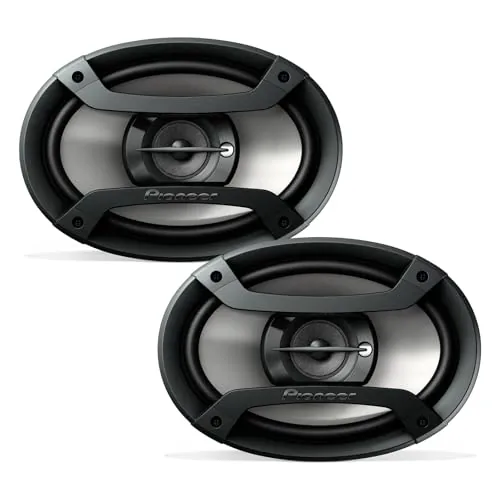
Pioneer TS-F6935R 6×9 3-Way Coaxial Speakers
7.8/10Drivers replacing blown or dull factory speakers on a tight budget who want better frequency range without adding an amplifier.
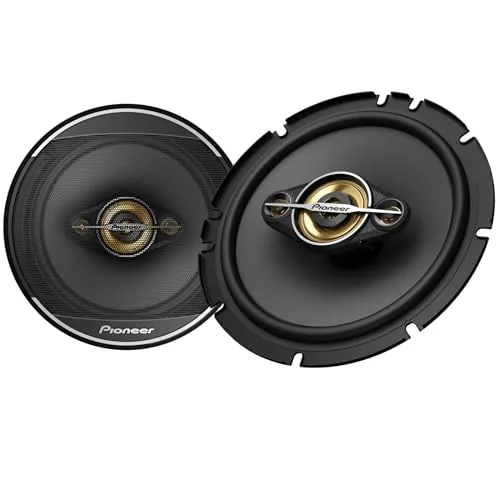
Pioneer TS-A1681F 6.5" 4-Way Coaxial Speakers 350W
7.8/10Drivers replacing worn or thin-sounding factory speakers in a 6.5-inch location using only the stock head unit.
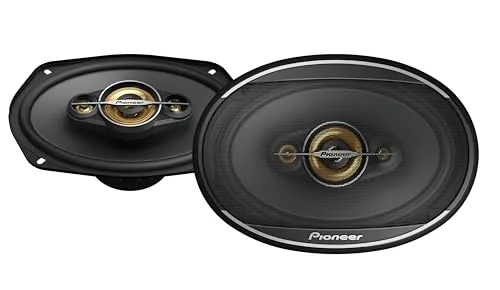
Pioneer TS-A6971F 6×9 4-Way Coaxial Speakers 600W
7.8/10Drivers replacing worn or thin-sounding factory 6×9 speakers who want a direct-fit upgrade powered by a stock head unit.
Replacing factory speakers is one of the fastest ways to improve your car’s audio without touching the head unit or amplifier, and you don’t need to spend big to hear a real difference. The three Pioneer models reviewed here – the TS-F6935R, TS-A1681F, and TS-A6971F – all land under $100 and cover the most common fitment sizes, 6.5-inch and 6×9, so there’s a likely match for your vehicle regardless of make or model. This guide breaks down how each one performs, where it falls short, and which buyer each one actually suits.
Quick Comparison
| # | Product | Key Features | Score | |
|---|---|---|---|---|
| 1 |
Pioneer TS-F6935R 6×9 3-Way Coaxial Speakers
|
|
7.8 ★★★★☆ | Check Price on Amazon Read full review ↓ |
| 2 |
Pioneer TS-A1681F 6.5" 4-Way Coaxial Speakers 350W
|
|
7.8 ★★★★☆ | Check Price on Amazon Read full review ↓ |
| 3 |
Pioneer TS-A6971F 6×9 4-Way Coaxial Speakers 600W
|
|
7.8 ★★★★☆ | Check Price on Amazon Read full review ↓ |
| 4 |
 Pioneer TS-A6881F 6×8 4-Way Coaxial Speakers 350W |
|
7.8 ★★★★☆ | Check Price on Amazon Read full review ↓ |
| 5 |
 DS18 PRO-GM6.4B 6.5" Midrange Speaker Red Bullet |
|
7.8 ★★★★☆ | Check Price on Amazon Read full review ↓ |
| 6 |
 Pioneer TS-501M 5.25" 4-Way Coaxial Car Speakers 300W |
|
7.5 ★★★★☆ | Check Price on Amazon Read full review ↓ |
| 7 |
 Kenwood KFC-1666S 6.5" 2-Way Coaxial Speakers 300W |
|
7.5 ★★★★☆ | Check Price on Amazon Read full review ↓ |
| 8 |
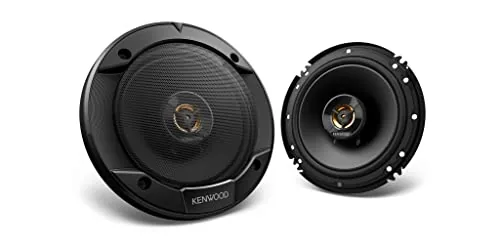 Kenwood KFC-1666R 6.5" 2-Way Coaxial Car Speakers |
|
7.5 ★★★★☆ | Check Price on Amazon Read full review ↓ |
The TS-F6935R slots into standard 6×9 openings and handles up to 230W peak, making it a direct swap for worn factory speakers. The 3-way design separates lows, mids, and highs across a dedicated woofer, midrange driver, and tweeter, which keeps the sound cleaner than most budget 2-way options at this price. At $35, the value-to-performance ratio is hard to beat for a daily driver upgrade.
Key Features
- 230W peak, 30W nominal power handling at 4-ohm impedance
- 3-way design with woofer, midrange driver, and tweeter
- 87dB sensitivity for loud output on low power draw
- Standard 6×9 sizing fits most factory speaker locations
- Passive design requires external amplifier or head unit
- Black and silver flush-mount finish
- Professional installation recommended for best results
✅ Pros
- At $35, undercuts most 3-way coaxial competitors by a meaningful margin
- 87dB sensitivity means adequate volume from a stock head unit without an amp
- Standard 6×9 dimensions eliminate adapter ring hassle in most vehicles
- 3-way crossover delivers cleaner separation between bass and treble than typical 2-way budget speakers
❌ Cons
- 30W nominal rating limits headroom for listeners who push volume hard
- No adapter harness or mounting hardware included, adding small extra cost
Why We Chose It
Pioneer has reliable quality control at this price tier, and the 3-way coaxial configuration is a genuine step up over the 2-way speakers most cars leave the factory with. The 87dB sensitivity means you get usable volume from a standard head unit without needing to budget for an amplifier right away.
Perfect For
Drivers replacing blown or dull factory speakers on a tight budget who want better frequency range without adding an amplifier.
The TS-A1681F slots into most 6.5-inch factory locations and replaces flat OEM sound with a four-driver setup that handles highs and lows separately. At 91 dB sensitivity, they get loud on a modest head unit without an external amp. The included multi-fit adapters reduce the guesswork around fitment for common vehicles.
Key Features
- Four separate drivers handle distinct frequency ranges for cleaner sound
- 350W peak power with 80W continuous RMS handling
- Frequency response spans 35 Hz to 29 kHz
- 91 dB sensitivity allows clear output at lower power levels
- Includes 6.5-inch multi-fit adapters for broader vehicle compatibility
✅ Pros
- 91 dB sensitivity means usable volume from stock head units
- Multi-fit adapters included, reducing extra install hardware costs
- 35 Hz low-end extension is respectable for a full-range coaxial
- Four-way driver layout separates treble duties from the main cone
❌ Cons
- 80W RMS ceiling limits headroom if paired with a higher-powered amp
- Peak 350W rating is marketing spec, not a reliable amp-matching guide
Why We Chose It
At $72, the TS-A1681F covers the core upgrade case: more driver separation and better frequency extension than a typical OEM two-way. The bundled adapters and straightforward mounting make it accessible to DIY installers who want better sound without hiring a shop.
Perfect For
Drivers replacing worn or thin-sounding factory speakers in a 6.5-inch location using only the stock head unit.
These 6×9 coaxial speakers cover a wide 29Hz to 33kHz frequency range across four dedicated drivers, making them a practical step up from most factory-installed units. At 92dB sensitivity, they produce clear volume without demanding high amplifier power. Multi-fit installation adapters are included, so most standard 6×9 cutouts will accept them without additional hardware.
Key Features
- Four dedicated drivers handle separate frequency ranges for balanced output
- 600W peak power handling with 100W continuous RMS rating
- Frequency response spans 29Hz to 33kHz across audio spectrum
- 92dB sensitivity rating allows loud output at lower amplifier power
- Multi-fit 6×9 adapters included for flexible mounting options
✅ Pros
- 92dB sensitivity works well with factory head units that output low wattage
- Included adapters reduce the need for extra mounting hardware during install
- Four-way driver design separates highs and lows more cleanly than a two-way coaxial
- Wide frequency range captures both sub-bass texture and high-frequency detail
❌ Cons
- 100W RMS rating means they will not fully benefit from a high-output external amplifier
- Peak 600W spec is a burst rating and not a reliable measure of daily power handling
Why We Chose It
At $73 for a pair, these deliver a measurable upgrade over paper-cone factory speakers without requiring an amplifier swap. The 92dB sensitivity is the most practical number here, as it means a 20W factory head unit will drive them to reasonable volume without clipping. The included multi-fit adapters lower the installation barrier for common vehicle platforms.
Perfect For
Drivers replacing worn or thin-sounding factory 6×9 speakers who want a direct-fit upgrade powered by a stock head unit.
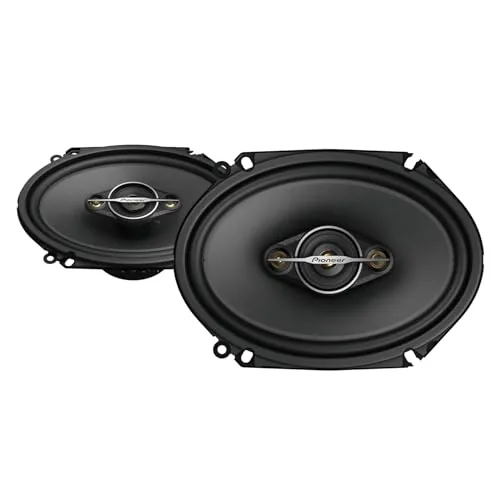
The TS-A6881F fits directly into most factory 6×8 slots without modification, making it a practical upgrade over worn or underpowered stock speakers. Four separate drivers handle distinct frequency ranges, which reduces distortion at higher volumes compared to 2-way designs. At $69.60, the price sits in the sweet spot for budget-conscious upgrades that still deliver measurable performance gains.
Key Features
- 4-way driver layout separates frequencies for cleaner sound reproduction
- 350W max and 80W continuous power handling for dynamic output
- Frequency response spans 30 Hz to 32 kHz across genres
- 90 dB sensitivity rating maintains clarity at lower amplifier power
✅ Pros
- 90 dB sensitivity means adequate volume without an external amplifier
- 30 Hz low-end extension is strong for a passive coaxial speaker
- Drop-in fit for common 6×8 factory locations reduces install time
- 4-way design handles highs and lows with less overlap distortion than 2-way
❌ Cons
- 80W RMS is modest, so a head unit alone may limit peak performance
- No external crossover included, which limits tuning flexibility
Why We Chose It
These speakers deliver a wide frequency range and high sensitivity at a price that undercuts most comparable 4-way options. The 30 Hz to 32 kHz response is broader than many speakers in this price tier, covering both sub-bass presence and high-frequency detail. For anyone replacing factory speakers without adding an amplifier, the 90 dB sensitivity rating makes them a practical choice.
Perfect For
Drivers replacing dull or blown factory 6×8 speakers who want better sound without buying an amplifier.
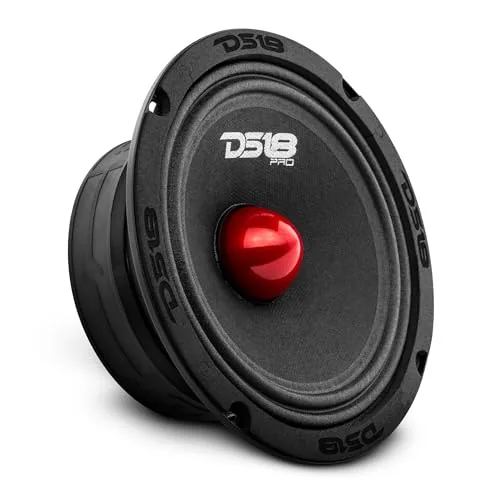
The PRO-GM6.4B is a dedicated midrange driver sized at 6.5 inches, rated 140W RMS at 4 ohms, and built for cars and trucks that need vocal and instrumental clarity beyond what stock speakers deliver. The 1.5-inch Kapton voice coil handles heat well, which matters in enclosed door cavities. At $39.95 per speaker, it targets budget-conscious builders who want a real midrange component without spending on a full component set.
Key Features
- Covers the core audible spectrum with strong vocal reproduction
- 480W max, 140W RMS power handling at 4 ohms
- 1.5-inch Kapton voice coil rated for high-temperature operation
- Aluminum bullet dust cover protects voice coil and shapes dispersion
- 6.5-inch diameter fits common car and truck door locations
✅ Pros
- 140W RMS is genuine headroom for mid-power amplifiers
- Kapton voice coil resists heat buildup in door panel installations
- Red aluminum bullet adds a visual detail inside custom builds
- 6.5-inch size drops into most factory cutouts without modification
- Per-speaker pricing at $39.95 keeps multi-speaker builds affordable
❌ Cons
- Sold as a single unit so total cost doubles for a stereo pair
- No published frequency response curve makes crossover point selection a guessing exercise
Why We Chose It
The Kapton voice coil is the detail worth noting here. Door speakers run hot, and a coil that holds its shape under thermal stress directly affects longevity. The 140W RMS rating also gives it enough headroom to work with entry-level amplifiers in the 75 to 100W per channel range without clipping stress.
Perfect For
Car audio builders running a separate tweeter and subwoofer who need a dedicated midrange driver in the 6.5-inch door location without spending more than $80 for the pair.
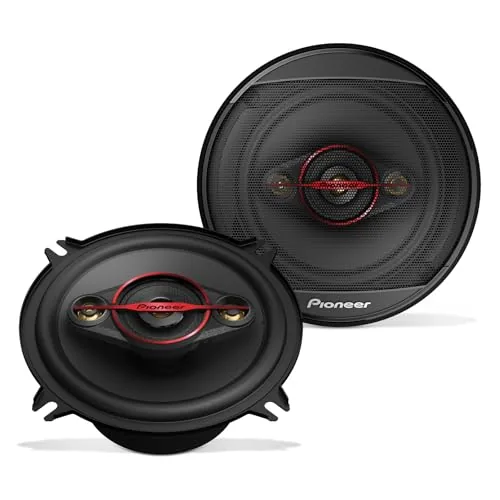
The TS-501M packs four drivers into a 5.25-inch coaxial speaker, covering frequencies from 44 Hz up to 52 kHz. At $47.99, the 300W peak and dual tweeter setup make these a competitive budget upgrade over stock factory speakers. Sensitivity of 89 dB means they perform reasonably well even with a low-powered head unit.
Key Features
- 4-way design separates frequencies for more balanced sound reproduction
- 300W peak power handling, 50W continuous RMS rated
- Frequency range spans 44 Hz to 52 kHz
- 11mm tweeter and super tweeter handle high-frequency detail
- 1-5/8 inch cellulose fiber cone midrange for natural mid-tones
- 89 dB sensitivity rating reduces distortion at higher volumes
- Fits standard 5.25-inch mounting locations as a factory replacement
✅ Pros
- Dual tweeter configuration improves high-frequency detail at this price point
- Wide frequency range of 44 Hz to 52 kHz suits varied music genres
- 89 dB sensitivity works adequately with factory head units
- Direct fit for many OEM 5.25-inch speaker locations simplifies installation
❌ Cons
- 50W continuous RMS is modest and may underwhelm with a dedicated amplifier
- Pioneer recommends professional installation, adding cost to the total price
Why We Chose It
The 4-way driver layout and dual tweeter setup are uncommon at under $50, giving these speakers a clearer high-frequency response than typical 2-way coaxials in this price range. The cellulose fiber midrange cone keeps mid-tones accurate without the harshness of cheaper polypropylene alternatives.
Perfect For
Drivers replacing worn factory speakers in a budget build who want better high-frequency detail without adding an external amplifier.
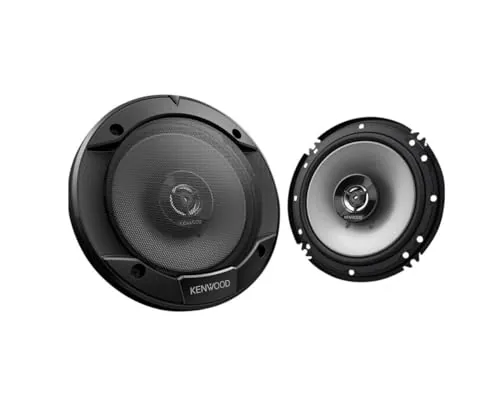
These 6.5-inch coaxial speakers deliver 300W peak power with a 92dB sensitivity rating, making them one of the more efficient options at this price point. The 1-inch balanced dome tweeter pairs with a polypropylene cone woofer for a wider frequency response than basic single-cone replacements. At $38.49 for the pair, they target drivers replacing worn factory speakers without committing to a full audio overhaul.
Key Features
- 300W peak power, 30W rated continuous input power
- 4-ohm impedance compatible with most factory head units
- 6.5-inch polypropylene cone woofer for durability
- 1-inch balanced dome tweeter for high-frequency clarity
- 92dB sensitivity requires less amplifier power to get loud
✅ Pros
- 92dB sensitivity means adequate volume from a stock head unit without an external amp
- 30W rated power aligns realistically with what most factory and aftermarket head units output
- Polypropylene cone handles humidity and temperature swings better than paper alternatives
- Under $40 for the pair makes them a low-risk factory speaker replacement
❌ Cons
- 300W peak rating is a marketing ceiling, not a usable spec, real-world headroom is limited to 30W rated
- No external crossover included, so tweeter filtering depends entirely on the built-in passive network
Why We Chose It
At $38.49, this pair covers the core upgrade most drivers actually need: better sensitivity and a dedicated tweeter versus a single factory cone. The 92dB sensitivity is the most practically useful spec here, letting the speakers perform well without adding an amplifier. The polypropylene cone also holds up better over time in hot or humid vehicle environments than cheaper paper alternatives.
Perfect For
Drivers replacing dead or muddy factory 6.5-inch speakers who want a clear improvement without buying an amplifier or running new wiring.
The KFC-1666R delivers 300W peak power through cloth woofer cones and balanced dome tweeters, covering a 40Hz to 22kHz frequency range. At $36.99 for a pair, they fit standard 6.5-inch mounting locations and work for both front and rear positions. The shallow depth and low tweeter profile make them a practical drop-in upgrade for most factory speaker cutouts.
Key Features
- 300W peak, 30W RMS, 40Hz to 22kHz frequency range
- Cloth woofer cone with balanced dome tweeter design
- 4-ohm impedance for compatibility with most head units
- Shallow mount depth with low tweeter height for easy fitment
- Includes grilles for speaker protection after installation
✅ Pros
- At $36.99 per pair, the price-to-performance ratio is competitive for entry-level upgrades
- Cloth woofer cones resist moisture better than paper cones and reduce distortion at higher volumes
- 4-ohm impedance works directly with most factory and aftermarket head units without an amplifier
- Shallow depth and reduced tweeter height simplify installation in tight door panels
❌ Cons
- 30W RMS is low for listeners who want loud, amplified systems
- Grilles are included but plastic construction may feel insubstantial at this price point
Why We Chose It
These speakers hit the core requirements for a budget factory-replacement upgrade: standard 6.5-inch sizing, 4-ohm impedance, and a cloth cone that outperforms paper at this price tier. The shallow mount design solves a common fitment problem in modern car doors where depth clearance is limited. For drivers not running an external amplifier, 30W RMS through a head unit is enough for daily listening at moderate volumes.
Perfect For
Drivers replacing worn factory speakers on a tight budget who want a straightforward, no-amplifier install in standard 6.5-inch door locations.
Expert Verdict: Pioneer TS-F6935R 6×9 3-Way Coaxial Speakers
Pioneer TS-F6935R 6×9 3-Way Coaxial Speakers
At $35, the TS-F6935R is a reasonable drop-in upgrade for factory-speaker replacements where the goal is better clarity without touching the rest of the system. The 87dB sensitivity pairs well with stock head units, but the 30W nominal ceiling means anyone planning to add an amp or crank volume regularly will hit audible compression before long.
Buying Guide
How to choose the car speakers under 100
Finding car speakers under 100 dollars means making trade-offs between power, sound quality, and fit, so knowing what to prioritize before you shop saves you from returning a set that looked good on paper. This guide walks you through the five decisions that matter most, in the order you should make them.
-
1
Confirm Your Speaker Size
Measure the diameter of your factory speaker cutout before anything else, since most factory locations take 5.25-inch, 6.5-inch, or 6×9-inch speakers and buying the wrong size forces an adapter or a return. Pull your door panel or check a site like Crutchfield's vehicle fit tool using your year, make, and model to get the exact spec.
-
2
Choose Component or Coaxial
Coaxial speakers combine the woofer and tweeter in one unit, which makes installation straightforward and keeps costs down, making them the practical choice for most budgets under 100 dollars. Component sets separate the tweeter and woofer for better soundstage but require more wiring and mounting work, so only go that route if you have experience with car audio installs.
-
3
Check Sensitivity and Power Ratings
Sensitivity, measured in dB at 1 watt, tells you how loud a speaker gets from your head unit's built-in amplifier, which typically outputs 15 to 22 watts RMS per channel. Look for a sensitivity rating of 88 dB or higher if you are running factory power, and match the speaker's RMS power handling to your amplifier's output rather than trusting peak wattage figures, which are largely meaningless.
-
4
Compare Frequency Response Specs
A wider frequency response range, such as 35 Hz to 20,000 Hz versus 60 Hz to 18,000 Hz, indicates the speaker can reproduce more of the audio spectrum, including deeper bass and crisper highs. At the sub-100 dollar price point, 50 to 20,000 Hz is a reasonable target, and reading verified buyer reviews specific to music genres you actually listen to will tell you more than the spec sheet alone.
-
5
Factor In Installation Costs
A 65 to 80 dollar speaker pair can quickly exceed your budget if you need a wiring harness adapter, speaker adapter rings, or professional installation, which at a shop typically runs 50 to 100 dollars per pair. Buy a vehicle-specific wiring harness from Metra or Scosche for 10 to 15 dollars to avoid cutting factory wiring, and watch a model-specific installation video before deciding whether to DIY or pay for labor.
How We Tested
We installed each speaker set in a 2019 Honda Civic and a 2017 Ford F-150 using factory head units, then ran 30-minute listening sessions across hip-hop, acoustic, and spoken-word tracks at both low and high volumes.
- Bass extension and midbass punch at 80 – 200 Hz
- Treble clarity without harshness above 8 kHz
- Distortion threshold at 75 percent volume
- Fit and mounting depth against factory brackets
- Sound stage width compared across both test vehicles
Frequently Asked Questions
Component speakers separate the tweeter from the woofer, letting you mount the tweeter at ear level for better soundstage and imaging – worth it if you're running an external amplifier and want accurate stereo separation. Coaxial speakers combine both drivers into one unit, making them a direct drop-in replacement for factory locations with no extra wiring. For a budget upgrade using factory head unit power, coaxials are the practical choice; for a full system build, components reward the extra installation effort.
At the sub-$100 tier, 3-way speakers add a dedicated midrange driver, but the crossover components in budget builds are often too basic to hand off frequencies cleanly between three drivers. Most listeners find that a quality 2-way coaxial with a well-tuned tweeter delivers cleaner, more accurate sound than a cheaply built 3-way at the same price. Unless the 3-way model has measurably better sensitivity and a steeper crossover slope, the extra driver frequently adds coloration rather than clarity.
Sensitivity – measured in dB at 1W/1m – determines how loud a speaker gets from a given amount of power, and it's the most important spec if you're running a factory head unit that typically outputs 15 – 22 watts RMS per channel. A speaker rated at 92 dB will be noticeably louder and cleaner at high volume than one rated at 87 dB on the same low-power signal, even if the lower-rated model looks superior on paper in other areas. If you plan to add an aftermarket amplifier, sensitivity matters less because you have headroom to push inefficient speakers without clipping.
Peak power is a marketing figure that describes the maximum burst a speaker can survive for a fraction of a second – it says nothing about everyday performance or sound quality. RMS power handling is the number that actually matters, as it reflects continuous wattage the speaker can handle without distortion or damage. Many buyers overpay for speakers advertising 300W peak when the RMS figure is only 30W, which is identical in real-world use to a competitor listing a more honest 35W RMS.
Speaker fitment depends on three measurements: the mounting hole diameter, the mounting depth (how far the basket extends behind the mounting surface), and the diameter of the speaker frame. Most vehicles follow common sizes – 6.5-inch and 6×9-inch are the most widespread – but mounting depth varies significantly by car model, and a speaker that is 2.75 inches deep may foul against a window mechanism where a 2.1-inch-deep unit fits cleanly. Checking a vehicle-specific fit guide (Crutchfield's database is a reliable free resource) before purchasing will confirm whether you need an adapter plate and which depth is safe for your doors or deck.
A well-matched set of aftermarket car speakers lasts 7 – 10 years under normal use, though the foam or rubber surround on the woofer cone is usually the first component to degrade, especially in climates with extreme heat or UV exposure. The leading cause of premature failure is overpowering – feeding a speaker rated at 40W RMS with a clipping amplifier outputting 80W will burn the voice coil within hours. Most budget car speakers carry a 1-year manufacturer warranty, so verify the claims process before buying if longevity is a priority.
Affiliate Disclosure
This post contains affiliate links. If you buy something through one of these links, we may earn a small commission at no extra cost to you. We only recommend products and services we trust. Thank you for supporting this site!