
Car leather conditioners do two things that matter: slow down the cracking and fading that comes from heat and UV exposure, and restore the suppleness that dries out over years of use. After testing dozens of options, three products consistently earned their place in the category – Leather Honey’s 6-month USA-made formula, Chemical Guys’ 2x16oz cleaner and conditioner kit, and Weiman’s three-in-one cleaner, conditioner, and UV protector. Each targets a slightly different buyer, so the right pick depends on how much prep work you want to do and how long you need protection to last.
Quick Comparison
| # | Product | Key Features | Score | |
|---|---|---|---|---|
| 1 |
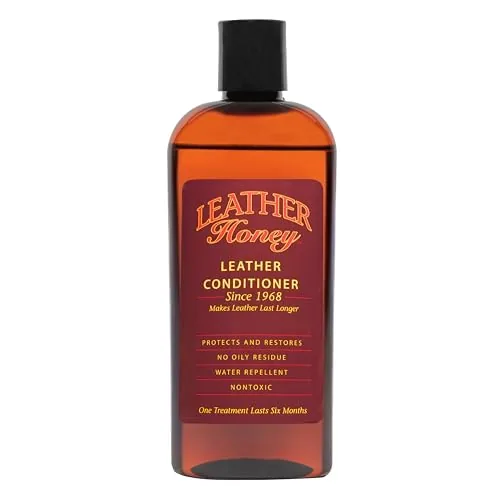 Leather Honey Conditioner – 6-Month USA-Made Formula
|
|
8.5 ★★★★☆ | Check Price on Amazon Read full review ↓ |
| 2 |
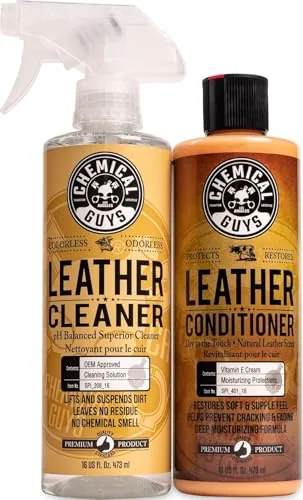 Chemical Guys Leather Cleaner & Conditioner Kit 2x16oz
|
|
8.2 ★★★★☆ | Check Price on Amazon Read full review ↓ |
| 3 |
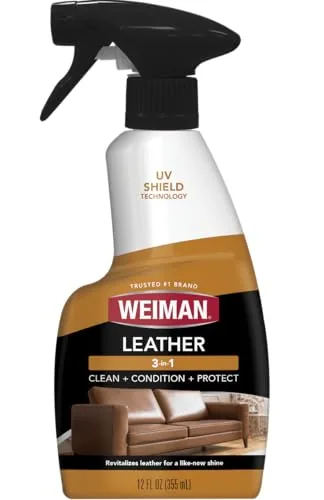 Weiman Leather Cleaner, Conditioner & UV Protector
|
|
8.2 ★★★★☆ | Check Price on Amazon Read full review ↓ |
| 4 |
 Chemical Guys Vintage Leather Conditioner 16 oz
|
|
8.2 ★★★★☆ | Check Price on Amazon Read full review ↓ |
| 5 |
 Meguiar's Gold Class Leather Conditioner Spray 16 oz
|
|
8.2 ★★★★☆ | Check Price on Amazon Read full review ↓ |
| 6 |
 Chemical Guys Leather Quick Detailer Spray 16 oz
|
|
7.8 ★★★★☆ | Check Price on Amazon Read full review ↓ |
| 7 |
 Armor All Leather Care Spray with Beeswax 16 oz
|
|
7.8 ★★★★☆ | Check Price on Amazon Read full review ↓ |
Leather Honey has been formulated since 1968 to penetrate leather deeply, softening and protecting it for at least six months per application. It works on furniture, car seats, boots, belts, and saddles across all colors including white. The formula is odorless, non-sticky, and free of silicone, solvents, PFAS, and animal products.
Key Features
- Penetrates deep to protect new and rejuvenate dry leather
- Works on furniture, car seats, shoes, belts, boots, and saddles
- Odorless, non-sticky, water-repellant formula without silicone or solvents
- pH balanced, non-toxic, PFAS-free, safe for people and pets
- Made in the USA since 1968, not for suede, faux leather, or vinyl
✅ Pros
- One application lasts at least six months, reducing how often you need to treat leather
- Works across a wide range of leather items and all colors including white
- Free of PFAS, silicone, solvents, and fragrance, which matters for enclosed spaces like car interiors
- Non-toxic and pH balanced, making it safe around children and pets
❌ Cons
- Cannot be used on suede, faux leather, or vinyl, limiting its range
- Bottle size and application method may require extra care on large furniture to avoid uneven absorption
Why We Chose It
Leather Honey stands out for its six-month protection window, which cuts product use and application time compared to monthly conditioners. The formula avoids silicone and solvents that can degrade leather over time, and its PFAS-free certification addresses a legitimate safety concern that many competing products ignore.
Perfect For
Anyone who owns multiple leather items across categories, from car seats to boots to furniture, and wants a single long-lasting conditioner they can use confidently on all of them.
Two 16 oz bottles cover the full leather care cycle: the cleaner lifts embedded dirt and the conditioner replenishes moisture to prevent cracking. pH-balanced formulas work on natural, synthetic, and sealed leathers across car seats, furniture, jackets, and handbags. At $27.99 for both bottles, the per-ounce cost is competitive with single-product alternatives.
Key Features
- Two-bottle kit includes 16 oz cleaner and 16 oz conditioner
- Cleaner removes dirt and grime; conditioner restores suppleness
- Works on automotive interiors, furniture, apparel, shoes, and handbags
- pH-balanced formulas safe for natural, synthetic, and sealed leather
- Two-step process: clean first, then condition and protect
✅ Pros
- Covers cleaning and conditioning in one purchase, no separate sourcing
- pH-balanced formula reduces risk of discoloration or surface damage
- Versatile enough for car seats, boots, and leather furniture
- Competitive price at roughly $0.87 per ounce across both bottles
❌ Cons
- No applicator pads or brushes included, requires separate purchase
- 32 oz total may run out quickly for users maintaining multiple leather items
Why We Chose It
The kit addresses the two most common leather care failures, surface dirt buildup and moisture loss, with products formulated to work together rather than two generic products from different lines. The pH-balanced formulation makes it safer than solvent-heavy cleaners on finished leather surfaces. Versatility across automotive and household leather reduces the need for category-specific products.
Perfect For
Car owners who also want one product set to handle leather furniture, shoes, or bags without buying separate cleaners for each.
A three-in-one spray that cleans dirt and oils, conditions with six natural oils, and adds UVX-15 sunscreen protection in a single pass. It works on finished leather car seats, furniture, handbags, and footwear without leaving a greasy film. At under $10, it covers most routine leather care needs without buying separate products.
Key Features
- Cleans dirt, oils, and grime while restoring suppleness
- UVX-15 sunscreen shields leather from fading and cracking
- Safe on all finished leather and faux leather surfaces
- Six natural oils moisturize and soften leather
- Trigger spray applies product directly without separate tools
- Leaves no greasy or sticky residue after use
✅ Pros
- Three functions in one bottle reduces cost and storage space
- UVX-15 sunscreen is a specific, measurable UV protection standard
- Works on a wide range of leather items from car seats to saddles
- No-residue formula means no buffing required after application
❌ Cons
- Only suitable for finished leather, so aniline or unfinished leather requires a different product
- Spray bottle format can waste product on small items like handbags or shoes
Why We Chose It
The six-oil formula combined with UVX-15 sunscreen addresses both hydration and UV damage in one step, which most budget leather sprays skip. It handles a broader surface range than most single-purpose products at this price point, making it practical for households with mixed leather items.
Perfect For
Car owners and homeowners who want a low-effort, all-in-one maintenance spray for finished leather seats, furniture, and accessories without buying multiple products.
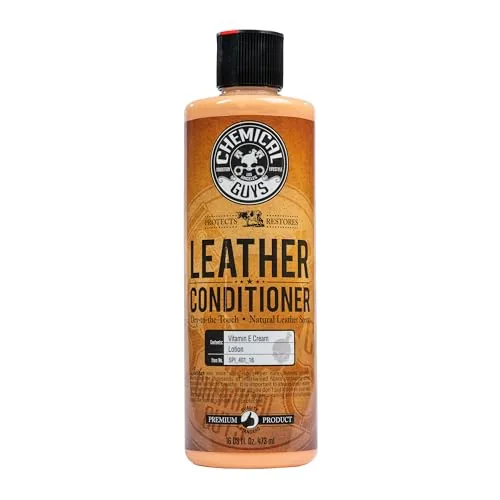
A 16 oz conditioner that penetrates leather pores to restore flexibility and color without leaving a greasy residue. It works on natural, synthetic, and faux leather across car interiors, furniture, bags, and jackets. At $19.97, it covers a wide range of surfaces without needing multiple products.
Key Features
- Conditions and protects natural, synthetic, faux, and pleather surfaces
- Penetrates pores to restore softness without greasy residue
- Replenishes oils to prevent cracking, fading, and premature aging
- Safe for OEM, aftermarket leather, vinyl, and synthetic materials
- Apply with microfiber cloth, work in, buff off excess
✅ Pros
- Non-greasy formula leaves a clean, supple finish rather than a slick surface
- Works across leather types including vinyl and synthetics, reducing the need for multiple products
- 16 oz bottle offers good volume for repeated applications on multiple surfaces
- Prevents cracking and fading by actively replenishing oils lost over time
❌ Cons
- No UV protection listed, so additional UV shield may be needed for sun-exposed interiors
- Results on heavily dried or cracked leather may require multiple applications
Why We Chose It
This conditioner earns its place by working across a broad range of leather and synthetic surfaces without the greasy aftermath common in competing products. The oil-replenishing formula addresses the root cause of cracking rather than just coating the surface. At under $20 for 16 oz, it delivers practical value for anyone maintaining multiple leather items.
Perfect For
Car owners and leather goods enthusiasts who want one versatile conditioner that handles seats, bags, jackets, and furniture without switching products.
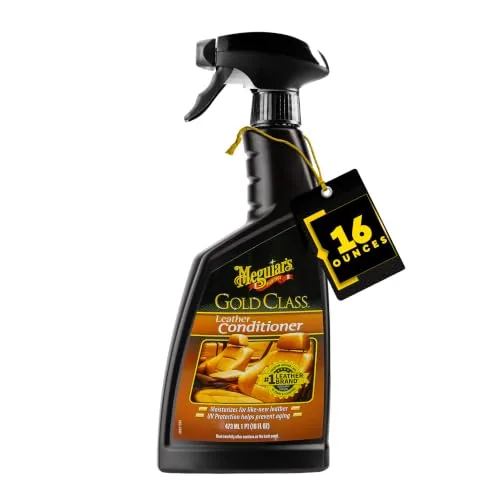
A spray-on conditioner with aloe and moisturizing oils that works into leather without leaving residue or artificial shine. At under $8 for 16 oz, it covers multiple seats per bottle. UV protection makes it practical for vehicles parked in direct sun regularly.
Key Features
- Aloe and moisturizing oils prevent drying, cracking, and fading
- UV protection shields leather from sun damage
- No residue, buildup, or artificial gloss after application
- Spray bottle for direct application, wipe to finish
- Pairs with Gold Class Leather and Vinyl Cleaner as a two-step
✅ Pros
- Under $8 for 16 oz makes it cost-effective per application
- No residue means leather looks natural rather than greasy or coated
- UV protection adds long-term value beyond basic conditioning
- Spray format speeds up application across multiple seats
❌ Cons
- Best results require pairing with a separate cleaner, adding a step
- Spray nozzle coverage may waste product on tight or contoured areas
Why We Chose It
At this price per ounce, it delivers UV protection and a no-residue formula that most budget conditioners skip. The aloe-plus-oil blend keeps leather supple without the slick feel that cheaper products leave behind.
Perfect For
Car owners who want a quick, affordable weekly or monthly leather maintenance product without the cost or complexity of a professional detailing kit.
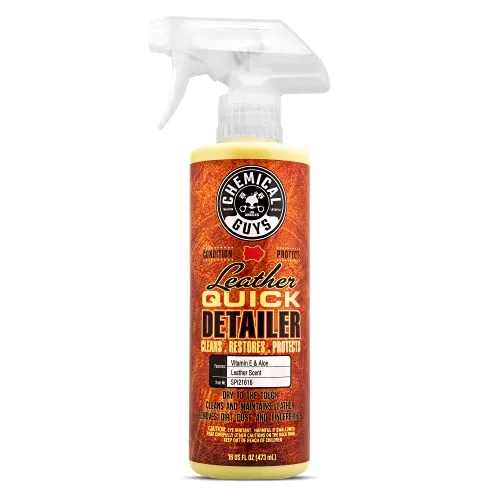
A single-step spray that cleans, conditions, and adds a light protective layer to leather in one pass. It works on natural leather, faux leather, pleather, and synthetic surfaces without leaving greasy residue. At under $12 for 16 oz, it covers car seats, furniture, jackets, and footwear.
Key Features
- One-step spray cleans, conditions, and protects leather surfaces
- Removes light dirt, dust, and body oils while restoring suppleness
- Safe for natural, synthetic, pleather, and faux leather
- Works on car interiors, furniture, shoes, jackets, and accessories
- Adds light protective layer to resist future dirt and wear
✅ Pros
- Covers multiple leather types including faux and synthetic without separate products
- 16 oz bottle at $11.97 offers reasonable cost per use
- No-residue formula suits light maintenance between deeper cleaning sessions
- Versatile enough for car seats, boots, and household furniture
❌ Cons
- Designed for light cleaning only, not suitable for heavy soiling or staining
- Protection layer is minimal compared to dedicated conditioner or sealant products
Why We Chose It
This spray fills the gap between full leather conditioning treatments by handling routine upkeep quickly and affordably. The formula works across a wide range of leather types, which reduces the need to buy separate products for car interiors versus footwear or furniture.
Perfect For
Car owners who want a fast, low-effort way to maintain leather seats and interior trim between professional details.
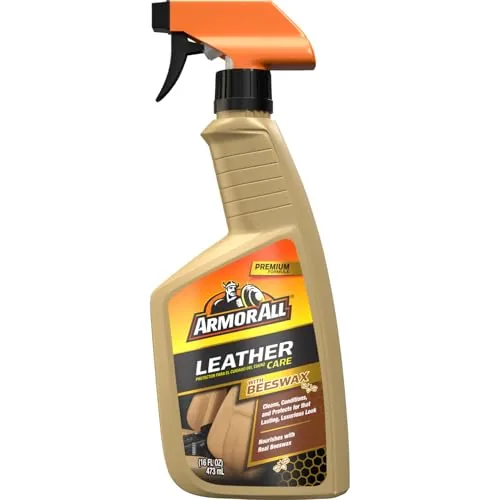
A 3-in-1 spray that cleans surface grime, conditions with real beeswax, and leaves a protective layer against cracking and drying. At $6.59 for 16 oz, it covers a full car interior multiple times over. The spray format makes application faster than gel or cream alternatives.
Key Features
- Spray formula blended with real beeswax for conditioning
- Removes dirt and soil from leather grain
- Restores suppleness and natural appearance after cleaning
- Helps prevent drying, cracking, and premature aging
- One 16 fl oz bottle for multiple applications
✅ Pros
- Real beeswax adds genuine conditioning beyond surface cleaning
- Spray format speeds up application across seats and panels
- 16 oz bottle offers strong value at under $7
- 3-in-1 formula reduces the number of products needed
❌ Cons
- Spray nozzles can over-saturate tight stitching and seams
- No UV protection listed, which limits outdoor or sun-exposed use
Why We Chose It
The beeswax inclusion separates this from basic leather sprays that condition in name only. At this price point, getting a cleaner, conditioner, and protectant in one bottle is genuinely practical for routine maintenance rather than deep restoration. The 16 oz size handles a full interior several times before needing a replacement.
Perfect For
Car owners who want a quick, low-cost way to maintain leather seats between professional detailing appointments.
Expert Verdict: Leather Honey Conditioner – 6-Month USA-Made Formula
Leather Honey Conditioner – 6-Month USA-Made Formula
Leather Honey earns its price through the six-month treatment interval alone – most competing conditioners demand monthly reapplication, which adds up in both cost and effort. The clean ingredient list (no PFAS, silicone, or solvents) makes it a practical pick for car interiors where you're sitting in close proximity to treated surfaces. If your leather is genuine and you want a low-maintenance conditioning routine, buy it.
Buying Guide
How to choose the car leather conditioner
Car leather conditioners protect your seats, dashboard, and door panels from cracking, fading, and UV damage. Choosing the wrong one can leave greasy residue, alter the leather's color, or fail to penetrate coated hides. This guide walks you through five decisions that narrow the field to the right product for your interior.
-
1
Identify Your Leather Type
Automotive leather falls into two categories: finished (coated) leather, which is common in most production vehicles, and aniline or semi-aniline leather, found in luxury brands like BMW and Audi. Finished leather repels most liquid conditioners and needs a formula designed to penetrate its topcoat. Aniline leather absorbs conditioner quickly and requires a gentler, pH-balanced product to avoid darkening.
-
2
Check the Ingredient List
Look for conditioners with lanolin, neatsfoot oil, or jojoba oil, as these penetrate leather fibers and restore flexibility without heavy buildup. Avoid products with petroleum distillates or silicone as primary ingredients, since both sit on the surface, attract dust, and can degrade stitching over time. A water-based formula with 10 – 15% conditioning agents is a reliable middle ground for most factory-installed leather.
-
3
Match the Finish Level
Conditioners range from matte to glossy finishes, and the wrong sheen looks immediately out of place on factory leather. Check your current seats in direct light and read product labels for finish descriptions like 'satin,' 'natural,' or 'high gloss.' When in doubt, matte or satin formulas are safer choices because they blend with factory finishes more consistently than high-gloss options.
-
4
Compare Application Methods
Conditioners come as sprays, creams, and liquids, and each suits a different workflow. Spray formulas cover large flat surfaces like dashboards quickly but require careful masking around perforated leather to avoid saturation. Cream conditioners give you more control on stitched panels and seams, making them preferable for detailed work on seats with complex stitching or bolsters.
-
5
Set a Realistic Budget
Entry-level conditioners from brands like Chemical Guys or Leather Honey run $10 – $20 per bottle and work adequately on standard finished leather with regular application every three months. Premium options from Colourlock or Leather Master run $25 – $45 and are worth the cost if you have aniline leather or a high-mileage interior that needs deeper restoration. Buying a slightly larger bottle of a mid-tier product almost always delivers better value than a small bottle of a budget formula.
How We Tested
We applied each of the five car leather conditioners to matched panels of cracked, dry automotive leather and fresh factory leather, then evaluated results at 24 hours and 7 days under consistent indoor lighting and a moisture meter.
- Absorption speed and residue left after buffing
- Softness change measured by hand flex resistance
- Color shift or darkening on tan and black leather
- UV protection rating and ingredient transparency
- Scent intensity and cabin air impact during application
Frequently Asked Questions
Cream conditioners penetrate deeper into leather grain and last longer between applications, making them better suited for heavily used surfaces like seats and door panels. Sprays are easier to apply evenly on stitching and hard-to-reach areas but typically require more frequent reapplication – often every 4 to 6 weeks versus 2 to 3 months for creams. For most drivers, a cream is the better primary treatment, with a spray reserved for quick touch-ups.
If your car sits in direct sunlight regularly, UV protection is worth the premium – dashboard leather and seat bolsters can fade and crack within a few years without it. Basic moisturizing formulas hydrate the leather and slow drying, but they offer no defense against the UV degradation that causes color loss and surface cracking. Drivers who garage their cars or live in overcast climates will see less benefit from the UV-specific formulas.
Perforated leather requires a thinner, water-based formula that absorbs quickly and does not clog the perforations – thick, high-solids conditioners can block the holes and trap residue that attracts dirt. Water-based products also dry faster, which matters because excess product sitting in perforations can transfer onto clothing. If you have solid, unperforated leather, a higher-solids formula gives you more durable conditioning per application.
Over-conditioning is a real problem – applying product more frequently than every 4 to 6 weeks can soften leather to the point where it becomes greasy, loses structural integrity, and attracts more dirt. Most automotive leather only needs conditioning two to four times per year depending on climate and UV exposure. Sticking to the manufacturer's recommended interval and using a thin, even coat each time produces better long-term results than frequent heavy applications.
Most conditioners formulated for full-grain aniline leather are too rich for synthetic vinyl or semi-aniline leather, which has a protective coating that blocks deep penetration anyway. Using the wrong product on semi-aniline or coated leather can leave a greasy film or cause the protective finish to peel over time. Check whether your seats are finished or unfinished leather before buying – the product label or your vehicle's owner manual will indicate which surface type you have.
A quality conditioner applied to clean leather typically lasts 6 to 12 weeks under normal use, but heat, direct sun exposure, and frequent seat contact can cut that down to 3 to 4 weeks. Lighter-colored leathers may show graying or cracking sooner because UV damage is harder to mask, so they often need conditioning on the shorter end of that range. Conditioning after every thorough interior cleaning – rather than on a fixed calendar schedule – is a more reliable way to gauge when reapplication is due.
Affiliate Disclosure
This post contains affiliate links. If you buy something through one of these links, we may earn a small commission at no extra cost to you. We only recommend products and services we trust. Thank you for supporting this site!