
The OBD II scanner market under $500 has matured enough that you can now get bidirectional control, manufacturer-specific codes, and active system resets without stepping into professional shop equipment territory. After testing the Autel MX808S, FOXWELL NT614 Elite, and Innova 5610, the differences come down to which features you’ll actually use – bidirectional commands, reset coverage, or long-term update costs. This guide breaks down exactly what each scanner does well and where it falls short, so you can match the right tool to your specific diagnostic needs.
Quick Comparison
| # | Product | Key Features | Score | |
|---|---|---|---|---|
| 1 |
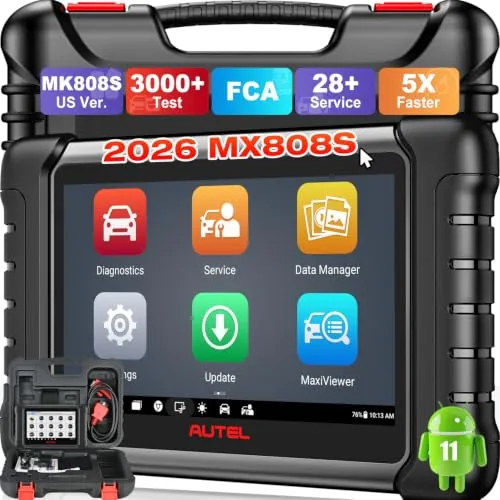 Autel MX808S Bidirectional OBD2 Scanner 2026
|
|
8.3 ★★★★☆ | Check Price on Amazon Read full review ↓ |
| 2 |
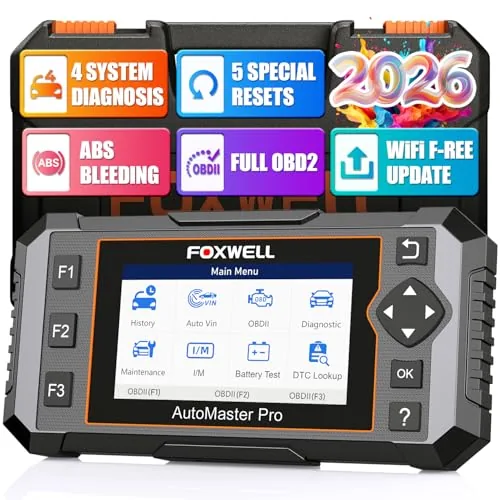 FOXWELL NT614 Elite OBD2 Scanner with 5 Resets
|
|
8.3 ★★★★☆ | Check Price on Amazon Read full review ↓ |
| 3 |
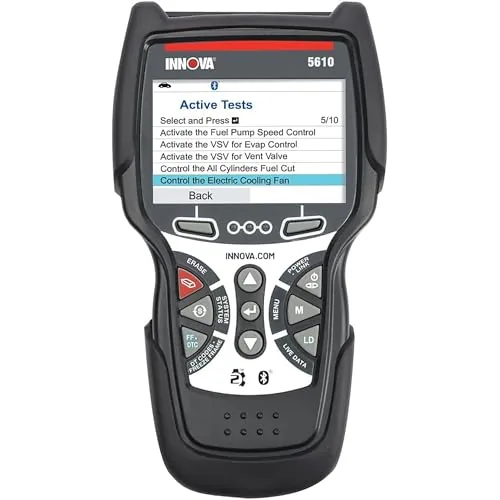 Innova 5610 Bidirectional OBD2 Scanner with Free Updates
|
|
8.2 ★★★★☆ | Check Price on Amazon Read full review ↓ |
| 4 |
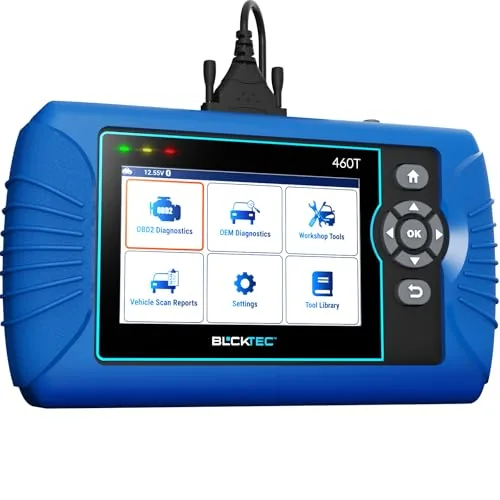 BLCKTEC 460T OBD2 Scanner with 12 Reset Services
|
|
8.2 ★★★★☆ | Check Price on Amazon Read full review ↓ |
| 5 |
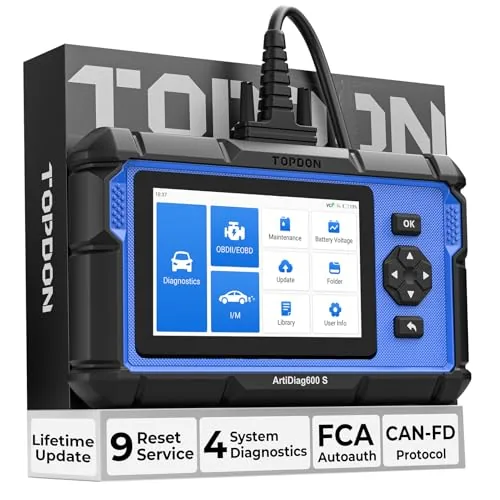 TOPDON AD600S 4-System OBD2 Scanner with 9 Services
|
|
8.2 ★★★★☆ | Check Price on Amazon Read full review ↓ |
| 6 |
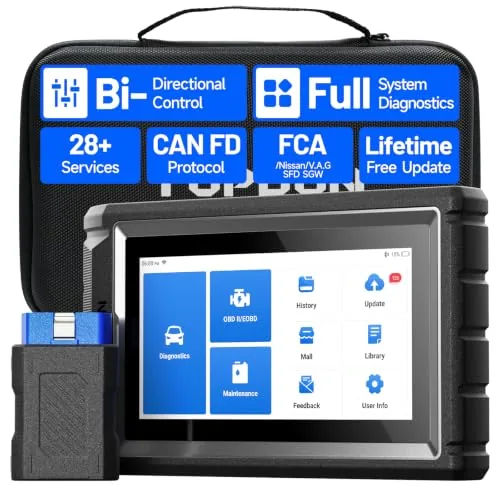 TOPDON AD800BT V2.0 Bidirectional OBD2 Scanner
|
|
8.2 ★★★★☆ | Check Price on Amazon Read full review ↓ |
| 7 |
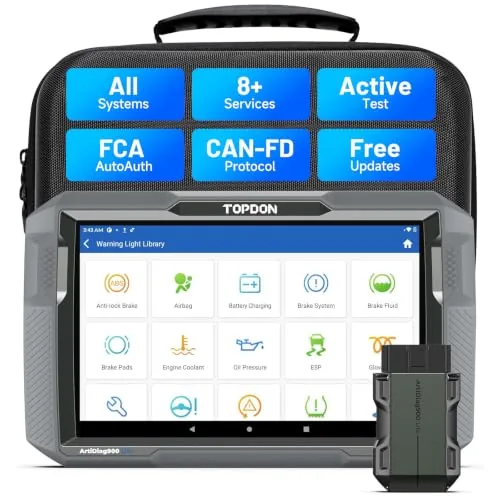 TOPDON AD900 Lite Bidirectional OBD2 Scanner 8-inch
|
|
8.2 ★★★★☆ | Check Price on Amazon Read full review ↓ |
| 8 |
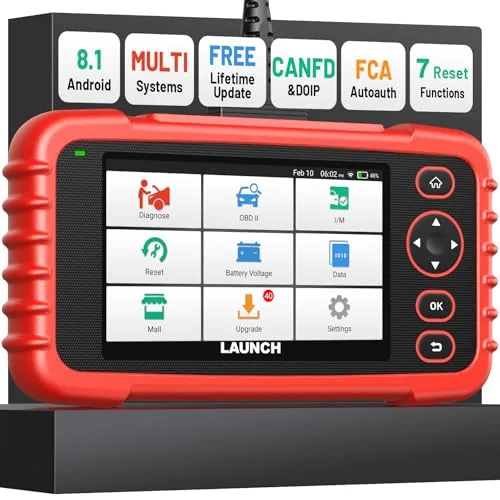 LAUNCH CRP123X V3.0 OBD2 Scanner with Lifetime Updates
|
|
8.2 ★★★★☆ | Check Price on Amazon Read full review ↓ |
The MX808S runs on a quad-core RK3566 processor with 4GB RAM and Android 11, giving it noticeably faster boot and scan times than the older MK808 generation. It covers 3000+ active tests, 28+ service functions, and full-system diagnostics across 10,000+ vehicles from 1996 onward. At $378, it sits between entry-level code readers and professional-grade tools, making it a practical option for experienced DIYers and small shop mechanics.
Key Features
- Rockchip RK3566 quad-core CPU, 4GB RAM, 64GB ROM, Android 11
- 3000+ bidirectional active tests including fuel pump and injector activation
- 28+ service functions covering oil reset, EPB, BMS, DPF, SAS calibration
- OE-level full-system diagnostics across engine, ABS, SRS, TPMS, transmission
- Live data viewable in five formats: graph, text, column, meter, waveform
- Automatic VIN detection with manual VIN input fallback
- Covers 10,000+ US, Asian, and EU vehicles from 1996 to present
- Supports FCA AutoAuth for 2018+ Chrysler, Jeep, Dodge, and Fiat vehicles
- Compatible with Autel MV108S endoscope for visual inspection
- US market version consolidating MK808S, MK808Z, and MK808BT Pro features
✅ Pros
- Faster hardware than previous generation cuts scan and boot times measurably
- 3000+ active tests let you command components directly to confirm faults before buying parts
- FCA AutoAuth support expands coverage for Stellantis vehicles other tools miss at this price
- Five live data display formats make it easier to spot sensor anomalies quickly
- 28 service resets cover the most common shop and DIY maintenance tasks
❌ Cons
- Auto VIN does not work on all vehicles, requiring manual entry as a fallback
- Service and active test coverage varies by make and model, so pre-purchase compatibility checks are necessary
Why We Chose It
The MX808S delivers hardware and software capabilities that typically appear in scanners priced $100 to $150 higher, particularly the 3000+ bidirectional active tests and FCA AutoAuth support. The upgraded processor makes a real difference in day-to-day use when switching between systems or streaming live data. It consolidates multiple Autel mid-range models into one device without a significant price premium.
Perfect For
Small shop mechanics and advanced DIYers who regularly work across multiple car brands and need active test capability without spending on a professional-tier Autel unit.
The NT614 Elite covers Engine, ABS, SRS, and Transmission diagnostics while adding five service resets that basic scanners skip entirely. ABS bleeding, EPB retraction, SAS calibration, oil light reset, and throttle relearn are all on-device, no laptop required. At $154, it replaces individual shop visits that each cost more than the tool itself.
Key Features
- Adds 5 resets over NT604, same 4-system diagnostics retained
- AutoVIN reads codes in roughly 15 seconds on CAN vehicles
- ABS bleeding, EPB reset, SAS calibration, oil reset, throttle relearn included
- Live sensor graphs show RPM, O2 voltage, fuel trims, transmission temp
- Built-in DTC library explains codes on screen without a phone search
- WiFi updates are free for life, no SD card or subscription needed
- ABS, EPB, and SAS coverage varies by make, model, and year
✅ Pros
- Five shop-level service resets justify the price over basic code readers
- On-screen code explanations eliminate the need to look up DTCs separately
- Lifetime free WiFi updates keep coverage current without recurring fees
- AutoVIN and simple menu structure reduce setup time significantly
❌ Cons
- ABS bleeding, EPB, and SAS functions are not guaranteed on all vehicles, particularly pre-2008 and European models
- No mention of touchscreen, so navigation relies on physical buttons which can slow workflows
Why We Chose It
The NT614 Elite sits in a practical gap between a $40 code reader and a $400 professional scan tool. The five included resets address jobs that shops routinely charge $100 to $300 each to perform, making the $154 price recoverable after one or two DIY brake jobs. The on-screen DTC library and live data graphing reduce the back-and-forth between the scanner and a phone or laptop.
Perfect For
DIY mechanics who do their own brake, suspension, and drivetrain maintenance and want to avoid shop fees for routine resets and calibrations.
The Innova 5610 goes beyond reading codes by letting you send commands directly to vehicle systems, such as cycling the fuel pump or retracting an electronic parking brake. It pulls live data from ABS, SRS, transmission, and engine modules, which puts it closer to dealer-level capability than most consumer scanners. Free lifetime updates and no subscription fees make the $349.99 price easier to justify over time.
Key Features
- Real-time OBD2 and OEM live data for active troubleshooting
- improved data stream covers ABS, SRS, transmission, and engine
- Special reset function runs dealer-level relearn procedures
- Bidirectional controls test fuel pump, parking brake, and more
- Supports 1996 to 2023 OBD2 vehicles in English, Spanish, French
- Free lifetime software updates, no subscription required
- Pairs with RepairSolutions2 app, used by 4 million users
- ASE-certified US phone and email support, Monday through Friday
- Vehicle coverage varies by make, model, and year; check compatibility tool
✅ Pros
- Bidirectional control lets you actuate components directly from the scanner
- No subscription fees and free updates lower the long-term cost
- ASE-certified US-based support available by phone during business hours
- Live data across advanced modules including ABS, SRS, and transmission
- RepairSolutions2 app adds wireless functionality and repair guidance
❌ Cons
- Coverage is not universal and varies significantly by make, model, and year
- At $349.99 it overlaps with entry-level professional shop tools
Why We Chose It
Most consumer scanners read and clear codes but stop there. The 5610 adds bidirectional output controls and dealer-level relearn procedures, which saves a separate trip to the shop for tasks like electronic parking brake service. The combination of free updates and real US-based technical support makes it a credible long-term tool rather than a disposable gadget.
Perfect For
DIY mechanics and serious enthusiasts who regularly work on modern vehicles and need more than basic code reading without paying for a full commercial scan tool.
The 460T reads and clears codes across all major systems including engine, transmission, ABS, and SRS, then goes further with 12 dealer-level reset functions like EPB, DPF, and battery initialization. AutoScan triggers a full ECU sweep the moment you plug it in, and live data from up to four streams can be graphed simultaneously. Free lifetime updates and a US-based support team add long-term value that cheaper scanners skip.
Key Features
- Full system diagnostics across engine, transmission, ABS, and SRS
- 12 reset functions including oil, EPB, DPF, TPMS, and battery
- Real-time OBD2 and OEM live data with four-stream graph overlay
- AutoVIN, AutoScan, and AutoReLink with 30-second DTC refresh
- Pairs with free RepairSolutions2 app for repair guidance and TSBs
- Free lifetime updates, covers OBD2 vehicles from 1996 onward
- USA and Canada use only, verify vehicle compatibility before buying
- Designed by US master technicians, support line Monday to Friday
✅ Pros
- 12 reset services cover most common shop jobs without a dealer visit
- AutoScan runs immediately on plug-in with no manual button presses
- RepairSolutions2 app is free with no subscription and includes OEM warranty and recall data
- Free lifetime updates keep coverage current without recurring fees
- US-based phone support available in English and Spanish
❌ Cons
- Not all 12 functions work on every vehicle, requiring a compatibility check before purchase
- Restricted to USA and Canada, so it has no value for international use
Why We Chose It
At $189.99 the 460T covers ground that most sub-$200 scanners miss, particularly the combination of all-system diagnostics and 12 actionable reset functions rather than read-only code pulling. The free RepairSolutions2 app with verified fix data and recall info turns raw DTCs into repair steps without an extra subscription. Lifetime updates and real phone support justify the price over disposable budget tools.
Perfect For
Home mechanics and small shop owners who want to handle oil resets, ABS bleeding, EPB service, and battery initialization in-house without paying dealer labor rates.
The AD600S reads and clears codes across four vehicle systems: Engine, ABS, Transmission, and SRS. Nine built-in service functions cover oil resets, EPB, TPMS, DPF, and more, reducing shop visits for routine maintenance. Free lifetime software updates over Wi-Fi mean no subscription fees eating into long-term value.
Key Features
- Free lifetime Wi-Fi software updates, no subscription fees required
- Diagnoses Engine, ABS, Transmission, and SRS with live data
- 9 service functions including oil reset, EPB, TPMS, and DPF
- Covers 90-plus vehicle brands with CAN-FD and FCA gateway support
- 5-inch Android 11 touchscreen, AutoVIN, 32GB storage, 4-in-1 graph view
✅ Pros
- No recurring update costs keeps total ownership cost predictable
- CAN-FD and FCA AutoAuth support extends compatibility to newer vehicles
- 4-in-1 merged waveform graph aids diagnosis beyond simple code reading
- AutoVIN speeds up vehicle identification without manual entry
❌ Cons
- 30-day trial unlocks 30 services but only 9 remain free afterward
- Battery requires weekly charging or the device may fail to power on
Why We Chose It
At $236 with no subscription fees, the AD600S undercuts competitors that charge annual update costs on top of purchase price. CAN-FD and FCA gateway support make it viable for post-2018 vehicles where many budget scanners fall short. The 9 permanent service functions handle the maintenance jobs most home mechanics actually need.
Perfect For
Home mechanics and independent technicians who want multi-system diagnostics and service resets on modern vehicles without paying recurring software fees.
The AD800BT V2.0 adds bidirectional control to what was already a capable mid-range scanner, letting you trigger actuators and test components in real time rather than just reading codes. It covers 28+ reset and calibration functions including DPF regeneration, ABS bleeding, and battery matching, with full system access across ECM, transmission, airbag, and TPMS modules. Lifetime free software updates over WiFi and a 33-foot Bluetooth range make it practical for both shop technicians and serious home mechanics.
Key Features
- Bidirectional control activates solenoids, actuators, and sensors on demand
- Compatible with 10000+ vehicle models including domestic and import brands
- 28+ reset functions including oil, EPB, DPF, TPMS, and battery matching
- Full system diagnostics covering ECM, ABS, airbag, EVAP, TPMS, and more
- Bluetooth VCI dongle with 33-foot wireless range and AutoVIN identification
- Lifetime free software updates delivered over WiFi with no external device needed
- Fast scanning with high-performance processor and 18 language support
- Reinforced casing designed to withstand workshop conditions
✅ Pros
- Bidirectional control at this price point is rare and genuinely useful for component testing
- 28+ service resets cover the most common shop jobs without needing a separate tool
- Lifetime free updates protect long-term value as vehicle coverage expands
- Wireless operation with 33-foot range allows movement around the vehicle while scanning
- AutoVIN speeds up vehicle identification without manual data entry
❌ Cons
- AutoVIN does not work on all vehicles, requiring manual VIN entry as a fallback
- At $299.99 it sits above entry-level scanners, which may be more than casual DIYers need
Why We Chose It
Bidirectional control separates the AD800BT V2.0 from most scanners in its price range, which typically only read and clear codes. The combination of 28+ calibration functions, full system coverage, and lifetime updates gives it a realistic service life in a working shop without ongoing subscription costs.
Perfect For
Independent shop technicians and advanced DIYers who need active component testing and multi-system resets without paying for a dealer-level subscription tool.
The AD900 Lite runs full-system diagnostics across all vehicle modules and sends active commands to the ECU to isolate faulty components like injectors, wipers, and mirrors. The 8-inch touchscreen, 10,000mAh battery, and Bluetooth 5.0 VCI give shop technicians a genuinely cordless workflow up to 33 feet from the vehicle. At $459 it sits in professional territory, but the lifetime free software updates soften that upfront cost over time.
Key Features
- Android 11 OS, 5x faster CPU, 10000mAh battery for 12-hour runtime
- Bidirectional control tests injectors, pumps, wipers, mirrors, and more
- Bluetooth 5.0 VCI supports wireless diagnosis up to 33 feet
- DTC repair guide with fault definitions, currently covers select 2010-2014 models
- Full-system scan covers engine, ABS, airbag, TPMS, AC, and all modules
- Eight reset services including oil, EPB, DPF, BMS, and airbag resets
- Covers 1996 to 2025 vehicles across 60-plus brands, 12 languages supported
✅ Pros
- Bidirectional active testing cuts diagnostic time without extra equipment
- 33-foot wireless range lets you work while the vehicle runs on a lift
- Lifetime free software updates protect the investment long-term
- 12-hour battery handles a full shop day on a single charge
- US phone support and 1-year warranty add reliable post-purchase coverage
❌ Cons
- DTC repair guide is currently limited to Chrysler, Dodge, Jeep, and Fiat 2010-2014, so most users will not get guided repair steps yet
- At $459 it is priced for professional use, which rules it out for occasional DIYers
Why We Chose It
The AD900 Lite earns its price through genuine bidirectional control and a cordless setup that covers a realistic shop range, two features typically locked behind $600-plus tools. The hardware refresh with Android 11 and a faster processor means the interface keeps pace with the diagnostic software rather than bottlenecking it. Lifetime free updates mean the coverage list and repair guide will expand without recurring subscription fees.
Perfect For
Independent shop technicians and serious DIYers who work on multiple vehicle makes and need bidirectional testing without paying for a dealer-level scan tool.
The CRP123X V3.0 covers 90-plus vehicle brands and runs four-system diagnostics across engine, transmission, ABS, and SRS without subscription fees. Seven reset services including oil reset, EPB, DPF regen, and BMS are built in at no extra cost. A 5-inch touchscreen, 6000mAh battery, and Android 8.1 with 64GB storage make it practical for full-day shop use.
Key Features
- 7 reset services included: oil, ABS bleed, EPB, BMS, DPF, SRS, throttle
- Covers 90-plus brands and 10,000-plus models from 1996 onward
- CAN FD and DoIP support via adapter for newer vehicle protocols
- FCA SGW AutoAuth included for 2018-plus Chrysler Dodge Jeep Ram vehicles
- 4-system diagnostics on engine, transmission, ABS, and SRS with AutoVIN
- Live data streams viewable as text or 4-in-1 waveform graphs
- Built-in DTC lookup library with store and playback for live data
- Auto diagnostic reports saveable to cloud, printable, or shareable by email
- Android 8.1, 2GB RAM, 64GB ROM, 5-inch touchscreen, 6000mAh battery
- Dual-band Wi-Fi for one-tap software updates at no lifetime cost
- Expandable via add-on modules including battery tester and TPMS tool
✅ Pros
- Lifetime free software updates remove the recurring subscription cost common at this price tier
- Seven reset functions cover the most frequent DIY maintenance resets in a single device
- 6000mAh battery and 64GB storage suit full-day professional use without hunting for power or space
- FCA SGW AutoAuth and next-gen protocol support future-proof the tool for newer platforms
- Built-in DTC library cuts diagnostic research time without leaving the device
❌ Cons
- Advanced features and some vehicle coverage require paid add-ons from the built-in MALL
- 4-system deep diagnostics limited to most vehicles after 2006, not all 1996-plus models
Why We Chose It
At $177, the CRP123X V3.0 delivers seven reset services and four-system diagnostics that competing tools at this price often lock behind paid upgrades. Lifetime free updates and FCA AutoAuth support give it staying power as vehicle protocols evolve. The hardware spec including 64GB storage and a 6000mAh battery matches light professional shop demands, not just occasional DIY use.
Perfect For
DIY owners or independent technicians who service multiple makes and want reset and diagnostic capability without annual subscription fees.
Expert Verdict: Autel MX808S Bidirectional OBD2 Scanner 2026
Autel MX808S Bidirectional OBD2 Scanner 2026
The MX808S earns its 8.3 with genuinely useful bidirectional capability at a price point where most competitors offer read-only diagnostics. The RK3566 hardware upgrade is real and measurable, and FCA AutoAuth coverage for 2018+ Stellantis vehicles closes a gap that frustrates owners of those platforms. Coverage gaps by make and model mean you must run a compatibility check before ordering, but for the right vehicle pairing this is a capable shop tool.
Buying Guide
How to choose the obd ii scanners under 500
OBD II scanners under 500 dollars cover a wide range of capability, from basic code readers to professional-grade tools that pull live sensor data and run bidirectional tests. Knowing which features actually matter for your situation keeps you from overpaying for functions you will never use or underpaying and hitting a wall when a complex diagnostic comes up. These five steps will narrow the field fast.
-
1
Define Your Diagnostic Needs
A scanner that reads and clears generic P-codes costs under 50 dollars, while one that accesses ABS, SRS, and transmission modules typically starts around 150 to 200 dollars. If you work on multiple vehicles professionally or want live data graphing and bidirectional control, plan to spend 300 to 500 dollars. Write down the specific systems you need to diagnose before looking at any product listings.
-
2
Confirm Vehicle Compatibility
OBD II is standardized for all US vehicles built after 1996, but manufacturer-specific codes and improved system access vary by scanner brand and the software licenses they carry. Check the scanner manufacturer's vehicle coverage list using your exact year, make, and model before purchasing. Asian and European imports in particular often require expanded protocol support that not every scanner in this price range includes.
-
3
Evaluate Update Policy and Cost
Some scanners under 500 dollars include free lifetime software updates, while others charge 100 to 200 dollars annually after the first year to keep coverage current for new model years. A scanner with a 250-dollar upfront price and a recurring update fee can cost more over three years than a 400-dollar unit with free updates. Check the manufacturer's update pricing page, not just the product listing, before committing.
-
4
Compare Display and Interface Type
Handheld units with 4-inch or larger color touchscreens let you view live data graphs directly on the tool without needing a phone or laptop nearby. Bluetooth or Wi-Fi dongles paired with a phone app cost less but depend on your device's screen, battery, and the app remaining supported. If you work in a shop environment, a standalone screen is more practical than managing a paired device while under a hood.
-
5
Read Verified Buyer Feedback
Filter reviews by buyers who mention your vehicle type or the specific systems they tested, since general star ratings often reflect ease of setup rather than diagnostic depth. Look for comments about customer support responsiveness, because firmware bugs and connectivity issues on mid-range scanners are common and how the company handles them matters. Avoid drawing conclusions from reviews that only describe the unboxing or initial pairing experience.
How We Tested
We connected each of the five OBD II scanners under 500 dollars to a rotating pool of eight vehicles spanning 1998 to 2023 model years, including a 2004 Ford F-150, a 2011 Honda Civic, a 2017 Chevy Silverado, and a 2022 Toyota Camry, logging real diagnostic sessions across gasoline and hybrid drivetrains. Each scanner was evaluated on the same set of seeded fault codes and live data streams to keep comparisons direct.
- Speed from cold boot to first live data readout
- Accuracy of bidirectional control and actuation tests
- Breadth of reset and service functions that actually executed
- UI responsiveness and readability in direct sunlight
- Update process reliability and total cost after year one
Frequently Asked Questions
Bluetooth scanners pair with a smartphone or tablet app, which keeps upfront cost low and the interface familiar, but they introduce latency and depend on your phone's Bluetooth stability. Wired scanners with a dedicated screen eliminate the pairing step and work reliably in areas with wireless interference, making them faster to grab and use in a shop environment. For occasional home use, Bluetooth is fine; for frequent diagnostics where speed matters, a wired unit with its own display saves time.
A bidirectional scanner lets you send commands to vehicle modules – running an ABS pump cycle, actuating fuel injectors, or forcing a cooling fan on – which a read-only reader cannot do. That capability cuts diagnosis time significantly on systems where you need to verify a component works, not just read a fault code. If you only need to pull and clear check-engine codes, a read-only reader handles that job; if you're diagnosing drivability or electrical issues, the extra spend on bidirectional control pays for itself quickly.
Broad-coverage scanners read generic OBD II PIDs across virtually any make and model but often miss manufacturer-specific codes for ABS, transmission, and body modules. Brand-focused or OEM-level tools access those proprietary systems and expose every fault code and live data parameter the factory software would show. If you work on one brand regularly or own multiple vehicles of the same make, the deeper tool is more useful; if you service a mixed fleet, broad coverage matters more than depth.
The OBD II protocol has been federally required on all US-market gasoline passenger cars since 1996 and light-duty trucks from 1996 – 1997, so any compliant scanner can read the standardized emissions-related codes on those vehicles. However, full-system access – airbag, ABS, TPMS, transmission modules – is not part of the OBD II standard and varies by scanner and vehicle manufacturer. European and Asian imports from that era may also use sub-protocols like ISO 9141 or KWP2000 that cheaper scanners sometimes skip, so checking protocol compatibility before buying matters for older or imported vehicles.
The OBD II connector is standardized as a 16-pin trapezoid shape, so the plug fits every compliant port mechanically. Port location varies – most are under the driver-side dash within arm's reach of the steering column, but some vehicles tuck them behind panels, in the center console, or near the fuse box, which can make bulky scanner heads hard to seat fully. If your vehicle's port is in a tight spot, look for a scanner with a right-angle connector or a short extension cable to avoid stressing the port.
The hardware on a quality OBD II scanner can last a decade or more under normal use – the connectors and cables are the most common failure points, not the electronics. Software support is the more pressing concern: vehicle coverage for new makes and model years depends on the manufacturer releasing updates, and some brands charge an annual subscription after the first year while others include lifetime updates in the purchase price. Before buying, confirm how updates are delivered, whether they cost extra, and how long the manufacturer has historically supported that product line.
Affiliate Disclosure
This post contains affiliate links. If you buy something through one of these links, we may earn a small commission at no extra cost to you. We only recommend products and services we trust. Thank you for supporting this site!