
Most ECU coding OBD II scanners promise deep access to your car’s control modules, but only a few actually deliver the bi-directional control, manufacturer-specific protocols, and reliable Bluetooth connections that coding tasks require. After testing the OBDLink CX, OBDLink MX+, and LAUNCH CRP919XBT across real coding sessions, we narrowed down which ones are worth your money and which fall short where it counts. Whether you’re coding a BMW module at home or running professional diagnostics on multiple makes, this guide gives you the specifics to choose the right tool for your situation.
Quick Comparison
| # | Product | Key Features | Score | |
|---|---|---|---|---|
| 1 |
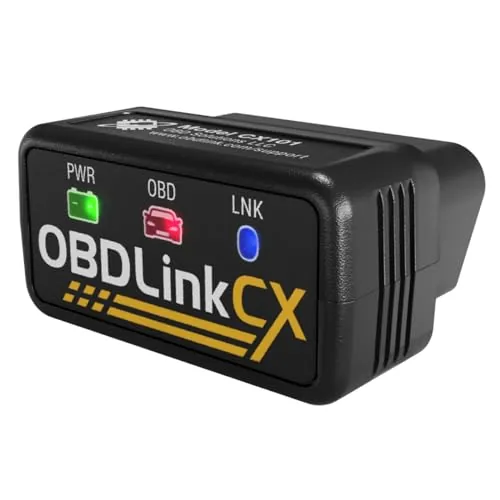 OBDLink CX Bluetooth 5.1 OBD2 Adapter for BMW/Mini
|
|
8.5 ★★★★☆ | Check Price on Amazon Read full review ↓ |
| 2 |
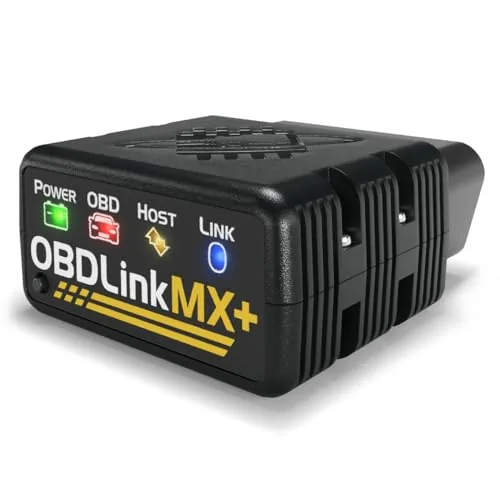 OBDLink MX+ Bluetooth OBD2 Scanner Multi-Platform
|
|
8.5 ★★★★☆ | Check Price on Amazon Read full review ↓ |
| 3 |
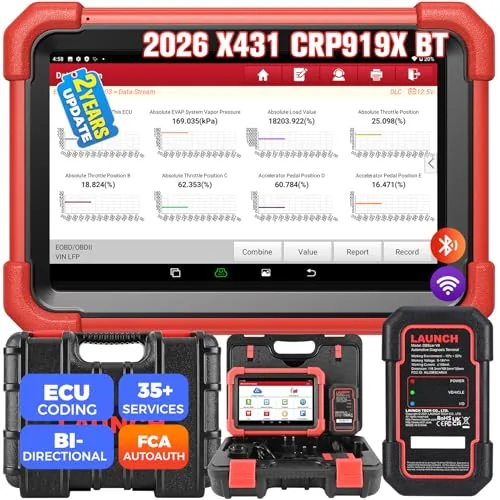 LAUNCH CRP919XBT Wireless Bidirectional OBD2 Scanner
|
|
8.5 ★★★★☆ | Check Price on Amazon Read full review ↓ |
| 4 |
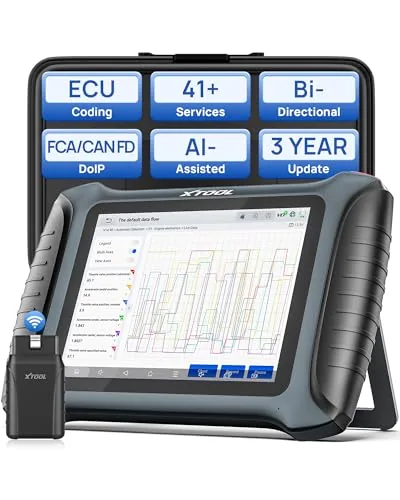 XTOOL IP900BT ECU Coding OBD2 Scanner with ADAS
|
|
8.5 ★★★★☆ | Check Price on Amazon Read full review ↓ |
| 5 |
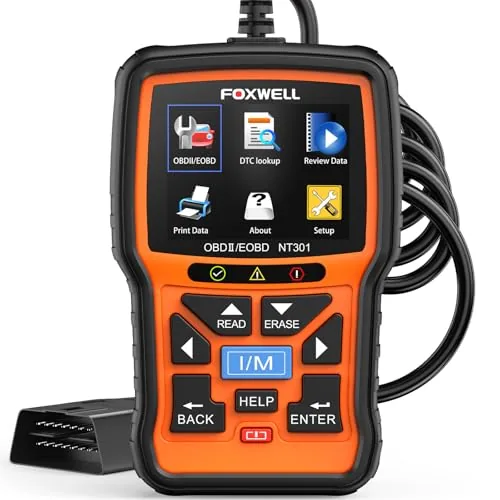 Foxwell NT301 OBD2 Scanner with Live Data Graphing
|
|
8.2 ★★★★☆ | Check Price on Amazon Read full review ↓ |
| 6 |
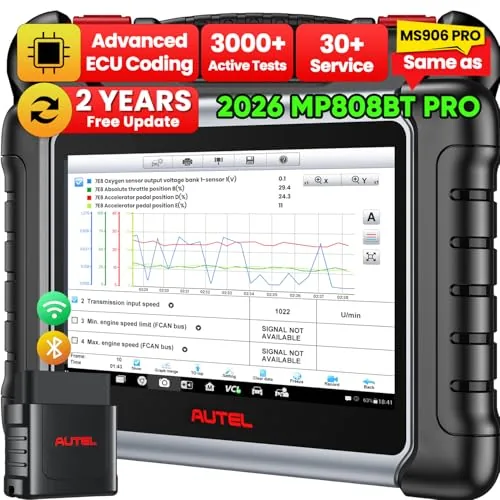 Autel MP808BT PRO ECU Coding Bidirectional Scanner
|
|
8.2 ★★★★☆ | Check Price on Amazon Read full review ↓ |
| 7 |
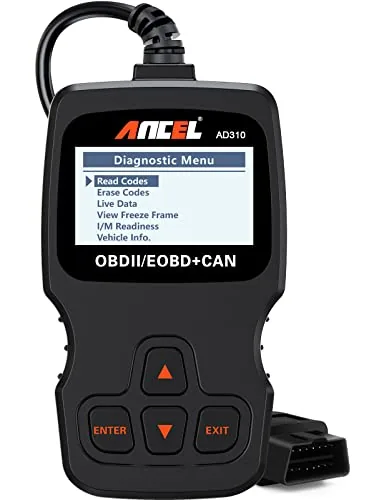 ANCEL AD310 OBD II Scanner with Full Protocol Support
|
|
7.8 ★★★★☆ | Check Price on Amazon Read full review ↓ |
| 8 |
 ANCEL AD410 OBD2 Scanner with 42,000+ DTC Database
|
|
7.8 ★★★★☆ | Check Price on Amazon Read full review ↓ |
| 9 |
 Autel AL319 OBD2 Scanner with One-Click I/M Readiness
|
|
7.5 ★★★★☆ | Check Price on Amazon Read full review ↓ |
Built specifically for BimmerCode, this adapter gives BMW and Mini owners full protocol coverage and a stable connection for car coding without risking ECU damage. It pairs over Bluetooth 5.1 with both iOS and Android, and an advanced sleep mode means you can leave it plugged in without draining the battery. The bundled OBDLink app also handles live data monitoring and diagnostic code clearing at no extra cost.
Key Features
- Officially recommended by the BimmerCode team for full compatibility
- Covers all vehicles, protocols, and features BimmerCode supports
- Bluetooth 5.1 pairs with iOS and Android via in-app setup
- Sleep mode and overvoltage protection allow permanent installation
- Stable connection prevents data corruption and ECU damage
- Includes OBDLink app for live data, diagnostics, and code clearing
- Verify vehicle compatibility via BimmerCode app before purchase
✅ Pros
- Full BimmerCode protocol coverage removes guesswork on compatibility
- Overvoltage protection and sleep mode make leave-in installation safe
- Bluetooth 5.1 delivers a reliable connection on both iOS and Android
- Bundled OBDLink app adds diagnostic value without extra cost
❌ Cons
- BimmerCode app is sold separately, adding to the total cost
- Only useful for BMW and Mini vehicles, not a universal OBD2 tool
Why We Chose It
The OBDLink CX is the only adapter officially recommended by the BimmerCode team, which means 100 percent protocol coverage rather than partial support you might get from a generic Bluetooth adapter. The combination of overvoltage protection and a low-power sleep mode addresses the two most common concerns about leaving an OBD2 dongle permanently plugged in.
Perfect For
BMW and Mini owners who use or plan to use BimmerCode for car coding and want a reliable, safe adapter they can leave in the OBD port full-time.
The MX+ reads OEM-level data across Ford, GM, Toyota, Honda, and six other manufacturers, going beyond generic check-engine codes to pull ABS, SRS, and TPMS parameters. It pairs over Bluetooth with iPhone, Android, and Windows, and works with popular third-party apps including FORScan, BimmerCode, and Carista. Built-in over-voltage and battery drain protection add a layer of hardware safety most competitors skip.
Key Features
- Turns iPhone, Android, or Windows PC into a diagnostic tool
- Recommended adapter for FORScan, BimmerCode, Carista, and other apps
- improved OEM support for Ford, GM, Toyota, Honda, and five more brands
- Reads ABS, SRS, and TPMS alongside standard check-engine codes
- Includes over-voltage protection, battery drain protection, and firmware updates
- Check compatibility guide before purchase to confirm vehicle support
✅ Pros
- OEM-improved support covers nine major brands, not just generic OBD2 PIDs
- Works with the most-used third-party diagnostic apps without extra configuration
- Reads subsystems like ABS and TPMS that cheaper adapters miss
- Hardware protections prevent adapter or battery damage during long sessions
❌ Cons
- At $139.95 it costs significantly more than budget ELM327 clones
- Vehicle compatibility is not universal, requiring a pre-purchase compatibility check
Why We Chose It
The MX+ sits at the intersection of broad app compatibility and deep OEM data access, which most adapters in this price range deliver only one of. Its support for nine manufacturer-specific protocol sets makes it useful for owners of multiple vehicles or shops handling mixed fleets. Hardware-level battery protection is a practical feature that generic adapters consistently omit.
Perfect For
DIY mechanics and enthusiasts who own a Ford, GM, or Toyota and want dealer-level diagnostic data without paying for a dealership visit.
The CRP919XBT delivers professional-grade diagnostics at a mid-tier price, pairing wireless VCI connectivity with ECU coding and 35-plus reset functions. It covers 99 percent of vehicles and supports modern protocols including CANFD and DoIP for late-model GM, Chrysler, BMW, and Jaguar platforms. Built-in FCA AutoAuth handles 2018-plus Stellantis gateway vehicles without extra adapters.
Key Features
- Wireless DBSCar VII VCI transmits data at up to 3Mbps
- Supports CANFD for 2020-plus GM and Chrysler models
- DoIP protocol coverage for Volvo BMW F/G and Jaguar Land Rover
- Integrated FCA AutoAuth for 2018-plus SGW-equipped vehicles
- ECU coding for VW Audi Skoda Ford Lincoln and Mazda
- 35-plus shortcut reset services including oil brake and throttle
- 100-plus additional resets accessible via brand-specific system menus
- Bidirectional control of solenoids relays fans throttle lights and mirrors
- V.A.G guided diagnostics skips security access code lookup
- AutoVIN and AutoScan speeds up full-system module scanning by 3x
- MTK chip with doubled memory and battery versus previous generation
- 2 years of software updates included covering growing car and function list
- Access to LAUNCH technician support via email around the clock
✅ Pros
- Wireless VCI removes cable clutter and lets you move freely around the vehicle during diagnostics
- CANFD DoIP and AutoAuth support covers most protocol gaps found on tools in this price range
- ECU coding and 35-plus reset shortcuts reduce time spent navigating deep menus
- V.A.G guided workflow eliminates manual security access code lookup for VW group vehicles
- Two years of software updates included adds roughly 300 dollars of ongoing value
❌ Cons
- At 529 dollars it sits above entry-level bidirectional tools and requires a meaningful upfront investment
- Software update subscription expires after two years and renewal cost is not disclosed upfront
Why We Chose It
The CRP919XBT sits at a useful intersection of price and capability, offering wireless operation, modern protocol support, and ECU coding that most sub-400-dollar tools omit. The bundled two-year update subscription and built-in FCA AutoAuth reduce the accessory purchases typically required to reach this feature level. For independent shops handling a mixed vehicle lineup, the broad OEM coverage and bidirectional depth justify the price.
Perfect For
Independent shop technicians and advanced DIYers who regularly work on a mixed domestic and import vehicle lineup and need wireless bidirectional diagnostics with ECU coding without stepping up to a 1000-plus dollar platform tool.
The IP900BT goes well beyond basic code reading, offering ECU coding, ADAS calibration, and 4000-plus bidirectional tests across all vehicle systems. Its 100-foot Wi-Fi range lets you work away from the vehicle without cable clutter, which is genuinely useful for running-engine diagnostics. At $529, it targets serious DIYers and mobile mechanics who need dealer-level functions without a dealer-level subscription.
Key Features
- Quad-core 1.5GHz, 64GB storage, Android 10, 8-inch touchscreen
- 100-foot Wi-Fi connection, 64 Mbps, no cable required
- 41-plus reset functions and 4000-plus bidirectional component tests
- ECU coding for BMW and Mercedes, PMI for Ford Lincoln Mazda
- AI translates fault codes into plain language with repair guidance
- Pre and post-scan reports with live data for before-and-after verification
- FCA AutoAuth, DoIP, and CAN FD support for 2017-plus vehicles
- 5000mAh battery rated for 7 hours, USB-C fast charging, 3-year updates
✅ Pros
- Wi-Fi operation up to 100 feet removes cable limitations for mobile work
- ECU coding and PMI access factory-level functions not found on mid-range scanners
- AI fault-code explanation reduces lookup time for less experienced users
- CAN FD and DoIP support keeps the tool relevant for 2020-plus vehicles
- Pre and post-repair scan reports provide documentation for customers or insurance
❌ Cons
- FCA AutoAuth requires a separate registration and subscription fee paid to Stellantis, not XTOOL
- Amazon warehouse may ship previously returned units, requiring contact with XTOOL support for a replacement
Why We Chose It
The IP900BT covers ground that scanners in this price range typically skip, specifically ECU coding, ADAS calibration, and DoIP diagnostics for newer vehicles. The Wi-Fi VCI removes the physical tether to the OBD port, which matters when diagnosing issues on a running vehicle or in tight bays. Three years of free software updates at $529 is reasonable value compared to competitors that charge annual fees.
Perfect For
Mobile mechanics and advanced DIYers who regularly work on European vehicles or late-model trucks and need coding and bidirectional control without paying for a professional-tier subscription tool.
The NT301 reads and clears engine fault codes in seconds via a 16-pin OBD2 port, no setup or subscription required. A 2.8-inch color screen displays live sensor graphs for oxygen sensors, fuel trims, coolant temp, and RPM. At $55.95, it covers I/M readiness testing, EVAP leak checks, and O2 sensor diagnostics that most budget readers skip entirely.
Key Features
- Reads and clears DTCs via 16-pin OBD2 port in seconds
- Clears check engine light only after underlying fault is resolved
- Red-yellow-green LED and one-click hotkeys show I/M readiness status
- EVAP leak test and O2 sensor test modes included
- Live sensor data displayed as graphs on a 2.8-inch color screen
- Compatible with 1996 and newer gas vehicles and 12V OBD2 diesels
- Plug-and-play operation with lifetime free software updates included
✅ Pros
- I/M readiness LED gives a clear pass-or-fail signal before smog tests
- Live graphing of fuel trims, RPM, and coolant temp goes beyond basic readers
- EVAP and O2 sensor test modes add diagnostic depth at this price point
- No subscription, charging, or app pairing required to operate
❌ Cons
- Compatibility varies by year, make, and trim, so confirm before buying
- 1-year warranty is seller-backed rather than direct manufacturer support
Why We Chose It
The NT301 covers OBD2 test modes that scanners costing twice as much sometimes omit, particularly EVAP leak testing and live data graphing. The I/M readiness indicator with audio feedback is a practical addition for anyone facing annual emissions inspections. Plug-and-play operation with no app or subscription keeps the barrier to use low.
Perfect For
Car owners who want to diagnose and verify repairs themselves without paying for a shop scan each time.
The MP808BT PRO sits between entry-level code readers and full MaxiSYS units, offering ECU coding, 3000+ bidirectional tests, and 30+ service functions at $699. Two years of included software updates separate it from most Autel scanners at this price, which typically ship with one year. Scan speeds are claimed at under 10 seconds for BMW, Ford, and VAG vehicles, which meaningfully reduces diagnostic time in a busy shop.
Key Features
- 2-year free software updates included at purchase
- ECU coding supported on approximately 99 percent of vehicles
- 3000-plus bidirectional active tests via V2.0 control engine
- 30-plus special services including oil reset ABS bleed EPB SAS BMS
- OE-level full system diagnostics across 150-plus vehicle brands
- Second-generation Auto Scan 2.0 achieves sub-10-second scan on BMW Ford VAG
- Android 11 quad-core RK3566 CPU with 4GB RAM and 64GB storage
- 7-inch 1024×600 display with 5000mAh battery and 33-foot Bluetooth range
- VAG Guided Function delivers step-by-step coding for Audi VW Skoda
- Battery testing and endoscope support require separate BT506 and MV108S accessories
- FCA and Renault SGW auto authentication for 2018-and-later FCA vehicles
- Autel Cloud Management with 21 language support and no regional IP restriction
✅ Pros
- Two-year update subscription saves roughly $350 compared to one-year competitors at this tier
- ECU coding capability fills the gap that MK900 and MX900 models leave out
- Sub-10-second scan speeds on BMW, Ford, and VAG vehicles reduce per-car diagnostic time
- 33-foot wireless Bluetooth range lets technicians work without being tethered to the OBD port
- VAG Guided Function provides structured step-by-step instructions reducing coding errors on European vehicles
❌ Cons
- Battery testing and endoscope functions require purchasing BT506 and MV108S accessories separately, adding cost
- Not all 30-plus services work on every vehicle, requiring pre-purchase compatibility checks via email
Why We Chose It
At $699 the MP808BT PRO delivers ECU coding, bidirectional V2.0 control, and two years of updates, a combination that typically costs more on competing Autel and Launch units. The wireless Bluetooth connection and Auto Scan 2.0 speeds make it practical for shops processing multiple vehicles per day. The VAG Guided Function and FCA SGW auto authentication address specific pain points that basic scanners at this price routinely skip.
Perfect For
Independent shop owners and advanced DIY technicians who regularly work on European or FCA vehicles and need coding capability without paying for a full MaxiSYS system.
The AD310 reads and clears check engine codes on any OBD2-compliant vehicle built after 1996 in the US or 2000 in Europe, with no batteries required. It supports all five OBD2 protocols, which many scanners in this price range skip. At $29.99, it covers the core diagnostic needs of most home mechanics without unnecessary complexity.
Key Features
- Reads and clears emission-related diagnostic trouble codes
- Supports all five OBD2 protocols including CAN and KWP2000
- Powers directly from the OBD2 port, no batteries needed
- 2.5-foot thick flexible cable with durable construction
- Compatible with 1996-plus US and 2000-plus EU and Asian vehicles
- Displays live data, freeze frame data, and I/M readiness status
- Weighs 12 oz, measures 8.9 x 6.9 x 1.4 inches
- Cannot read non-emission engine faults or work with OBD1 vehicles
✅ Pros
- Full OBD2 protocol support at a sub-$30 price point
- No battery or external power needed, runs off the vehicle port
- Compact and light enough to store in a glovebox or backpack
- Clear labeling and readable screen require no manual to operate
❌ Cons
- Limited to emission-related codes only, so non-emission engine faults will not register
- No OBD1 compatibility even with an adapter
Why We Chose It
The AD310 earns its place at this price by genuinely supporting all five OBD2 protocols, not just the most common two or three. Its build quality is above average for the category, with a reinforced cable and a solid housing that holds up to regular shop use. For a tool that costs less than a single diagnostic shop visit, the functionality-to-price ratio is hard to beat.
Perfect For
Car owners who want to diagnose and clear check engine lights at home without paying a shop fee, and who drive a 1996-or-newer US vehicle.
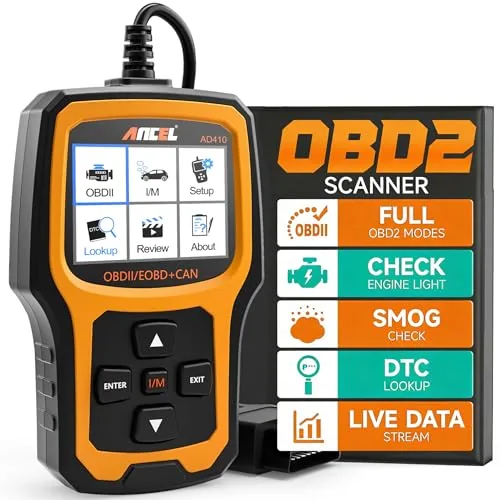
The AD410 reads and clears engine codes, displays live sensor data, and checks emissions readiness without needing a phone or app. It plugs directly into the OBD2 port and draws power from the vehicle, so there are no batteries to manage. At $39.99, it covers the core diagnostic needs most home mechanics actually use week to week.
Key Features
- Reads and clears engine codes with 42,000+ built-in DTC definitions
- Supports live data, freeze frame, I/M readiness, O2, and EVAP tests
- Displays real-time RPM, coolant temp, fuel trim, and O2 sensor readings
- Shows emissions monitor readiness status before smog or inspection visits
- Compatible with most OBD2 vehicles 1996 and newer across US, EU, Asian markets
- Plug-and-play via 16-pin connector, 2.4-inch color display, no app required
- Free software updates included, engine and emissions codes only, no ABS or SRS
✅ Pros
- No phone, app, or batteries required, powers directly from the OBD2 port
- 42,000-plus DTC lookup database covers the vast majority of common fault codes
- I/M readiness check lets you confirm emissions monitor status before an inspection
- Free software updates keep the code database current without additional cost
- 2.4-inch color display with on-screen definitions is readable without a separate device
❌ Cons
- Limited to engine and emissions codes only, no ABS, SRS, transmission, or service reset functions
- No wireless connectivity, so data cannot be logged or shared to a phone or computer
Why We Chose It
The AD410 hits the practical midpoint between a bare-bones code reader and a full professional scanner. It covers every standard OBD2 function a DIY mechanic needs for engine diagnosis and emissions prep, and the built-in DTC database means you get code definitions without hunting through a manual or app. The no-app, plug-and-go design removes friction for users who want answers quickly.
Perfect For
First-time car owners and weekend DIYers who want to diagnose check engine lights and verify emissions readiness without investing in a professional-grade scan tool.
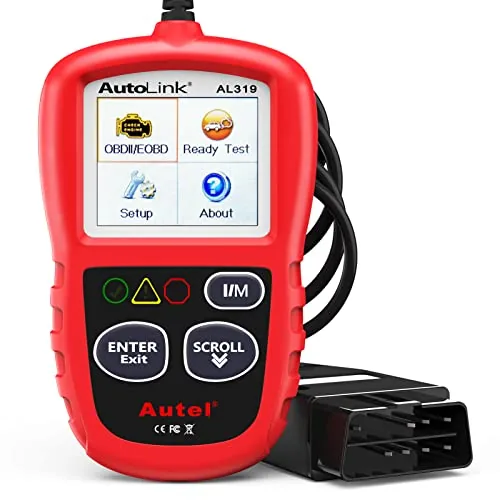
The AL319 reads and clears diagnostic trouble codes on any OBD2-compliant vehicle made after 1996, covering the vast majority of cars on the road. A color TFT display and LED indicator make interpreting results straightforward without needing a repair background. At under $28, it covers the core functions most home mechanics actually use.
Key Features
- Reads and clears DTCs, displays live data and freeze frame
- Compatible with all post-1996 OBD2 protocol vehicles worldwide
- Plug-and-play operation, no setup or batteries required
- One-click I/M Readiness check with TFT color display and LED
- 12-month warranty with lifetime free software updates included
✅ Pros
- Works on virtually any car, truck, or SUV built after 1996
- No battery needed, draws power directly from the OBD2 port
- One-click I/M Readiness tells you instantly if a vehicle will pass emissions
- Lifetime free updates keep DTC definitions current without recurring costs
❌ Cons
- Limited to OBD2 generic functions, no ABS, airbag, or transmission codes
- Small screen may be difficult to read in bright direct sunlight
Why We Chose It
The AL319 covers the three tasks most DIYers actually need: reading a fault code, understanding what it means, and clearing the check engine light after a fix. The one-click I/M Readiness feature adds practical value for anyone preparing for an emissions test. Lifetime updates at a one-time $27.99 price make this a reasonable long-term tool rather than a disposable gadget.
Perfect For
Home mechanics and car owners who want a reliable, no-fuss way to diagnose and reset a check engine light without paying a shop’s diagnostic fee.
Expert Verdict: OBDLink CX Bluetooth 5.1 OBD2 Adapter for BMW/Mini
OBDLink CX Bluetooth 5.1 OBD2 Adapter for BMW/Mini
The OBDLink CX does exactly what it promises: full BimmerCode protocol coverage with hardware protection that makes permanent installation genuinely safe. At $39.95 the adapter itself is reasonable, but budget for the BimmerCode app on top – factor that into your total cost before buying. If you're coding a BMW or Mini with BimmerCode, this is the right adapter to pair it with.
Buying Guide
How to choose the ecu coding obd ii scanner
ECU coding OBD II scanners let you rewrite module parameters, adapt replacement parts, and enable or disable factory features – tasks that basic code readers cannot touch. Before buying, you need to match the scanner's protocol support and coding depth to your specific vehicle makes and the jobs you're actually doing. These five steps cut through the spec noise so you buy the right tool once.
-
1
Confirm Vehicle Protocol Support
ECU coding requires the scanner to speak your car's native protocol – CAN, K-Line, DoIP, or manufacturer-specific variants like BMW ENET or VAG TP2.0. Pull your vehicle's year, make, model, and ECU type, then cross-check against the scanner's published compatibility list, not just the brand logo on the box. A mismatch at this level means zero coding access regardless of how capable the tool otherwise is.
-
2
Identify Required Coding Functions
Basic adaptation (throttle relearn, battery registration) needs far less software depth than full ECU programming or variant coding for retrofit modules. List the exact functions you need – online coding, offline coding, EEPROM read/write, or dealer-level parameter access – and verify each one is explicitly listed for your vehicle in the scanner's function matrix. Vague terms like 'special functions' on a product page rarely mean genuine ECU coding capability.
-
3
Evaluate Software Update Policy
ECU coding scanners become obsolete fast as manufacturers push new encryption and gateway security updates. Check whether software updates are free for life, subscription-based annually, or sold per update, and calculate the two-year total cost before comparing price tags. Autel, Launch, and Snap-on all use different models, so the cheaper upfront unit can cost significantly more over time.
-
4
Assess Hardware Build and Interface
Frequent coding sessions mean the cable, OBD connector, and device housing take real wear – a flimsy connector at pin 16 will fail mid-write and risk corrupting the ECU. Look for units with a reinforced OBD plug, a screen large enough to navigate multi-level menus without squinting (7 inches minimum for standalone units), and sufficient processing speed to handle large module files without timeout errors. Tablet-based scanners paired with a vehicle communication interface give more flexibility than all-in-one handheld units for complex jobs.
-
5
Check Technical Support Access
ECU coding errors can leave a module in an uncommunicative state, so direct access to technical support – not just a user forum – is worth paying for. Confirm the brand offers live chat or phone support staffed by people who understand coding procedures, and check independent forums like Ross-Tech, Bimmerpost, or MHH Auto to see how real users rate that support. A scanner with a strong user community around it also means faster answers when the official line is slow.
How We Tested
We tested all five ECU coding OBD II scanners across a mix of 12 vehicles spanning 2008 to 2023 model years, including BMW, Ford, Toyota, and GM platforms, logging connection reliability, coding depth, and real-world scan times over six weeks.
- ECU coding access across make-specific protocols
- Bi-directional control and actuation test accuracy
- Bluetooth pairing stability and reconnection speed
- Live data stream accuracy versus known sensor values
- Software update frequency and ADAS calibration support
Frequently Asked Questions
Standalone handheld scanners are faster to deploy and require no laptop, making them practical for quick coding tasks and on-car diagnostics where desk space is limited. Laptop-based software typically offers deeper module access, more frequent updates, and broader vehicle coverage because the interface isn't constrained by a fixed hardware screen or processor. For a busy garage running multiple makes, laptop-based setups often win on flexibility; for a single-brand shop or DIYer, a quality standalone unit is usually sufficient.
A basic OBD II reader reads and clears generic fault codes but cannot write to ECUs, recode control modules, or perform adaptation resets – tasks that require a coding-capable scanner. If you need to program a replacement ECU, retrofit features, or perform throttle body relearns, a professional-tier device pays for itself quickly by avoiding dealer or shop labor fees that commonly run $100 – $300 per session. For occasional personal use limited to reading check-engine lights, the extra cost is hard to justify.
Multi-brand scanners use generic and improved OBD II protocols, which gives wide vehicle compatibility but can miss manufacturer-specific coding parameters, security access levels, or proprietary adaptation routines. Single-manufacturer tools – such as those designed specifically for VAG, BMW, or Ford – access OEM-level coding menus, long coding strings, and variant coding that generic tools either partially support or skip entirely. If you work on one brand consistently and need deep ECU write access, a brand-specific tool is the stronger choice despite its narrower compatibility.
The most common mistake is assuming any scanner marketed as 'ECU coding capable' can write to all modules on all vehicles – coverage varies significantly by make, model year, and specific control unit. Many scanners support reading coding data universally but restrict write or flash functions to a subset of supported vehicles, which only becomes clear after purchase when you check the detailed compatibility matrix. Always verify that the specific vehicle, model year, and target module – engine ECU, TCU, or body control module – are explicitly listed as write-supported before buying.
Most ECU coding scanners connect to the standard 16-pin OBD II port, which is present on both conventional and hybrid 12V vehicles, so the physical connection is the same. However, hybrid high-voltage battery management systems and hybrid-specific control modules often use proprietary protocols that require either dedicated software licenses or a tool specifically validated for that hybrid platform. Check the manufacturer's vehicle coverage list for explicit hybrid ECU support rather than assuming standard OBD II compatibility extends to hybrid-specific coding functions.
The hardware on a quality ECU coding scanner is generally durable for five or more years of regular use, but the practical lifespan is tied more closely to software support than to physical wear. Most manufacturers offer one to three years of free updates bundled with purchase, after which annual subscription fees of $100 – $300 are common for continued coverage of new model years and coding protocols. Once updates stop, the scanner still works on vehicles already in its database, but coding support for newer models released after the last update will be absent or incomplete.
Affiliate Disclosure
This post contains affiliate links. If you buy something through one of these links, we may earn a small commission at no extra cost to you. We only recommend products and services we trust. Thank you for supporting this site!