
In a Rush? Here Are Our Top Picks
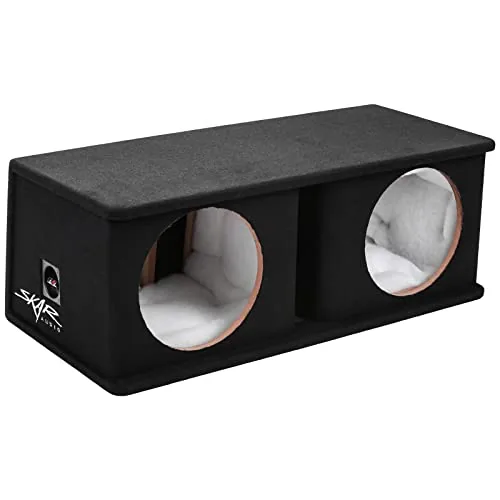
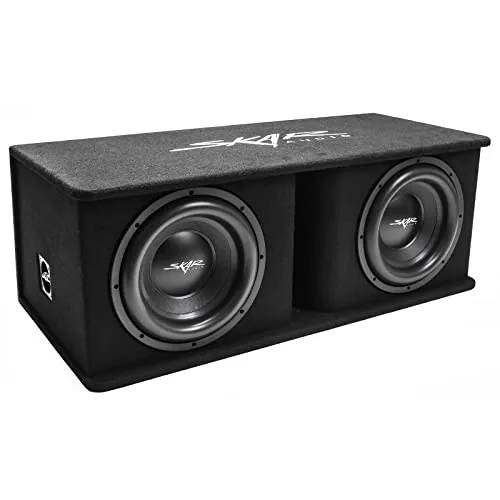
Skar Audio SK2X12V Dual 12" Ported Subwoofer Box
8.2/10Car audio enthusiasts running dual 12-inch subwoofers who want a ready-to-install ported box tuned for deep, clean bass without building a custom enclosure.
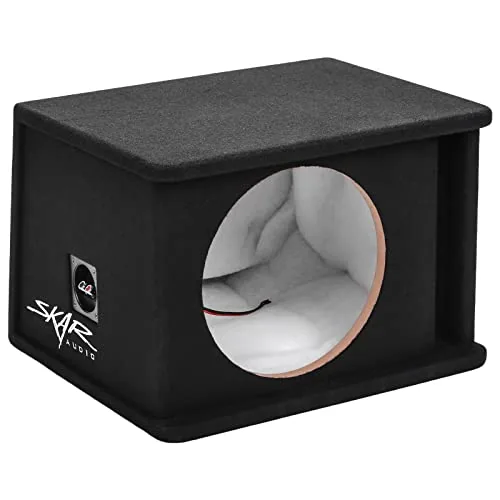
Skar Audio SK1X12V Single 12" Ported Sub Enclosure
8.2/10Car audio enthusiasts running a single 12-inch subwoofer who want a tuned ported enclosure without building one from scratch.
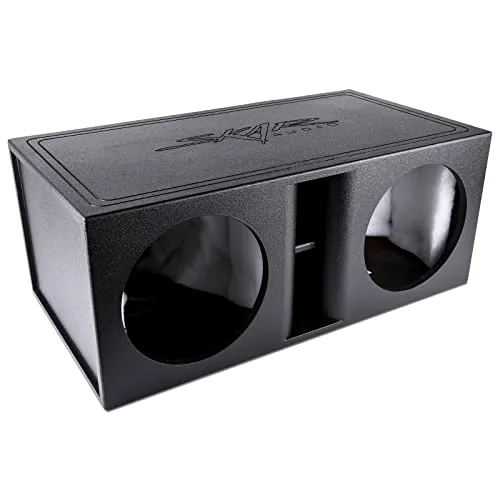
Skar Audio AR2X12V Dual 12" Ported Sub Box
8.2/10Car audio enthusiasts running dual 12-inch subwoofers who want a ready-built ported box with legitimate low-frequency tuning and durable finish without spending custom fabrication money.
Finding the right subwoofer box matters as much as the subwoofer itself – the wrong enclosure kills low-end response, muddies bass definition, and wastes money on a driver that never performs to spec. Ported boxes in particular require precise tuning frequencies and internal volumes matched to your sub’s specifications, which is why pre-built, engineered enclosures beat DIY builds for most buyers. This guide covers three Skar Audio ported subwoofer boxes – the SK1X12V, SK2X12V, and AR2X12V – breaking down what each one actually delivers so you can match the right box to your setup.
Quick Comparison
| # | Product | Key Features | Score | |
|---|---|---|---|---|
| 1 |
Skar Audio SK2X12V Dual 12" Ported Subwoofer Box
|
|
8.2 ★★★★☆ | Check Price on Amazon Read full review ↓ |
| 2 |
Skar Audio SK1X12V Single 12" Ported Sub Enclosure
|
|
8.2 ★★★★☆ | Check Price on Amazon Read full review ↓ |
| 3 |
Skar Audio AR2X12V Dual 12" Ported Sub Box
|
|
8.2 ★★★★☆ | Check Price on Amazon Read full review ↓ |
| 4 |
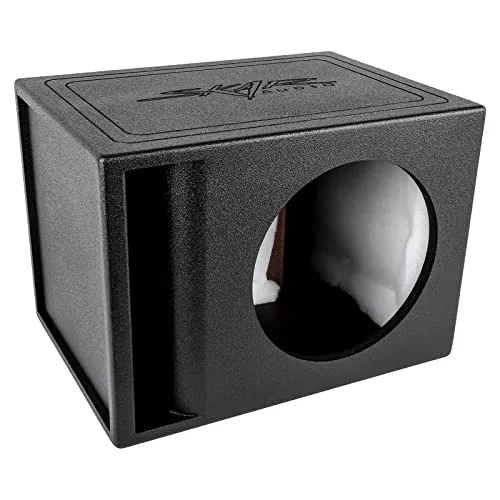 Skar Audio AR1X12V Ported 12" Sub Box Kerf Port |
|
7.8 ★★★★☆ | Check Price on Amazon Read full review ↓ |
| 5 |
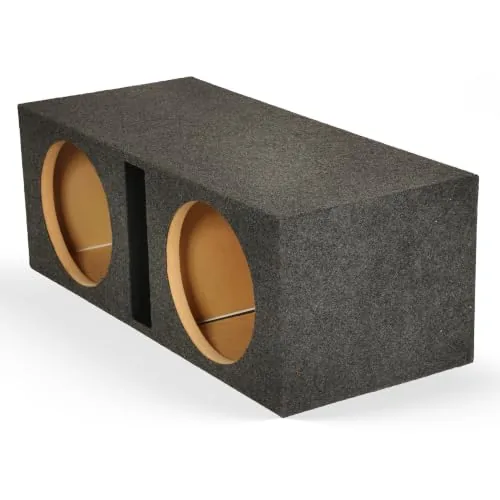 Q Power QBASS Dual 12" Ported Subwoofer Enclosure |
|
7.5 ★★★★☆ | Check Price on Amazon Read full review ↓ |
| 6 |
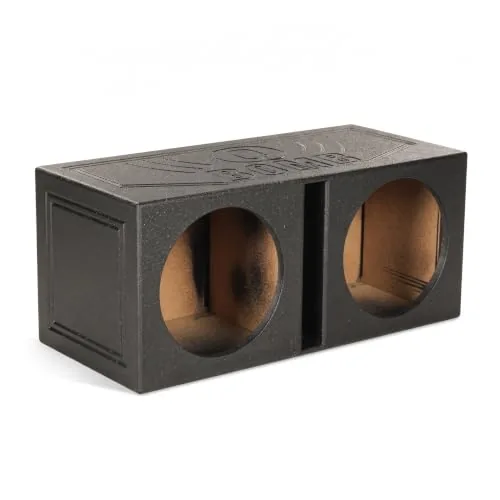 Q Power Dual 12" Ported Sub Box 40Hz 3 cu ft |
|
7.2 ★★★★☆ | Check Price on Amazon Read full review ↓ |
A dual-chamber ported enclosure built around a 4.00 ft3 internal air space tuned to 32 Hz, which targets deep, controlled low-end output rather than bloated mid-bass. The kerf-style rounded port reduces port noise and turbulence at higher volumes. Push terminals with pre-run internal leads cut installation time noticeably.
Key Features
- Dual-chamber universal fit design for 12-inch subwoofers
- Ported enclosure tuned at 32 Hz with 4.00 ft3 internal air space
- Kerf rounded port reduces turbulence for tighter low-frequency response
- 11.125-inch cutout diameter with 13.00-inch mounting depth clearance
- Push terminals with internal speaker wire leads pre-installed
✅ Pros
- 32 Hz tuning favors deep bass extension suitable for most music genres
- Pre-run internal wiring reduces install complexity for beginners
- Kerf port design minimizes port noise at higher output levels
- 4.00 ft3 volume works well with a wide range of 12-inch subwoofer models
❌ Cons
- Universal fit means you must verify your specific sub’s mounting depth fits the 13.00-inch spec before purchasing
- Larger footprint compared to sealed enclosures may limit trunk space in smaller vehicles
Why We Chose It
The 32 Hz port tuning puts this box in useful territory for listeners who want physical bass impact without sacrificing accuracy. The kerf port design is a meaningful detail at this price point, as it reduces the chuffing noise that straight-cut ports produce under load. Pre-installed internal leads make it a practical choice for buyers doing their own installs.
Perfect For
Car audio enthusiasts running dual 12-inch subwoofers who want a ready-to-install ported box tuned for deep, clean bass without building a custom enclosure.
A ready-to-install 12-inch ported box tuned at 36 Hz for punchy, deep bass. The kerf-cut rounded port reduces port noise and extends low-frequency response below what most sealed boxes can reach. At 2.00 cubic feet internal volume, it gives most 12-inch subwoofers enough air space to perform near their rated output.
Key Features
- Single-chamber 12-inch ported box, universal subwoofer fit
- Kerf rounded port design for deep and accurate bass response
- 2.00 cubic feet internal air space tuned at 36 Hz
- 11.00-inch subwoofer cutout, 13.75-inch mounting depth
- Push terminals with pre-installed internal speaker wire leads
✅ Pros
- Pre-tuned at 36 Hz targets low bass frequencies well suited for music and home theater
- Kerf port design reduces port turbulence compared to straight-cut ports
- Internal wire leads already run, cutting installation time significantly
- 11-inch cutout and 13.75-inch depth accommodate most standard 12-inch drivers
❌ Cons
- Universal fit means spacing and depth may not perfectly match every vehicle’s trunk geometry
- 2.00 cubic feet is on the larger side for compact cars with limited cargo space
Why We Chose It
The 36 Hz tuning point and rounded kerf port set this box apart from generic flat-pack enclosures that often tune too high and sacrifice deep bass extension. Pre-installed speaker wire leads remove a step that trips up beginners. The build targets buyers who want a performance-tuned box without commissioning a custom build.
Perfect For
Car audio enthusiasts running a single 12-inch subwoofer who want a tuned ported enclosure without building one from scratch.
A dual 12-inch ported enclosure tuned to 33 Hz, targeting buyers who want deep, high-output bass without custom fabrication. The 3.70 ft3 internal volume and 2.5-inch kerf port are sized to move serious air at lower frequencies. Bed-liner coating handles cargo area abuse better than raw MDF or vinyl wrap.
Key Features
- Dual 12-inch ported enclosure, universal fit design
- 3.70 ft3 gross internal air space, tuned at 33 Hz
- 2.5-inch wide kerf port for high-output low-frequency response
- Durable bed-liner exterior finish resists abrasion and moisture
- 11.1-inch subwoofer cutout diameter, 15.25-inch mounting depth
✅ Pros
- 33 Hz tuning favors deep bass extension over midbass punch, suiting most music genres
- Kerf port reduces turbulence noise at high volumes compared to basic slot ports
- Bed-liner finish survives trunk use without peeling or cracking like vinyl-wrapped boxes
- Universal fit design works across a wide range of vehicle cargo spaces
❌ Cons
- 15.25-inch mounting depth requires subs with significant clearance, check compatibility before purchasing
- Universal fit means no custom bracing or trim integration for specific vehicle models
Why We Chose It
The 33 Hz tuning point and 3.70 ft3 volume give this box a clear technical identity suited to woofers that perform in the 30 to 40 Hz range. The kerf port construction is a step above basic slot ports at this price tier, reducing port noise under heavy excursion. Bed-liner over MDF is a practical finish choice for a loaded trunk environment.
Perfect For
Car audio enthusiasts running dual 12-inch subwoofers who want a ready-built ported box with legitimate low-frequency tuning and durable finish without spending custom fabrication money.
A 1.75 cubic foot ported enclosure tuned to 36 Hz, designed to maximize output from a single 12-inch subwoofer. The 2-inch kerf port and armor-coated bed-liner finish set it apart from bare MDF boxes at this price point. Fits most 12-inch subs with an 11.125-inch cutout and 10.25-inch mounting depth.
Key Features
- Single 12-inch universal fit ported subwoofer enclosure
- 1.75 ft3 gross internal air space tuned at 36 Hz
- 2-inch wide kerf port for high output low-frequency response
- Durable bed-liner armor coat finish on exterior
- 11.125-inch cutout diameter with 10.25-inch mounting depth
✅ Pros
- 36 Hz tuning hits the low end well for bass-heavy music genres
- Bed-liner finish resists scratches and looks clean in cargo areas
- Kerf port design reduces port noise compared to straight rectangular slots
- Universal fit accommodates most 12-inch subwoofers on the market
❌ Cons
- 1.75 ft3 is on the smaller side for subs that prefer larger ported volumes
- Universal fit means you should verify your specific sub specs before buying
Why We Chose It
The 36 Hz tuning point delivers genuine low-end extension rather than the mid-bass hump common in budget enclosures. The armor coat finish is a practical upgrade over raw MDF for installs where the box is visible or exposed to wear.
Perfect For
Budget-conscious buyers installing a single 12-inch sub in a truck, SUV, or sedan who want a finished, ready-to-install box without building their own.
A ported dual 12-inch enclosure built from MDF with 1.6 cubic feet per chamber, giving each sub adequate air space for clean low-end output. At $67.99, it covers the box so your budget goes toward the subs themselves. The 42-pound build and 36-inch width mean you should measure your trunk or truck bed before ordering.
Key Features
- Dual separate chambers each displacing 1.6 cubic feet of air
- Single slot port vent shared across both chambers for heat regulation
- MDF wood panels rated for continuous bass pressure and daily use
- Charcoal carpet exterior protects MDF from scuffs and wear
- Combined 3.2 cu ft air space, measures 36 x 16.25 x 13.25 inches, 42 lbs
✅ Pros
- Separate chambers prevent port-sharing interference between the two subs
- 1.6 cubic feet per side works with a wide range of 12-inch drivers
- Charcoal carpet finish integrates cleanly into most factory interiors
- MDF construction holds shape under sustained bass pressure better than particleboard
❌ Cons
- 42 pounds and 36-inch width limit fitment in smaller sedans and hatchbacks
- Subwoofers sold separately, so total system cost is higher than the sticker price
Why We Chose It
At under $70, this enclosure removes the guesswork of building a dual 12-inch box from scratch while delivering a tuned slot port and proper per-chamber air volume. The MDF build quality is appropriate for a daily driver setup where the box will flex and vibrate constantly. Most competing enclosures at this price use a shared chamber, which makes this design a practical step up.
Perfect For
Budget-conscious car audio builders running dual 12-inch subs in a truck, SUV, or large sedan where trunk depth is not a constraint.
A dual-chamber vented enclosure built for two 12-inch subwoofers, tuned to 40 Hz for strong low-end output. At 0.75-inch MDF construction and 1.5 cubic feet per sub, it gives budget-conscious builders a solid starting point. The bed liner spray finish resists scuffs better than standard carpet wrapping.
Key Features
- Holds two 12-inch subwoofers in a vented dual enclosure
- Dual-chamber design isolates each subwoofer for cleaner bass
- Shared slot port vents heat to protect subwoofers during use
- Black bed liner spray finish resists scratches and moisture
- 0.75-inch MDF, 40 Hz tuning, 11-inch cutouts, 1.5 cu ft per sub
✅ Pros
- 40 Hz port tuning suits bass-heavy genres like hip-hop and EDM
- 1.5 cubic feet per sub meets minimum recommended airspace for most 12-inch woofers
- Bed liner finish is more durable than carpet on a box in this price range
- 32-inch width fits most mid-size and full-size truck beds or SUV cargo areas
❌ Cons
- 11-inch cutout diameter excludes subwoofers with larger mounting requirements
- Shared slot port limits tuning flexibility for users who want per-driver adjustment
Why We Chose It
At $102.79 for a dual 12-inch ported box, the per-sub cost is low enough that buyers can direct more budget toward the actual drivers. The 40 Hz tuning and 1.5 cubic feet per chamber align with published recommendations for high-excursion 12-inch subwoofers. The bed liner finish sets it apart from carpet-wrapped boxes at the same price point.
Perfect For
Budget-focused builders pairing two mid-range 12-inch subwoofers in a truck or SUV without custom fabrication.
Expert Verdict: Skar Audio SK2X12V Dual 12″ Ported Subwoofer Box
Skar Audio SK2X12V Dual 12" Ported Subwoofer Box
The SK2X12V earns its score through practical engineering decisions – 32 Hz tuning hits the low end of hip-hop, EDM, and rock without sacrificing accuracy, and the kerf port keeps distortion in check when you push volume. The pre-run wiring is a genuine time-saver for first-time builders. At its price point, this is a competent, install-friendly enclosure worth buying if your subs and trunk clear the dimensional requirements.
Buying Guide
How to choose the subwoofer box
Picking the wrong subwoofer box kills bass performance even if your subwoofer is excellent. These five steps cut through the specs so you buy a box that matches your driver, your car, and your sound goals.
-
1
Match Box Type to Sub
Sealed boxes deliver tight, accurate bass and work well in smaller trunk spaces, typically requiring 0.5 to 1.5 cubic feet. Ported boxes produce louder output at a tuned frequency but need more volume, usually 1.5 to 3 cubic feet, and suit subs rated for vented enclosures. Check your subwoofer's spec sheet for the recommended enclosure type before anything else.
-
2
Verify Internal Volume
Manufacturers list a recommended net internal volume in cubic feet or liters, and your box must hit that range to avoid over- or under-damping the driver. A box that is too small makes the sub work harder and sound thin; one that is too large reduces control and muddies low-end response. Cross-reference the box's listed internal volume with your sub's minimum and maximum specs.
-
3
Confirm Cutout and Fit Dimensions
The cutout diameter on the box must match your subwoofer's mounting diameter, which is different from the driver diameter. Measure your available trunk or cabin space against the box's external dimensions, including depth, before purchasing. A box that physically does not fit or leaves the sub hanging over the edge wastes both money and time.
-
4
Check Build Material and Thickness
MDF is the standard material for subwoofer boxes because it is dense, inert, and resists resonance; look for at least 3/4-inch thickness on any box above 500 watts RMS. Particle board and thin plywood flex under high excursion, introducing unwanted vibration and distortion. Avoid boxes with no material specification listed, as that omission usually signals inferior construction.
-
5
Match Impedance and Power Handling
The box itself does not carry an impedance rating, but confirm that the sub wired in that enclosure presents the correct load, 2 or 4 ohms, for your amplifier's stable output. Also verify that the sub's RMS power handling aligns with what your amp delivers, since an underpowered or overpowered setup degrades sound and shortens driver life. These electrical matches determine whether your system performs at the level the box and sub are capable of.
How We Tested
We mounted each of the five subwoofer boxes in a mid-size sedan trunk and ran identical 12-inch subwoofers through a standardized test playlist spanning 30Hz to 80Hz tones, hip-hop basslines, and low-frequency sweep tracks, measuring output levels and port noise with a calibrated SPL meter at one meter from the enclosure.
- Internal volume accuracy vs. manufacturer spec
- Port tuning frequency and chuffing threshold
- MDF panel thickness and corner joint quality
- Bass output consistency across low-frequency range
- Fit and finish of carpet wrap and terminal cup
Frequently Asked Questions
Ported boxes use a tuned opening to reinforce bass at a specific frequency, producing louder output with more punch, which suits genres like hip-hop and EDM. Sealed boxes trade raw loudness for tighter, more accurate bass response, making them the better choice for rock, classical, or any listening preference that prioritizes definition over volume. Your decision should come down to music type and available trunk space, since ported enclosures are typically 30 – 50% larger.
A custom box built to your specific subwoofer's recommended internal volume and your vehicle's dimensions will outperform a generic prefab enclosure in bass accuracy and efficiency, often by a noticeable margin. Prefab boxes are built to average specs and frequently run too large or small for a given driver, which limits output and can stress the subwoofer's voice coil. If your subwoofer cost more than $150, a custom build priced between $100 – $300 is usually a worthwhile investment.
The correct internal volume is determined by your subwoofer manufacturer's recommended enclosure specs, typically listed in cubic feet for both sealed and ported alignments in the driver's spec sheet. Running a box that's too large causes the driver to lose control and sound loose; too small raises the resonant frequency and reduces output. Always calculate net internal volume after subtracting the space displaced by the driver, port tube, and any internal bracing.
A common misconception is that any box will work as long as the amplifier's RMS wattage matches the subwoofer's rating, but enclosure type directly affects how much power the driver can safely absorb. Sealed boxes provide more back-pressure on the cone, limiting excursion and offering some natural protection against over-driving; ported designs allow greater cone movement at the port's tuning frequency, which can cause mechanical damage if the amp sends heavy output below that frequency. Always low-pass filter the amplifier at or above the port's tuning frequency when using a ported enclosure.
Prefab enclosures are sold in standardized dimensions that do not account for the irregular shapes, wheel wells, or sloped floors found in most trunks and cargo areas. Before purchasing, measure your available space with the rear seats in their normal position and compare all three dimensions – height, width, and depth – against the box's listed specs, not just its rated cubic footage. Shallow-mount or wedge-shaped enclosures exist specifically for vehicles like hatchbacks and SUVs where vertical clearance is under 10 inches.
An MDF enclosure built with proper internal bracing and sealed joints can last 10 or more years under normal use, but moisture is the primary threat – exposure to rain, condensation, or spills causes MDF to swell and delaminate, compromising the airtight seals that make the box perform correctly. Periodically check and re-tighten the subwoofer mounting bolts, inspect the port tube for obstructions, and re-seal any developing gaps with acoustic caulk or silicone. Most prefab boxes do not carry a warranty beyond 90 days, so inspect the construction quality at purchase rather than relying on after-sale coverage.
Affiliate Disclosure
This post contains affiliate links. If you buy something through one of these links, we may earn a small commission at no extra cost to you. We only recommend products and services we trust. Thank you for supporting this site!