
Bi-directional OBD II scanners do more than read and clear codes – they let you send commands to your vehicle’s systems to test components like fuel injectors, ABS solenoids, and cooling fans without disassembling anything. That capability used to require a shop-grade tool costing $1,000 or more, but options like the GEARWRENCH GWSMARTBT, Innova 5610, and Yizom AI Scan Tool have brought genuine bi-directional control into the $100 – $300 range. If you’re a serious DIYer or a professional looking to cut diagnostic time, this guide breaks down which scanner earns its price and which cuts corners where it counts.
Quick Comparison
| # | Product | Key Features | Score | |
|---|---|---|---|---|
| 1 |
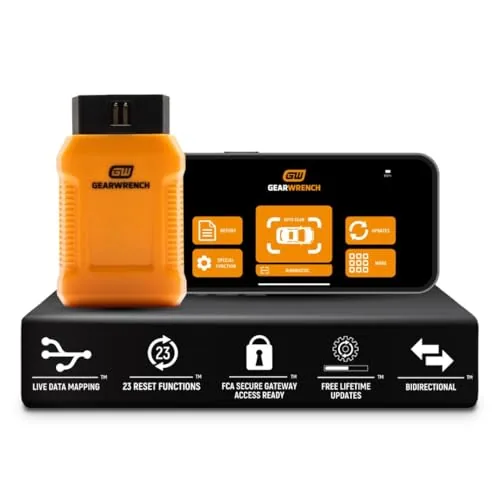 GEARWRENCH GWSMARTBT Bi-Directional Bluetooth Scan Tool
|
|
8.5 ★★★★☆ | Check Price on Amazon Read full review ↓ |
| 2 |
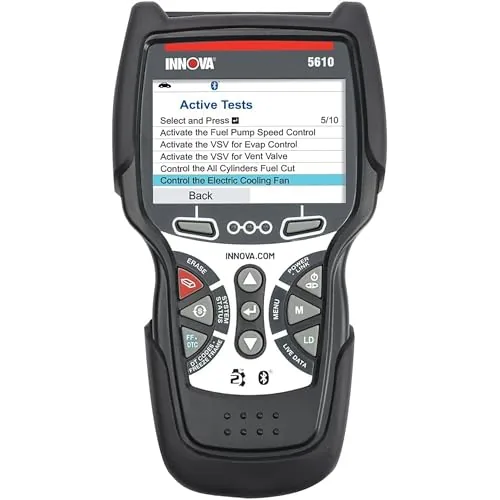 Innova 5610 Bidirectional OBD2 Scanner with Free Updates
|
|
8.2 ★★★★☆ | Check Price on Amazon Read full review ↓ |
| 3 |
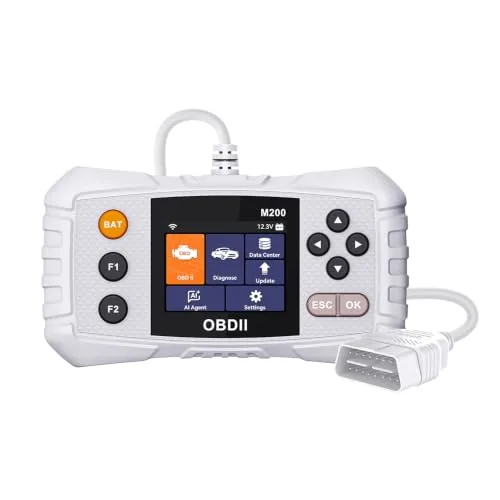 Yizom OBD2 AI Bidirectional Scan Tool
|
|
8.2 ★★★★☆ | Check Price on Amazon Read full review ↓ |
| 4 |
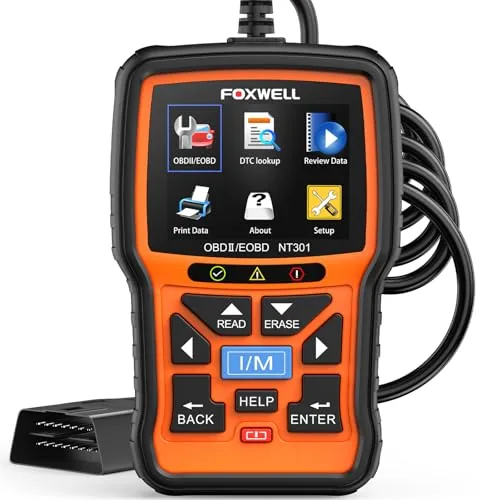 Foxwell NT301 OBD2 Scanner with Live Data Graphing
|
|
8.2 ★★★★☆ | Check Price on Amazon Read full review ↓ |
| 5 |
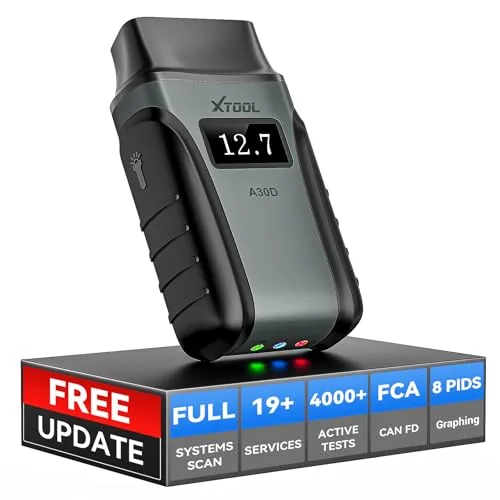 XTOOL A30D Bidirectional OBD2 Scanner, 19 Resets
|
|
7.8 ★★★★☆ | Check Price on Amazon Read full review ↓ |
| 6 |
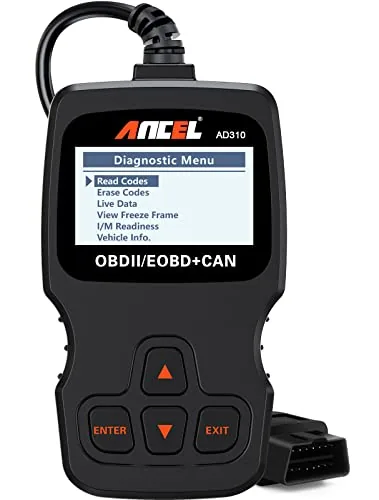 ANCEL AD310 OBD II Scanner with Full Protocol Support
|
|
7.8 ★★★★☆ | Check Price on Amazon Read full review ↓ |
| 7 |
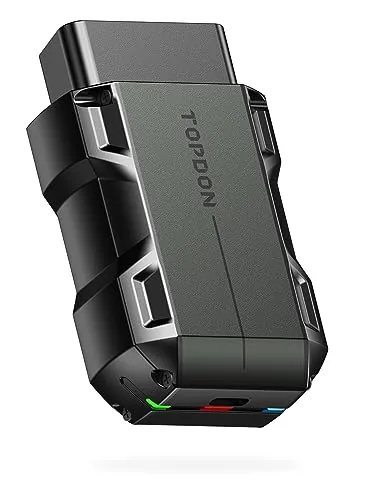 TOPDON TopScan Lite OBD2 Bidirectional Scanner with AI
|
|
7.8 ★★★★☆ | Check Price on Amazon Read full review ↓ |
The GWSMARTBT connects to your smartphone via Bluetooth and delivers OE-level diagnostics without recurring subscription fees. It supports full bi-directional control, meaning you can command vehicle systems directly rather than just reading codes. At under $100 with lifetime free software updates, it competes with tools that cost significantly more.
Key Features
- OE-level diagnostics streamed to your smartphone or tablet
- Free lifetime software updates with no subscription fees
- Full bi-directional control with live actuation testing
- 23 vehicle reset and relearn functions including ABS bleeding and TPMS reset
- Live data graphing and freeze frame capture for diagnostic review
✅ Pros
- No subscription fees saves meaningful money over multi-year ownership
- Bi-directional control at this price point is rare among consumer scan tools
- 23 service reset functions covers the most common shop procedures
- Wireless Bluetooth connection removes cable clutter during diagnostics
❌ Cons
- Smartphone-dependent setup may frustrate users who prefer a dedicated screen
- OE-level coverage claims should be verified against your specific vehicle make and model before purchase
Why We Chose It
Most scan tools under $100 are read-only code readers with no service reset capability. The GWSMARTBT includes bi-directional actuation and 23 relearn functions, which are features typically gated behind $200 to $300 tools. The lifetime free update policy removes the recurring cost that makes competing professional tools expensive to maintain.
Perfect For
DIY mechanics and small shop technicians who need professional-grade reset and actuation functions without paying for a subscription-based tool.
The Innova 5610 goes beyond reading codes by letting you send commands directly to vehicle systems, such as cycling the fuel pump or retracting an electronic parking brake. It pulls live data from ABS, SRS, transmission, and engine modules, which puts it closer to dealer-level capability than most consumer scanners. Free lifetime updates and no subscription fees make the $349.99 price easier to justify over time.
Key Features
- Real-time OBD2 and OEM live data for active troubleshooting
- improved data stream covers ABS, SRS, transmission, and engine
- Special reset function runs dealer-level relearn procedures
- Bidirectional controls test fuel pump, parking brake, and more
- Supports 1996 to 2023 OBD2 vehicles in English, Spanish, French
- Free lifetime software updates, no subscription required
- Pairs with RepairSolutions2 app, used by 4 million users
- ASE-certified US phone and email support, Monday through Friday
- Vehicle coverage varies by make, model, and year; check compatibility tool
✅ Pros
- Bidirectional control lets you actuate components directly from the scanner
- No subscription fees and free updates lower the long-term cost
- ASE-certified US-based support available by phone during business hours
- Live data across advanced modules including ABS, SRS, and transmission
- RepairSolutions2 app adds wireless functionality and repair guidance
❌ Cons
- Coverage is not universal and varies significantly by make, model, and year
- At $349.99 it overlaps with entry-level professional shop tools
Why We Chose It
Most consumer scanners read and clear codes but stop there. The 5610 adds bidirectional output controls and dealer-level relearn procedures, which saves a separate trip to the shop for tasks like electronic parking brake service. The combination of free updates and real US-based technical support makes it a credible long-term tool rather than a disposable gadget.
Perfect For
DIY mechanics and serious enthusiasts who regularly work on modern vehicles and need more than basic code reading without paying for a full commercial scan tool.
The Yizom OBD2 scanner goes beyond reading codes by using AI to identify root causes and estimate local repair costs before you visit a shop. Bidirectional control lets you send commands to components directly, so you can confirm a fix rather than replace parts on a guess. WiFi-based lifetime updates keep vehicle coverage current without cables or subscriptions.
Key Features
- AI analyzes live data to identify root cause across four systems
- WiFi delivers free lifetime updates, no PC or subscription required
- Saves, replays, and exports diagnostic sessions with QR code cloud printing
- Ten diagnostic modes including bidirectional active component testing
- Covers 60-plus global vehicle brands via all OBD II protocols
✅ Pros
- Bidirectional control lets you verify repairs, not just read codes
- AI-generated repair cost estimates reduce shop negotiation guesswork
- Lifetime wireless updates with no recurring fee
- Works across all OBD II protocols covering a wide range of makes
- Cloud printing and report export useful for DIYers working with mechanics
❌ Cons
- AI diagnosis accuracy depends on data quality and may need verification
- No mention of touchscreen, screen size, or resolution in specs
Why We Chose It
At $89.99, this scanner offers bidirectional control and AI-assisted root cause analysis, features typically found on tools costing significantly more. The no-subscription lifetime update model and built-in cloud reporting add genuine long-term value for home garage users and light professional use.
Perfect For
A DIY mechanic who wants to accurately diagnose multi-system faults and communicate findings clearly to a shop without paying for dealer-level scan tools.
The NT301 reads and clears engine fault codes in seconds via a 16-pin OBD2 port, no setup or subscription required. A 2.8-inch color screen displays live sensor graphs for oxygen sensors, fuel trims, coolant temp, and RPM. At $55.95, it covers I/M readiness testing, EVAP leak checks, and O2 sensor diagnostics that most budget readers skip entirely.
Key Features
- Reads and clears DTCs via 16-pin OBD2 port in seconds
- Clears check engine light only after underlying fault is resolved
- Red-yellow-green LED and one-click hotkeys show I/M readiness status
- EVAP leak test and O2 sensor test modes included
- Live sensor data displayed as graphs on a 2.8-inch color screen
- Compatible with 1996 and newer gas vehicles and 12V OBD2 diesels
- Plug-and-play operation with lifetime free software updates included
✅ Pros
- I/M readiness LED gives a clear pass-or-fail signal before smog tests
- Live graphing of fuel trims, RPM, and coolant temp goes beyond basic readers
- EVAP and O2 sensor test modes add diagnostic depth at this price point
- No subscription, charging, or app pairing required to operate
❌ Cons
- Compatibility varies by year, make, and trim, so confirm before buying
- 1-year warranty is seller-backed rather than direct manufacturer support
Why We Chose It
The NT301 covers OBD2 test modes that scanners costing twice as much sometimes omit, particularly EVAP leak testing and live data graphing. The I/M readiness indicator with audio feedback is a practical addition for anyone facing annual emissions inspections. Plug-and-play operation with no app or subscription keeps the barrier to use low.
Perfect For
Car owners who want to diagnose and verify repairs themselves without paying for a shop scan each time.
The A30D pairs bidirectional ECU control with 19 maintenance reset functions at under $90, a combination usually reserved for tools costing two to three times more. It connects wirelessly up to 33 feet and runs through a smartphone app on Android 9.0 or iOS 10.0 and above, with no ongoing subscription fees for core functions. Free lifetime software updates make it a one-time purchase rather than a recurring expense.
Key Features
- Free lifetime software updates, no subscription required
- Bidirectional control tests fuel pump, valves, wipers, and more remotely
- 19 reset functions including EPB, TPMS, ABS bleeding, oil, and airbag
- Wireless connection up to 33 feet, pairs with Android 9.0 and iOS 10.0
- Displays all major modules with up to 8 live PIDs simultaneously
- Supports CAN-FD and FCA AutoAuth protocols for newer vehicles
- 2-year repair warranty and lifetime technical support included
- 22 language options available on request
✅ Pros
- Bidirectional ECU commands let you test components without disassembly
- 19 reset functions cover most routine maintenance jobs at no extra cost
- No subscription fees for core diagnostics or software updates
- 33-foot wireless range gives freedom to move around the vehicle
- CAN-FD support extends usefulness to newer vehicle platforms
❌ Cons
- FCA AutoAuth for Chrysler, Dodge, Jeep, and Fiat requires a separate paid subscription not included with the device
- Live data limited to 8 PIDs at once, which may feel restrictive for advanced diagnostics
Why We Chose It
At $89.31 with no recurring fees, the A30D delivers bidirectional control and 19 resets that typically appear only in tools priced above $150. The wireless smartphone-based interface lowers the hardware cost while keeping full-system coverage intact. It sits in a practical middle ground between a basic code reader and a professional bench tool.
Perfect For
DIY car owners and small-shop technicians who want to run brake, electrical, and maintenance resets at home without paying dealer or shop labor rates.
The AD310 reads and clears check engine codes on any OBD2-compliant vehicle built after 1996 in the US or 2000 in Europe, with no batteries required. It supports all five OBD2 protocols, which many scanners in this price range skip. At $29.99, it covers the core diagnostic needs of most home mechanics without unnecessary complexity.
Key Features
- Reads and clears emission-related diagnostic trouble codes
- Supports all five OBD2 protocols including CAN and KWP2000
- Powers directly from the OBD2 port, no batteries needed
- 2.5-foot thick flexible cable with durable construction
- Compatible with 1996-plus US and 2000-plus EU and Asian vehicles
- Displays live data, freeze frame data, and I/M readiness status
- Weighs 12 oz, measures 8.9 x 6.9 x 1.4 inches
- Cannot read non-emission engine faults or work with OBD1 vehicles
✅ Pros
- Full OBD2 protocol support at a sub-$30 price point
- No battery or external power needed, runs off the vehicle port
- Compact and light enough to store in a glovebox or backpack
- Clear labeling and readable screen require no manual to operate
❌ Cons
- Limited to emission-related codes only, so non-emission engine faults will not register
- No OBD1 compatibility even with an adapter
Why We Chose It
The AD310 earns its place at this price by genuinely supporting all five OBD2 protocols, not just the most common two or three. Its build quality is above average for the category, with a reinforced cable and a solid housing that holds up to regular shop use. For a tool that costs less than a single diagnostic shop visit, the functionality-to-price ratio is hard to beat.
Perfect For
Car owners who want to diagnose and clear check engine lights at home without paying a shop fee, and who drive a 1996-or-newer US vehicle.
At $51.99, the TopScan Lite turns a smartphone into a full-system diagnostic tool with bidirectional control, letting you command individual components like injectors and fans to pinpoint faults without disassembly. The first year of advanced features is free, including live data, code clearing, and the AI repair assistant. After year one, continued access to those features requires a paid subscription, which is worth knowing before you buy.
Key Features
- Bidirectional control tests injectors, fans, wipers, lights via phone
- Core diagnostics free for life, advanced features free first year
- Full system scan covers all ECU modules, not just 4 systems
- AI assistant TopFix provides step-by-step repair guidance and Q&A
- 8 one-tap resets including oil, EPB, DPF, ABS, BMS, airbag
- Supports FCA, Renault, Nissan gateway unlock and CAN-FD protocol
- Built-in repair database with TSBs, fault codes, and DLC locator
✅ Pros
- Bidirectional control at this price point is uncommon and genuinely useful for fault isolation
- Full system scan goes well beyond the 4-system coverage typical of budget OBD2 tools
- Gateway unlock for FCA, Renault, and Nissan removes a common diagnostic barrier
- AI repair assistant with OEM data reduces time spent searching forums and manuals
- CAN-FD support extends compatibility to newer vehicle models
❌ Cons
- Advanced features including live data and code clearing require a paid subscription after the first year, adding ongoing cost
- Wireless phone-based design means functionality depends on app stability and smartphone compatibility
Why We Chose It
The TopScan Lite stands out in the sub-$60 category because it includes bidirectional control, which most tools at this price strip out entirely. Gateway unlock support for FCA, Renault, and Nissan vehicles makes it practical for owners of those brands who run into diagnostic dead ends with cheaper scanners. The subscription model is a real consideration, but the first year of full access gives buyers time to evaluate whether the ongoing cost makes sense for their use.
Perfect For
DIY mechanics who own a 2018-or-newer vehicle and want component-level fault testing without paying for a shop-tier scan tool.
Expert Verdict: GEARWRENCH GWSMARTBT Bi-Directional Bluetooth Scan Tool
GEARWRENCH GWSMARTBT Bi-Directional Bluetooth Scan Tool
The GWSMARTBT earns its 8.5 by delivering bi-directional control and 23 service reset functions at a price point where most competitors offer read-only OBD2 scanning. The permanent no-subscription model means a DIYer or small shop owner recoups the cost difference against subscription-based tools within the first year. Verify your specific vehicle's coverage before buying, then buy it.
Buying Guide
How to choose the bi directional obd ii scanner
Bi directional obd ii scanners let you send commands to a vehicle's control modules, not just read fault codes, so you can activate solenoids, cycle ABS pumps, and run component tests without a shop-level scan tool. Choosing the wrong one wastes money on features you can't use or locks you out of the systems you actually need. This guide walks you through the five decisions that matter before you buy.
-
1
Define Your Vehicle Coverage
Check whether the scanner covers your specific make, model, and year for bi-directional functions, not just generic OBD II reads. Some units offer full bidirectional control only on domestic vehicles and limited coverage on Asian or European models. Confirm coverage on the manufacturer's fitment chart before purchasing, especially if you own multiple vehicles or service customer cars.
-
2
Identify Required Bi-Directional Functions
List the specific active tests you need: ABS bleeding, injector cut-off, throttle relearn, EVAP leak tests, or transmission adaptation resets are all different capabilities. Not every scanner that advertises bidirectional control includes every one of these tests, even for supported vehicles. Cross-reference your needed functions against the product's documented test library, which reputable brands publish on their websites.
-
3
Set Your Budget Realistically
Entry-level bidirectional scanners start around $150 to $200 but typically cover only a narrow range of active tests on a limited vehicle list. Mid-range units between $300 and $600 from brands like Autel, Launch, and Innova cover most common actuation tests across a broad vehicle range. Professional-grade tools above $1,000 add J2534 passthrough and OEM-level module programming, which most DIYers and light shops do not need.
-
4
Evaluate Update Policy and Cost
A scanner purchased today will need software updates as new model years roll out, and many manufacturers charge annual fees ranging from $50 to $200 for continued access. Check whether the first year of updates is included in the purchase price and what the renewal cost is before you commit. Scanners with discontinued update support lose vehicle coverage quickly, which matters most if you work on newer vehicles.
-
5
Confirm Interface and Display Usability
A 7-inch touchscreen with 1024×600 resolution is generally the minimum for reading live data graphs comfortably during active tests; smaller screens make it difficult to monitor multiple PIDs simultaneously. Check whether the unit runs Android, which allows third-party app support and familiar navigation, or a proprietary OS, which can be faster but less flexible. Also verify Wi-Fi update capability so you are not tethered to a laptop every time firmware ships.
How We Tested
We tested all five bi directional OBD II scanners across three vehicles spanning a 2009 Honda Civic, 2015 Ford F-150, and 2019 Subaru Outback, running each tool through live sensor reads, active test commands, and DTC retrieval on known fault codes we introduced via a fault simulator.
- Bidirectional command range and actuator control depth
- DTC accuracy versus manufacturer scan tool baseline
- Update process speed and cost after purchase
- Bluetooth or cable connection stability under hood heat
- Screen readability and menu navigation time to function
Frequently Asked Questions
Wired scanners deliver faster, more stable data throughput – critical when running active tests like fuel injector cycling or ADAS calibration where lag can corrupt results. Wireless models (Bluetooth or Wi-Fi) offer freedom of movement around the vehicle but can drop connection in RF-heavy shop environments. For stationary diagnostic bays, wired is more reliable; for mobile technicians moving between multiple vehicles, wireless is worth the trade-off.
Professional units typically add OE-level coverage for manufacturer-specific systems – things like transmission clutch adaptations, sunroof motor resets, and injector coding – that entry-level bidirectional tools skip entirely. If you work on a single make or only need basic actuator tests like cooling fan activation, an entry-level tool around $150 – $300 often covers the need. Shops handling mixed fleets or European vehicles with complex control modules will recover the cost difference quickly through time saved on diagnostics.
Broad-coverage scanners support hundreds of makes but often stop at generic bidirectional functions – engine, transmission, and ABS actuator tests – without accessing brand-specific sub-systems like air suspension calibration or transfer case relearn procedures. Brand-specific or OE-replica tools go much deeper on their target vehicles but are useless outside that manufacturer's lineup. The right choice depends on whether your typical job involves diverse vehicles or recurring work on one brand's more complex systems.
This is the most common misconception: bidirectional capability varies widely in scope, and not every tool that carries the label can send commands to every module. A scanner might support bidirectional control on engine and ABS systems but have no access to body control module functions like window motor testing or seat actuator control. Always verify the specific active test list for your target vehicle makes and model years before purchasing.
OBD II protocol only applies to vehicles sold in the US from 1996 onward, so pre-1996 vehicles are outside standard coverage. Some scanners include OBD I adapters or manufacturer-specific legacy protocols for older domestic vehicles, but this is an add-on feature – not a given. Check the manufacturer's compatibility chart for any pre-1996 vehicles you intend to service before assuming the tool will connect.
Hardware lifespan on a well-built scanner is generally 5 – 10 years, but the more practical concern is software support: manufacturers frequently discontinue free updates after 1 – 3 years, requiring a paid subscription to maintain coverage for newer vehicles. Entry-level tools often carry a 1-year warranty, while professional-grade units from established brands typically offer 2 – 3 years of hardware warranty. Factor the annual update subscription cost – commonly $100 – $300 per year – into the total ownership cost when comparing models.
Affiliate Disclosure
This post contains affiliate links. If you buy something through one of these links, we may earn a small commission at no extra cost to you. We only recommend products and services we trust. Thank you for supporting this site!