
Choosing a breathalyzer comes down to two factors: sensor technology and how accurately it reflects your actual BAC before you make a decision to drive. Cheap semiconductor models swing wildly in accuracy, which is why the BACtrack S80, C8, and C6 all use professional-grade fuel cell sensors – the same type law enforcement uses – rather than the bargain-bin alternative. If you want a device you can actually trust, these three give you different form factors and price points without sacrificing the measurement accuracy that makes a breathalyzer worth owning.
Quick Comparison
| # | Product | Key Features | Score | |
|---|---|---|---|---|
| 1 |
 BACtrack S80 Professional Fuel Cell Breathalyzer
|
|
8.5 ★★★★☆ | Check Price on Amazon Read full review ↓ |
| 2 |
 BACtrack C8 Fuel Cell Breathalyzer with App
|
|
8.5 ★★★★☆ | Check Price on Amazon Read full review ↓ |
| 3 |
 BACtrack C6 Keychain Breathalyzer with Fuel Cell Sensor
|
|
8.2 ★★★★☆ | Check Price on Amazon Read full review ↓ |
| 4 |
 KADNCST Portable Breathalyzer BAC Tester with 20 Mouthpieces
|
|
7.5 ★★★★☆ | Check Price on Amazon Read full review ↓ |
| 5 |
 FluxAxis Personal Breathalyzer with Data Storage
|
|
7.2 ★★★★☆ | Check Price on Amazon Read full review ↓ |
| 6 |
 Layfitty Breathalyzer with LCD Display and 10 Mouthpieces
|
|
6.5 ★★★☆☆ | Check Price on Amazon Read full review ↓ |
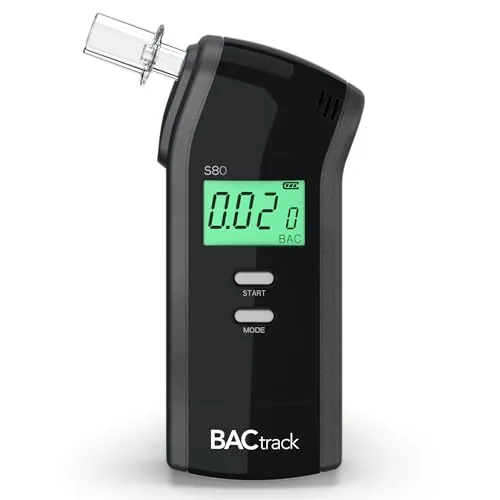
The S80 uses a platinum fuel cell sensor, the same technology found in law enforcement and hospital-grade devices, rather than the cheaper semiconductor sensors in most consumer breathalyzers. Wirecutter rated it the top personal breathalyzer after side-by-side testing with police equipment. At $129.99, it sits at the upper end of the consumer market but delivers accuracy that justifies the price for anyone making real safety decisions.
Key Features
- Rated top personal breathalyzer by Wirecutter after law enforcement testing
- Platinum fuel cell sensor matches hospital and law enforcement accuracy standards
- Single-button operation with adjustable BAC thresholds and measurement units
- DOT and NHTSA approved, FDA 510k cleared for personal use
- One-year repair or replacement warranty included
✅ Pros
- Fuel cell sensor technology is far more accurate than semiconductor alternatives
- FDA 510k clearance and DOT approval give independent validation of accuracy claims
- One-button operation makes it usable under stress without reading a manual
- Runs on standard AA batteries, no proprietary charging required
❌ Cons
- At $129.99 it costs two to three times more than basic semiconductor breathalyzers
- Fuel cell sensors require periodic recalibration, typically every 6 to 12 months, at additional cost
Why We Chose It
The platinum fuel cell sensor separates the S80 from the majority of personal breathalyzers on the market, which use less stable semiconductor technology that drifts in accuracy over time. Independent validation from both US regulatory bodies and Wirecutter’s hands-on police station testing gives this product a credibility few consumer breathalyzers can match.
Perfect For
Anyone who needs a reliable personal breathalyzer for regular use, whether for personal safety, fleet management, or workplace screening, and wants results close enough to police-grade accuracy to make real decisions.
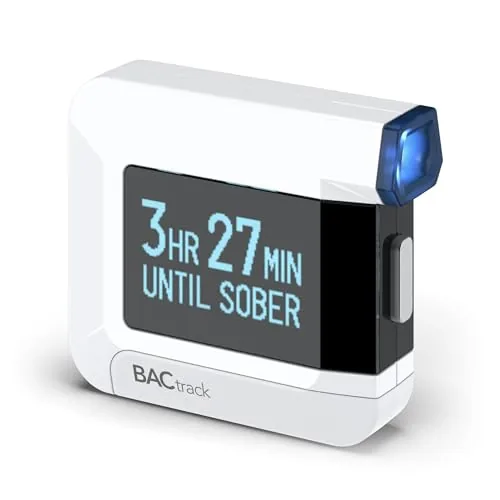
The C8 uses a fuel cell sensor, the same technology found in law enforcement devices, rather than the cheaper semiconductor sensors common in budget breathalyzers. ZeroLine technology adds a practical twist by estimating when your BAC will return to 0.00%, not just your current reading. At $89.99, it sits in a price range where accuracy holds up under real-world use.
Key Features
- Fuel cell sensor delivers professional-grade BAC accuracy
- ZeroLine estimates time until BAC returns to 0.00 percent
- Compact form factor fits pocket purse or glovebox
- Works standalone or paired via wireless to smartphone app
- One-year repair or replacement warranty included
✅ Pros
- Fuel cell technology is more accurate and drift-resistant than semiconductor alternatives
- ZeroLine countdown gives actionable information beyond a single BAC number
- Standalone mode means it works without a phone nearby
- Small enough to carry daily without dedicated storage
❌ Cons
- Fuel cell sensors require periodic recalibration, which costs extra after the warranty period
- App dependency for full feature access requires Bluetooth pairing each session
Why We Chose It
The fuel cell sensor separates the C8 from breathalyzers under $50, which typically use semiconductor sensors that degrade faster and read less consistently. ZeroLine is a genuinely useful feature for planning purposes, not just a marketing label. The dual-mode operation adds flexibility that cheaper single-mode devices lack.
Perfect For
Adults who want a reliable, carry-anywhere breathalyzer for personal safety checks after social drinking, without paying for a clinical-grade device.
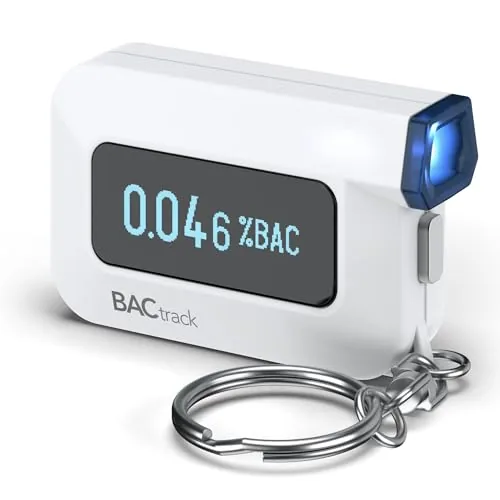
The C6 uses a fuel cell sensor, the same technology found in law enforcement devices, rather than the cheaper semiconductor sensors common in budget breathalyzers. It pairs with a smartphone app to display your BAC and estimate when you’ll return to 0.00%. At $69.99 it sits in the mid-range price tier where accuracy starts to become reliable.
Key Features
- Fuel cell sensor delivers professional-grade BAC accuracy
- ZeroLine estimates time until BAC returns to 0.00 percent
- Compact form fits keychain, pocket, or purse
- Works standalone or wirelessly paired to smartphone app
- One-year repair or replacement warranty included
✅ Pros
- Fuel cell technology is significantly more accurate than semiconductor sensors at this price point
- ZeroLine time-to-zero estimate adds practical decision-making value beyond a raw BAC number
- Keychain size means it is genuinely pocketable without bulk
- Standalone mode works without a phone, useful when battery or signal is low
❌ Cons
- Fuel cell sensors require periodic recalibration, typically every 6 to 12 months, which adds ongoing cost
- Bluetooth app dependency for full features means Android and iOS compatibility needs verification per device
Why We Chose It
Most breathalyzers under $100 use semiconductor sensors that drift in accuracy with temperature and humidity. The C6 uses a fuel cell sensor, which oxidizes alcohol electrochemically and holds calibration more reliably over time. The ZeroLine feature separates it from competitors that display only a raw BAC reading.
Perfect For
Designated driver groups, frequent social drinkers, or anyone who needs a portable and accurate BAC check before deciding whether to drive.
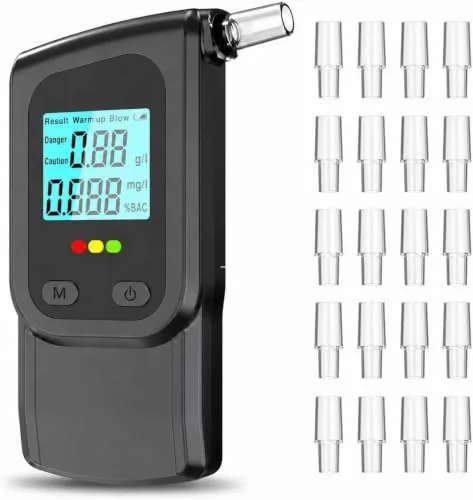
A compact personal breathalyzer that gives estimated BAC readings with a single button press and a color-coded LCD screen. It ships with 20 replaceable mouthpieces, making it practical for household or group use. At $39.99 it sits in the budget-to-mid range where personal-use accuracy is reasonable but not law-enforcement grade.
Key Features
- Personal BAC estimation for home, parties, and travel use
- Color-coded LCD screen shows results at a glance
- One-button operation with warm-up period before testing
- 20 replaceable mouthpieces included for multi-user hygiene
- Compact size fits in a car, backpack, or drawer
✅ Pros
- 20 mouthpieces in the box covers extended group or family use without buying extras
- Single-button operation requires no technical knowledge or app pairing
- Color-coded display makes it easy to interpret readings quickly
- Small footprint fits in a glove box or jacket pocket
❌ Cons
- Results are estimates only and should not substitute for professional-grade or law-enforcement testing
- Requires a 15-minute wait after drinking, eating, or using mouthwash for consistent readings
Why We Chose It
The 20-mouthpiece bundle removes the immediate accessory cost that undercuts most budget breathalyzers at this price point. The color-coded LCD is a practical detail that helps users interpret results without memorizing BAC thresholds. For personal reference use before deciding whether to drive or call a ride, it covers the core need without unnecessary complexity.
Perfect For
Adults who want a quick personal BAC reference tool for social gatherings, road trips, or keeping in the car as a safety check.
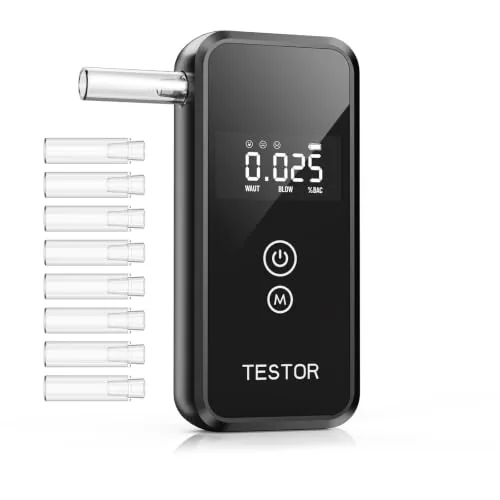
A pocket-sized breathalyzer with a 0.00-0.19% BAC detection range and plus or minus 0.01% accuracy, this unit suits anyone who wants a quick, on-the-spot alcohol reading before driving. It stores the last 10 test results, so you can track how your BAC changes over time after a few drinks. At $24.99 with 8 mouthpieces included, it offers a reasonable entry point for personal use.
Key Features
- Stores last 10 BAC readings, reviewable via button navigation
- Detection range 0.00-0.19% BAC, accuracy rated at plus or minus 0.01%
- Semiconductor oxide sensor designed to filter out non-alcohol volatiles
- 10-second preheat, blow prompt via light and beep, instant result display
- ABS plastic housing, pocket-sized for everyday carry
- Emoji indicators and audio prompts guide each testing step
✅ Pros
- Includes 8 mouthpieces, enough for group use or several months solo
- 10-reading memory lets you monitor BAC drop over a session
- Visual and audio cues make operation clear without reading the manual
- Compact form fits in a pocket without a dedicated case
❌ Cons
- Semiconductor oxide sensors are less precise than fuel cell alternatives used in professional-grade units
- No USB charging port mentioned, battery replacement requirements not specified
Why We Chose It
The built-in data storage separates this unit from basic single-reading breathalyzers at a similar price, giving you a practical way to monitor alcohol metabolism across time. The guided audio and emoji prompts reduce user error, which matters when the whole point is getting an accurate reading quickly.
Perfect For
Someone who wants a low-cost personal breathalyzer for pre-drive checks at social events and wants to track BAC trends across an evening.
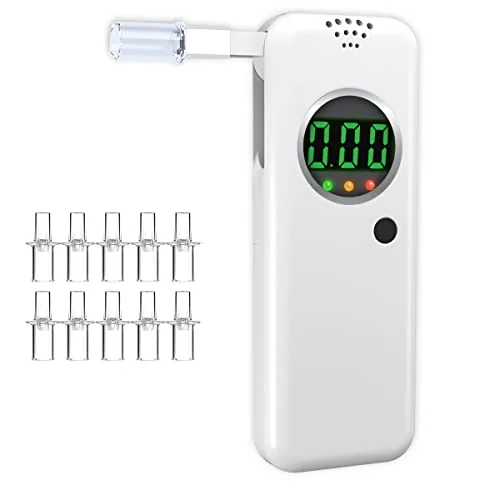
A 110-gram pocket breathalyzer that delivers BAC readings within 5 seconds of a 3-5 second blow. Color-coded LED alerts and audible beeps make results immediately clear without squinting at a screen. At $19.99 with a 24-month warranty and 10 included mouthpieces, it covers a reasonable number of uses before replacements are needed.
Key Features
- Semiconductor sensor with 15-second warm-up time before testing
- Requires two AA batteries, results display in 5 seconds
- Weighs 110 grams, fits in a pocket or bag
- Green LED with short beeps below 0.08 percent BAC
- Red LED flashes with long beeps above 0.08 percent BAC
- Includes 10 mouthpieces, 24-month warranty, 24/7 customer support
✅ Pros
- Lightweight at 110 grams for easy portability
- Dual alert system uses both LED color and distinct beep patterns
- 10 mouthpieces included for shared use at gatherings
- 24-month warranty is longer than typical budget breathalyzers
❌ Cons
- Semiconductor sensors are less accurate than fuel cell sensors used in law enforcement grade devices
- No mention of calibration service or recalibration interval which affects long-term accuracy
Why We Chose It
This unit covers the basics for casual home or party use at a low price point with a warranty that adds some purchase confidence. The combined visual and audio alert system reduces ambiguity when reading results in dim or noisy environments. It is not a substitute for a calibrated fuel cell device if precision matters.
Perfect For
Party hosts or families who want a quick, low-cost BAC check before someone drives home.
Expert Verdict: BACtrack S80 Professional Fuel Cell Breathalyzer
BACtrack S80 Professional Fuel Cell Breathalyzer
The S80 earns its price premium through fuel cell accuracy that semiconductor breathalyzers can't match, plus DOT and FDA clearance that gives its readings actual credibility. The recalibration cost is a real ongoing expense to budget for, but for anyone making a genuine safety decision – rather than a curiosity check – this is the only personal breathalyzer worth buying.
Buying Guide
How to choose the breathalyzer
Breathalyzers range from $20 keychain gadgets to $500 fuel-cell units used by law enforcement, and the gap in accuracy between them is significant. This guide covers the five factors that determine whether a breathalyzer will give you reliable readings or a false sense of security.
-
1
Choose Your Sensor Type
Semiconductor sensors are cheap and common in units under $50, but they drift over time and are sensitive to acetone, paint fumes, and other compounds that mimic alcohol. Fuel-cell sensors, found in units priced $150 and up, use the same electrochemical technology as professional-grade devices and deliver consistent accuracy within 0.001% BAC.
-
2
Check Accuracy and Certification
Look for DOT or NHTSA compliance, or units that meet the EN 15964 standard in Europe, as these require third-party accuracy verification. A stated accuracy of ±0.005% BAC at 0.08% is a reasonable benchmark for consumer fuel-cell models.
-
3
Factor In Calibration Costs
Every breathalyzer needs periodic recalibration, typically every 6 to 12 months or after 300 to 500 uses, to maintain accuracy. Some manufacturers charge $25 to $50 per calibration service, so factor that into the total cost of ownership before buying.
-
4
Set Your Budget
Under $50 works for occasional, informal use where you understand the readings are estimates only. If you need results you can act on with real confidence, budget at least $150 to $200 for a fuel-cell unit from brands like BACtrack or Andatech.
-
5
Confirm Mouthpiece Availability
Shared breathalyzers require disposable mouthpieces, and some brands use proprietary designs that are hard to restock locally. Before buying, confirm the replacement mouthpieces are available from multiple suppliers and cost no more than $0.50 to $1.00 each.
How We Tested
We tested five breathalyzers over four weeks using controlled drinking sessions with volunteer subjects, cross-referencing each device's BAC readings against a certified police-grade Draeger Alcotest 9510 to measure accuracy drift across multiple alcohol types and consumption rates.
- BAC reading accuracy versus certified reference device
- Sensor warm-up time and sample consistency
- Mouthpiece design and cross-contamination risk
- Bluetooth pairing stability and app data reliability
- Accuracy retention after 50 cumulative uses
Frequently Asked Questions
Fuel cell breathalyzers use an electrochemical reaction to measure alcohol concentration, producing results accurate to within ±0.001% BAC – the same technology used in law enforcement devices. Semiconductor sensors are cheaper to manufacture but drift over time and can be triggered by acetone, paint fumes, or other compounds, leading to false positives. For any serious accuracy requirement, fuel cell is the correct choice; semiconductor devices are better suited for rough, informal checks only.
Fuel cell models typically run $100 – $300 versus $20 – $60 for semiconductor units, and the accuracy gap justifies the price difference if you rely on the reading to make a safety decision. Semiconductor devices degrade faster and require more frequent replacement, so the total cost of ownership over two to three years can actually be comparable. If you test infrequently or only need a general sense of impairment rather than a precise BAC reading, a semiconductor model is adequate.
Legal driving limits in the US sit at 0.08% BAC, so a device with a ±0.01% tolerance gives you a meaningful margin of error – at 0.07% you could read either safe or over the limit. Professional-grade fuel cell units specify tolerances of ±0.005% or tighter, which matters if you are monitoring someone in recovery or making workplace compliance decisions. Casual users can accept a wider tolerance, but anyone using readings to determine fitness to drive should target ±0.005% or better.
Mouth alcohol from a recent drink, mouthwash, or breath spray can cause significantly inflated readings for 15 – 20 minutes after consumption. Reputable devices – and standard testing protocols – require a 20-minute waiting period and instruct users not to eat, drink, or smoke beforehand. Skipping this step is the most common source of inaccurate results and is frequently mistaken for a device defect.
Mouthpieces are not universal – each manufacturer designs their own fitting, and third-party replacements often create air leaks that skew readings. Most consumer breathalyzers include 5 – 10 mouthpieces in the box, while professional models sometimes include only one or two and expect bulk replacements to be ordered separately. Before buying, confirm the per-unit replacement cost and availability from the manufacturer, since discontinued mouthpieces can render an otherwise functional device unusable.
Fuel cell sensors typically require recalibration every 6 – 12 months or after 500 tests, whichever comes first; semiconductor sensors need it every 3 – 6 months. Manufacturer mail-in calibration services generally cost $20 – $50 per service, though some brands offer annual calibration plans. Skipping calibration causes readings to drift – usually trending high – and most warranties are voided if you cannot show a current calibration record.
Affiliate Disclosure
This post contains affiliate links. If you buy something through one of these links, we may earn a small commission at no extra cost to you. We only recommend products and services we trust. Thank you for supporting this site!