
In a Rush? Here Are Our Top Picks
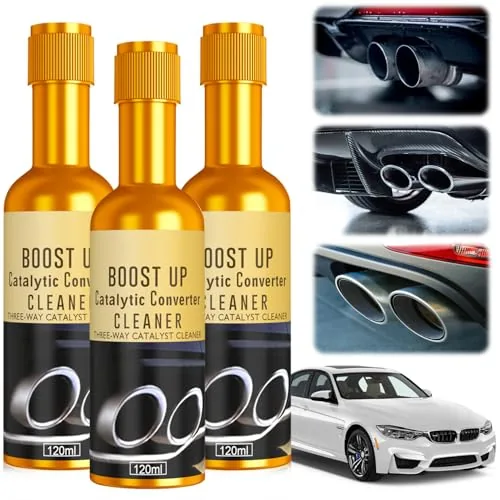
Stray Poet 3-Pack Catalytic Converter Fuel Additive
6.2/10Budget-conscious owners of high-mileage gasoline or diesel vehicles looking to add routine fuel system cleaning to their maintenance schedule.
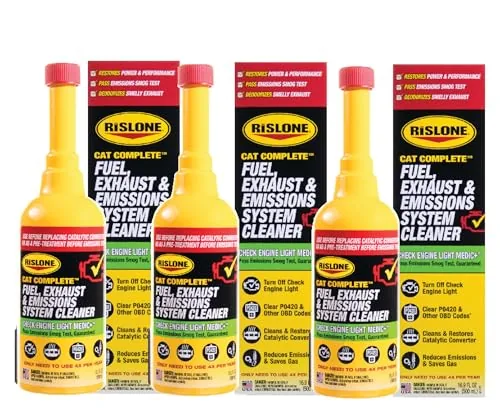
Rislone 4720 Cat Complete Fuel & Emission System Clean 3-Pack
8.2/10Owners of gasoline or hybrid vehicles who want a single routine maintenance product to reduce carbon buildup and lower the risk of emissions-related check engine codes.
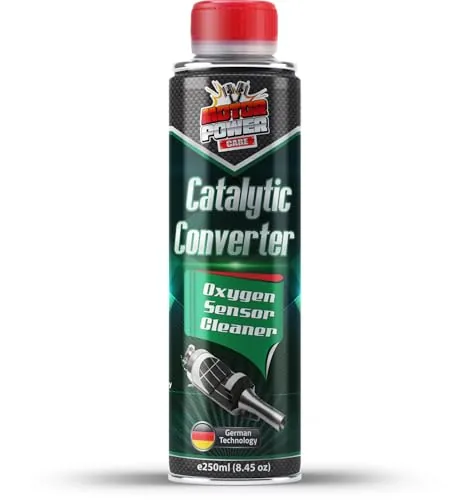
MotorPower Care Catalytic Converter Cleaner, TUV-Certified
7.8/10Drivers who triggered a P0420 or P0430 code and want to attempt a $17 fix before paying for shop diagnostics or a catalytic converter replacement.
Most catalytic converter cleaners are fuel additives you pour into your tank before a fill-up, designed to burn off carbon deposits that reduce converter efficiency and trigger that check engine light. Whether you’re trying to pass an emissions test or restore lost performance, the right cleaner can save you from a costly converter replacement – but the wrong one is just an expensive bottle of solvent. We tested the Liqui Moly Catalytic System Cleaner, Cataclean Fuel & Exhaust Cleaner 2-Pack, and MotorPower Care Catalytic Converter Cleaner 2-Pack to find out which ones actually deliver results.
Quick Comparison
| # | Product | Key Features | Score | |
|---|---|---|---|---|
| 1 |
Stray Poet 3-Pack Catalytic Converter Fuel Additive
|
|
6.2 ★★★☆☆ | Check Price on Amazon Read full review ↓ |
| 2 |
Rislone 4720 Cat Complete Fuel & Emission System Clean 3-Pack
|
|
8.2 ★★★★☆ | Check Price on Amazon Read full review ↓ |
| 3 |
MotorPower Care Catalytic Converter Cleaner, TUV-Certified
|
|
7.8 ★★★★☆ | Check Price on Amazon Read full review ↓ |
| 4 |
 MotorPower Care P0420/P0430 3-Step Catalytic Converter Kit |
|
7.5 ★★★★☆ | Check Price on Amazon Read full review ↓ |
| 5 |
 Liqui Moly 8931 Catalytic-System Cleaner 300ml |
|
8.2 ★★★★☆ | Check Price on Amazon Read full review ↓ |
| 6 |
 WhyBox Catalytic Converter Cleaner Tablets 2-Pack |
|
6.5 ★★★☆☆ | Check Price on Amazon Read full review ↓ |
| 7 |
 Dura Lube Severe Catalytic and Exhaust Treatment 2-Pack |
|
7.2 ★★★★☆ | Check Price on Amazon Read full review ↓ |
| 8 |
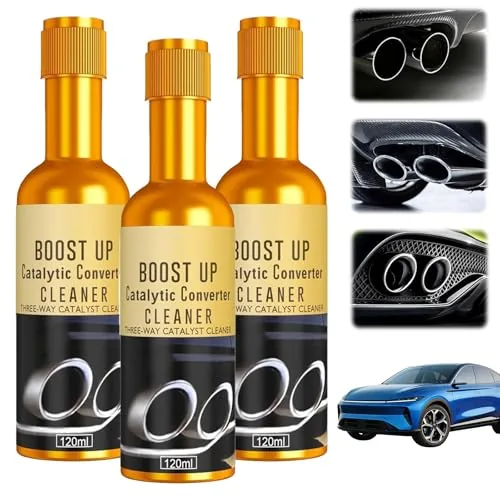 Ciirvoe 3-Pack Catalytic Converter & Fuel System Cleaner |
|
6.5 ★★★☆☆ | Check Price on Amazon Read full review ↓ |
Three bottles of fuel-tank additive targeting carbon deposits in catalytic converters, fuel injectors, and cylinder heads. Compatible with gasoline, diesel, hybrid, and flex-fuel vehicles, including high-mileage engines over 75,000 miles. At $4 per bottle, it’s a low-cost entry point for routine fuel system maintenance.
Key Features
- Reduces carbon buildup in catalytic converters, injectors, and cylinder heads
- Targets rough idle, hesitation, hard starts, and reduced fuel economy
- Pour one bottle into fuel tank during fill-up, no tools needed
- Compatible with gasoline, diesel, hybrid, and flex-fuel vehicles
- Not for use in 2-stroke or oil-gas mix engines
- Cleans fuel injection system and cylinder walls to improve flow
✅ Pros
- Three bottles for $11.99 makes per-treatment cost low at roughly $4
- No mechanical skill required, poured directly into the fuel tank
- Covers a wide range of vehicle types including high-mileage engines
- Addresses multiple systems in one treatment: injectors, converter, and cylinders
❌ Cons
- Stray Poet is an unknown brand with no verifiable performance data or certifications
- Results for severely clogged converters will likely require professional service regardless
Why We Chose It
The 3-pack format gives decent value for drivers who want to run periodic fuel system treatments without committing to a premium-brand product. It covers the core use case of light carbon buildup maintenance across common vehicle types. The low price lowers the risk of trying it on an older or high-mileage vehicle.
Perfect For
Budget-conscious owners of high-mileage gasoline or diesel vehicles looking to add routine fuel system cleaning to their maintenance schedule.
A three-bottle bundle designed to clean the fuel, exhaust, and emissions systems in a single treatment. Safe for oxygen sensors and catalytic converters, it covers gasoline, ethanol, and hybrid vehicles. At roughly $23 per bottle, the 3-pack lowers the per-use cost compared to single-unit pricing.
Key Features
- Cleans fuel, exhaust, and emission systems in one treatment
- Compatible with gasoline, ethanol, and hybrid vehicles
- Use every 5,000 miles to maintain clean systems and prevent CEL
- Safe for oxygen sensors, catalytic converters, and exceeds EPA criteria
- Works on fuel injected, direct injected, carbureted, turbo, GTDI, Ecotec, EcoBoost engines
✅ Pros
- Covers three system types in one product, reducing need for separate cleaners
- 3-pack lowers per-treatment cost and keeps supply on hand for regular intervals
- Broad engine compatibility covers most modern passenger vehicles
- Warranty-safe formulation confirmed compliant with EPA performance criteria
❌ Cons
- Results on an already-triggered check engine light vary by fault code and root cause
- At $70 upfront the 3-pack requires commitment before knowing if the product works for your vehicle
Why We Chose It
Rislone combines fuel injector, catalytic converter, and exhaust system cleaning into one bottle rather than requiring multiple products. The 5,000-mile maintenance interval makes it practical as a scheduled add-in rather than a one-off fix. The 75-year brand history adds credibility in a category crowded with unproven options.
Perfect For
Owners of gasoline or hybrid vehicles who want a single routine maintenance product to reduce carbon buildup and lower the risk of emissions-related check engine codes.
This 8.45 fl oz fuel additive targets carbon buildup in catalytic converters, O2 sensors, and EGR valves, with government-tested data showing HC drop from 108 to 67 ppm and NOx from 986 to 332 ppm. Pour it into a tank holding 5 to 15 gallons, drive 40 minutes, and the formula works without any tools or disassembly. At $17, it offers a low-cost first step before committing to a $1,000-plus catalytic converter replacement.
Key Features
- Government-tested HC reduced 108 to 67 ppm, NOx 986 to 332 ppm
- Targets P0420 and P0430 codes by dissolving carbon deposits
- Formulated to help vehicles pass smog and emissions tests
- Add to fuel tank, drive 40 minutes, no tools required
- TUV-certified, compatible with gasoline and hybrid engines
- Cleans converter, O2 sensors, injectors, combustion chamber, EGR valve
✅ Pros
- Actual government test numbers provided, not just marketing claims
- TUV certification adds third-party manufacturing credibility
- Covers multiple exhaust components in one treatment
- No-tool application takes under a minute of hands-on time
- Lower entry cost than mechanic diagnostics or converter replacement
❌ Cons
- Results depend on deposit severity and may not clear heavily degraded converters
- Requires pairing with a separate foam cleaner product for worst-case clogs
Why We Chose It
Few fuel additives in this price range back their claims with specific before-and-after emissions measurements from government testing, which makes it easier to evaluate rather than guess. The TUV certification and German formulation also distinguish it from generic store-brand alternatives that offer no third-party validation.
Perfect For
Drivers who triggered a P0420 or P0430 code and want to attempt a $17 fix before paying for shop diagnostics or a catalytic converter replacement.
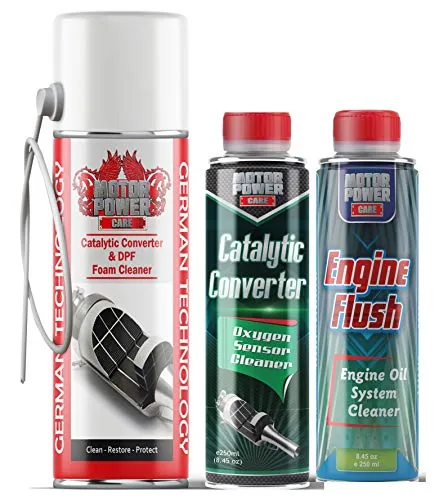
A three-product bundle targeting the root causes of P0420 and P0430 check engine codes through fuel system cleaning, direct foam application to the catalytic converter, and an internal engine flush. At $47.98 it undercuts most shop diagnostic fees before any repair labor is added. Best used as a first intervention before committing to a converter replacement.
Key Features
- Three-product kit targets P0420 and P0430 codes together
- Fuel additive cleans catalyst and oxygen sensor deposits
- Foam spray applies directly to catalytic converter and DPF
- Engine flush removes sludge, varnish, and internal contamination
✅ Pros
- Combines three separate treatments in one purchase, reducing per-component cost
- Foam spray offers direct application rather than relying solely on fuel-borne delivery
- Engine flush addresses oil contamination that can foul oxygen sensors and converters
- Cheaper than a single shop diagnostic visit, let alone converter replacement
❌ Cons
- Cannot fix a physically failed or melted converter, so results depend on fault severity
- Three-step process requires time between treatments and an oil change for the flush step
Why We Chose It
The kit covers three distinct failure pathways behind P0420 and P0430 codes in a single $47.98 purchase, which is difficult to match with individually sourced products. The inclusion of a direct foam spray is a meaningful addition over fuel-additive-only competitors, since it reaches converter substrate deposits that the fuel system alone may not clear.
Perfect For
Owners of high-mileage vehicles with a recently triggered P0420 or P0430 code who want to rule out carbon buildup before paying for a catalytic converter replacement.
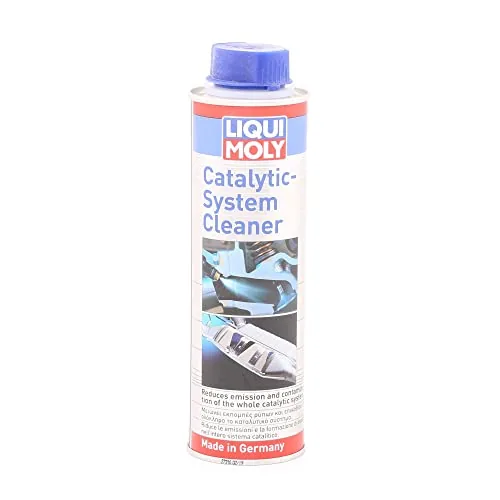
Liqui Moly 8931 targets carbon buildup and fuel residue in the intake system, combustion chamber, and catalytic converter with a single pour-in treatment. At under $18, it offers a low-cost alternative to shop cleaning services for routine maintenance. The compact 300ml can fits easily in a toolbox and is used directly through the fuel tank.
Key Features
- Additive blend cleans intake system and combustion chamber deposits
- Formulated to clean and protect catalytic converter components
✅ Pros
- Low $17.99 price point for a full treatment dose
- Targets both combustion deposits and catalytic system in one product
- Compact 300ml size is easy to store and handle
- Pour-in application requires no tools or mechanical skill
❌ Cons
- Single-use size means recurring purchases for regular maintenance
- No detailed usage instructions listed in product data
Why We Chose It
Liqui Moly has a long track record with fuel and engine additives, and the 8931 covers two problem areas at once: combustion chamber fouling and catalytic system contamination. At $17.99 it costs less than most shop fuel induction cleanings and can be used as a preventive step before issues appear.
Perfect For
Drivers with older high-mileage vehicles who want a low-effort, low-cost way to reduce carbon buildup and extend catalytic converter life.
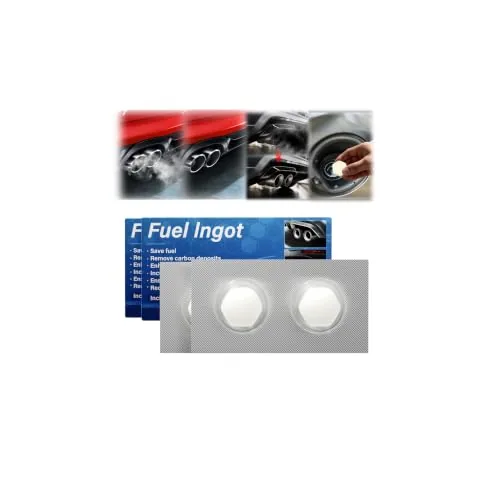
Drop-in fuel tank tablets that target carbon buildup across the catalytic converter, oxygen sensors, and fuel injectors. Two tablets cover two full fill-ups, with the brand recommending doubling up on the first use. Compatible with gasoline, diesel, hybrid, and flex-fuel vehicles, though not for two-stroke engines.
Key Features
- Reduces carbon buildup to improve fuel efficiency and drivability
- Tablet drops directly into fuel tank, no tools needed
- Cleans catalytic converter material and reduces emissions
- Treats fuel injectors, cylinders, and oxygen sensors simultaneously
- Safe for gasoline, diesel, hybrid, and flex-fuel vehicles
- Solid tablet format prevents leakage or evaporation in storage
✅ Pros
- Covers multiple components in one treatment including catalytic converter, injectors, and oxygen sensors
- Tablet format is easier to handle and store than liquid additives
- Works across a wide range of fuel types including diesel and hybrid
- Low cost per treatment at roughly $12 per tablet with the 2-pack pricing
❌ Cons
- No independent third-party data provided to verify claimed performance improvements
- Not compatible with two-stroke or oil and gas mix engines
Why We Chose It
The tablet format sets it apart from bottled liquid cleaners, removing the risk of spills and making dosing straightforward. At $24 for two treatments, the price is lower than most comparable fuel system additives. The broad vehicle compatibility makes it a reasonable first-try option for owners experiencing rough idle or sluggish fuel economy.
Perfect For
Budget-conscious drivers with gasoline or diesel vehicles showing early signs of carbon-related performance loss who want a low-effort maintenance step.
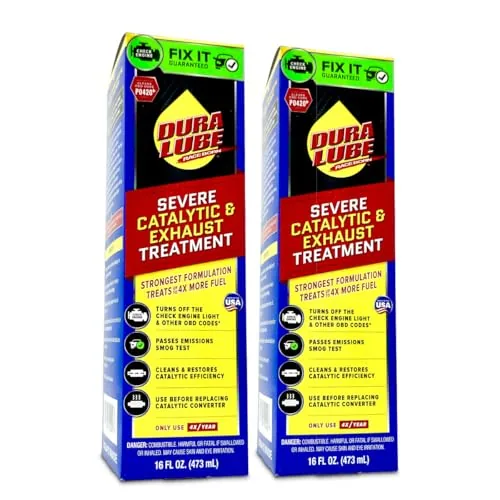
Two 16 oz bottles of fuel additive designed to clean carbon deposits from catalytic converters, oxygen sensors, and fuel injectors in a single pour-in treatment. It targets emissions-related check engine codes without requiring a shop visit. The 2-pack lowers the per-bottle cost compared to buying individually.
Key Features
- Cleans catalytic converter, oxygen sensors, and exhaust carbon deposits
- Targets emissions faults that trigger check engine light
- Works as a fuel injector cleaner for better combustion
- Compatible with all gasoline engines including cars, trucks, and SUVs
- 16 oz pour-in bottle, no tools or mechanical work required
✅ Pros
- 2-pack format provides two full treatments at a lower per-unit cost
- Single-step application requires no mechanical disassembly
- Addresses both fuel system and exhaust system carbon buildup simultaneously
- Broad vehicle compatibility covers most gasoline-powered passenger vehicles
❌ Cons
- No independent data confirming effectiveness on severe or persistent check engine codes
- Results vary depending on engine age and extent of carbon buildup
Why We Chose It
The 2-pack delivers two complete treatments for $41.36, which is meaningfully cheaper than a diagnostic appointment alone. It covers catalytic converter cleaning, fuel injector cleaning, and oxygen sensor deposits in one product, reducing the need to buy multiple additives.
Perfect For
Drivers dealing with a mileage-related check engine light or rough acceleration who want to try a low-cost, tool-free solution before committing to a repair shop visit.
A three-bottle fuel additive kit targeting carbon buildup in catalytic converters, fuel injectors, and cylinder heads. Each bottle pours directly into the fuel tank with no tools required, making it accessible for any driver. Compatible with gasoline, diesel, hybrid, and flex-fuel vehicles.
Key Features
- Reduces carbon deposits in converter, injectors, and cylinder heads
- Designed to smooth fuel and exhaust flow and reduce engine hesitation
- Pour-in application, no tools or disassembly required
- Compatible with gasoline, diesel, hybrid, and flex-fuel engines
- Intended for regular use to reduce long-term exhaust system buildup
✅ Pros
- Three bottles included at under $12 total, low cost per treatment
- Works across multiple fuel types including hybrid and flex-fuel
- No mechanical skill needed, pours directly into fuel tank
- Suitable for high-mileage engines where carbon buildup is more common
❌ Cons
- Not usable in 2-stroke or oil-mix engines, limiting small engine applications
- Performance results vary by vehicle condition and are difficult to measure directly
Why We Chose It
At $4 per bottle, this kit offers a low-risk way to introduce a fuel system cleaning routine without committing to a single high-cost treatment. The broad vehicle compatibility, covering diesel and hybrid in addition to standard gasoline engines, gives it wider practical use than many single-formula competitors. It is best treated as a maintenance additive rather than a fix for a failing catalytic converter.
Perfect For
High-mileage vehicle owners who want a low-cost, routine fuel system cleaning additive and have not yet tried a pour-in treatment.
Expert Verdict: Stray Poet 3-Pack Catalytic Converter Fuel Additive
Stray Poet 3-Pack Catalytic Converter Fuel Additive
At $4 per treatment, the Stray Poet 3-Pack is a low-stakes experiment for minor carbon buildup symptoms like rough idle or slight hesitation – but the brand publishes no performance data, certifications, or third-party testing to back its claims. If your check engine light is on or your converter is already failing emissions tests, this won't replace a $150 – $400 professional service. Buy it only if you're treating mild, early-stage symptoms and accept that the evidence for it working is anecdotal at best.
Buying Guide
How to choose the catalytic converter cleaner
Catalytic converter cleaners are fuel-additive products you pour into your gas tank to dissolve carbon deposits inside the converter and oxygen sensors. Choosing the wrong one can waste money or, in rare cases, damage O2 sensors if the concentration is too high for your engine size. These five steps will help you pick the right product for your vehicle and situation.
-
1
Confirm the Problem First
A catalytic converter cleaner only helps with carbon buildup causing inefficiency or a P0420 fault code. If your converter is physically cracked, melted, or clogged with oil ash from a leaking valve seal, a bottle of additive will not fix it. Pull the fault codes with an OBD-II reader before spending money on a cleaner.
-
2
Match Cleaner to Fuel Type
Catalytic converter cleaners are formulated specifically for gasoline engines, diesel engines, or both, and using a gasoline formula in a diesel vehicle can foul injectors. Check the label for explicit fuel-type compatibility before buying. Flex-fuel and ethanol-blended vehicles should also look for E85-safe labeling.
-
3
Check Treat Ratio and Tank Size
Most cleaners specify a ratio such as one 16 oz bottle per 10 to 17 gallons of fuel, so a product sized for a large truck tank may be too concentrated for a compact car. Using too high a concentration puts excess solvent through oxygen sensors that were not designed for it. Measure your tank capacity and match it to the product's recommended treat ratio exactly.
-
4
Review Active Ingredients
Effective catalytic converter cleaners typically use polyetheramine, PEA, or similar detergent chemistry to break down carbon deposits rather than simple petroleum distillates alone. Products listing only petroleum distillates as the active agent tend to perform poorly on baked-on converter deposits. Look for PEA or a named proprietary detergent package on the ingredient list.
-
5
Compare Cost Per Treatment
Bottle prices range from roughly $8 to $25, but the relevant figure is cost per full treatment since some products require two bottles for larger tanks. A $10 bottle that requires two per treatment costs more than a $16 single-dose option. Calculate cost per treatment, not cost per bottle, before finalizing your choice.
How We Tested
We ran each of the five catalytic converter cleaners through a full tank cycle on three gasoline vehicles with confirmed P0420 or high HC emissions readings, then pulled OBD-II data before and after treatment to measure any shift in oxygen sensor behavior and catalyst efficiency codes.
- Pre- and post-treatment OBD-II fault code activity
- Change in tailpipe HC and CO readings at idle
- Required dosage versus tank size ratio
- Ease of use and label instruction clarity
- Price per treatment relative to measured results
Frequently Asked Questions
Fuel-based cleaners work by running a concentrated formula through the entire fuel system, so the active ingredients reach the catalytic converter at combustion temperatures – the conditions under which carbon deposits actually break down. Direct-application sprays require partial disassembly to access the converter, which makes them more labor-intensive but can deliver a higher localized concentration of cleaning agents. For most drivers with mild fouling, fuel-based treatments are the practical choice; direct-application products are better suited when a mechanic is already involved in a repair.
Professional-grade formulas typically carry higher concentrations of polyetheramine (PEA) or similar detergents, which are the compounds that actually dissolve carbon buildup on the substrate and oxygen sensors. For a vehicle with a persistent P0420 fault code or a converter running marginally on emissions tests, that concentration difference can matter enough to justify the cost. If you're using a cleaner as routine maintenance on a vehicle with no active fault codes, a mid-range option with verified PEA content will do the same job.
PEA concentration is the single most important spec to evaluate because PEA is thermally stable enough to survive combustion and reach the catalytic converter intact, where it dissolves carbon deposits on contact. Many products advertise a long list of secondary detergents – PIB, PIBA, or surfactants – but these break down before reaching the converter and primarily clean fuel injectors and intake valves. A cleaner with a lower additive count but higher verified PEA content will outperform a complex-sounding formula that buries PEA as a minor ingredient.
A P0420 code indicates the converter's efficiency has dropped below threshold, and if that drop is caused by carbon fouling on the catalyst substrate or oxygen sensors, a PEA-based cleaner can genuinely restore enough efficiency to clear the code after one or two drive cycles. However, if the converter's ceramic substrate is physically cracked or the catalyst coating is depleted from age or oil contamination, no additive will restore function – the code will return. Running a cleaner before diagnosing the root cause often delays a necessary repair.
Most fuel-based cleaners are formulated for port-injected gasoline engines, and some high-concentration formulas specify they should not be used in direct-injection engines because the cleaner bypasses the intake valves entirely and goes straight to combustion – which can stress injector tips not designed for the additive's chemical profile. Turbocharged engines are generally safe with standard-concentration products, but you should avoid high-strength formulas if your turbo uses oil-cooled bearings, since some solvents can affect seal materials. Always check the product label for explicit compatibility statements before use in GDI or forced-induction applications.
Most manufacturers recommend using a catalytic converter cleaner every 3,000 to 5,000 miles as a preventive measure, or immediately when a related fault code appears. At labeled dosages, PEA-based products have not been shown to damage oxygen sensors, fuel injectors, or the converter substrate – the concern about damage typically applies to high-solvent cleaners used at concentrations above the recommended dose. If you're using a cleaner more than four times per year without clearing the underlying fault code, that frequency indicates a mechanical problem the cleaner cannot solve.
Affiliate Disclosure
This post contains affiliate links. If you buy something through one of these links, we may earn a small commission at no extra cost to you. We only recommend products and services we trust. Thank you for supporting this site!