
Most dual dash cams promise full coverage but deliver mediocre rear footage, weak low-light performance, or a wiring job that takes half a day. The three models worth your time right now – the VIOFO A229 Plus, ROVE R2-4K, and REDTIGER F7NP – each pair a STARVIS 2 sensor with a capable rear channel, which closes the gap between front and rear image quality that cheaper kits never manage. This review breaks down how they differ on resolution, night performance, GPS accuracy, and installation so you can match the right camera to how you actually drive.
Quick Comparison
| # | Product | Key Features | Score | |
|---|---|---|---|---|
| 1 |
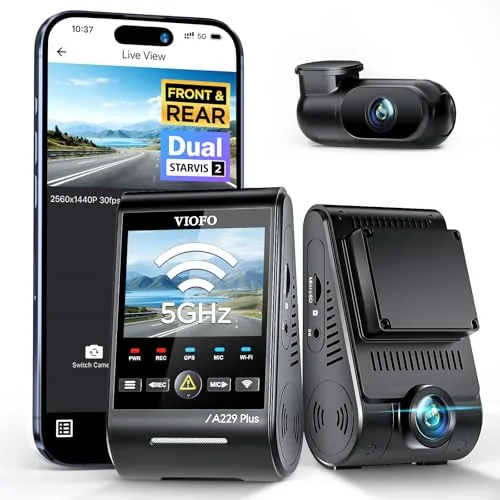 VIOFO A229 Plus Dual-Channel 2K Dash Cam with STARVIS 2
|
|
8.6 ★★★★☆ | Check Price on Amazon Read full review ↓ |
| 2 |
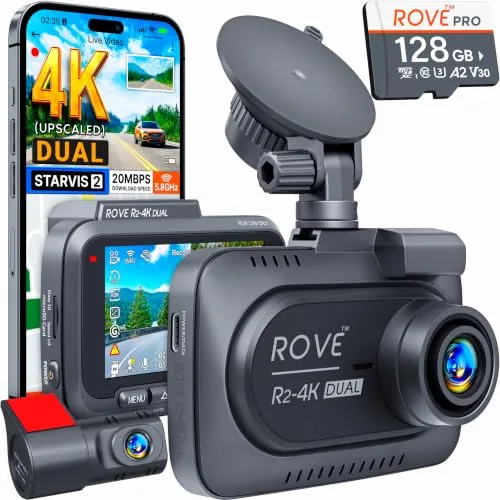 ROVE R2-4K Dual Dash Cam with STARVIS 2 + GPS
|
|
8.5 ★★★★☆ | Check Price on Amazon Read full review ↓ |
| 3 |
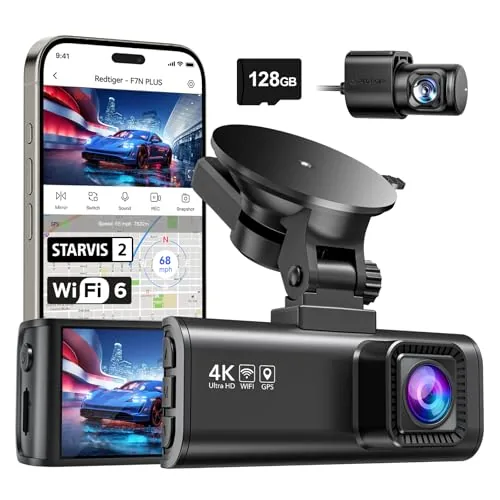 REDTIGER F7NP 4K Dash Cam with STARVIS 2 Sensor
|
|
8.5 ★★★★☆ | Check Price on Amazon Read full review ↓ |
| 4 |
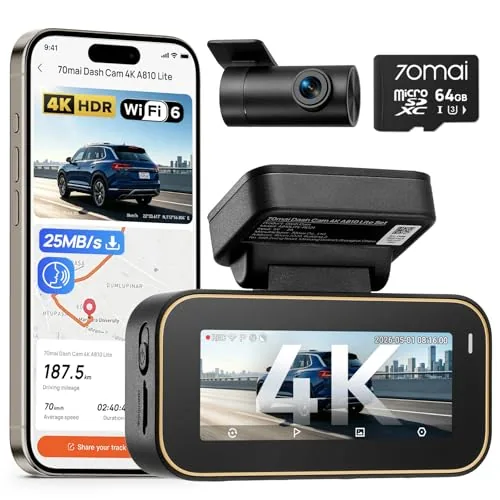 70mai A810 Lite 4K Dual Dash Cam with LTE
|
|
8.4 ★★★★☆ | Check Price on Amazon Read full review ↓ |
| 5 |
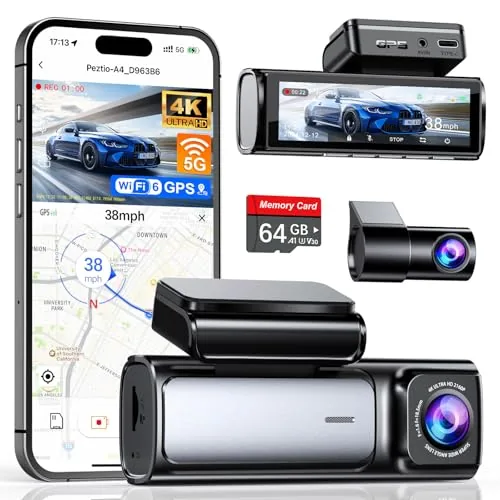 Affver A4 4K+2.5K Dual Dash Cam with WiFi 6 GPS
|
|
8.2 ★★★★☆ | Check Price on Amazon Read full review ↓ |
| 6 |
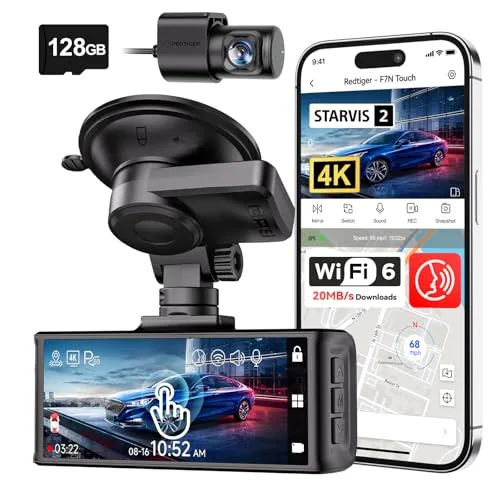 REDTIGER F7N Touch 4K Dashcam with Free 128GB Card
|
|
8.2 ★★★★☆ | Check Price on Amazon Read full review ↓ |
| 7 |
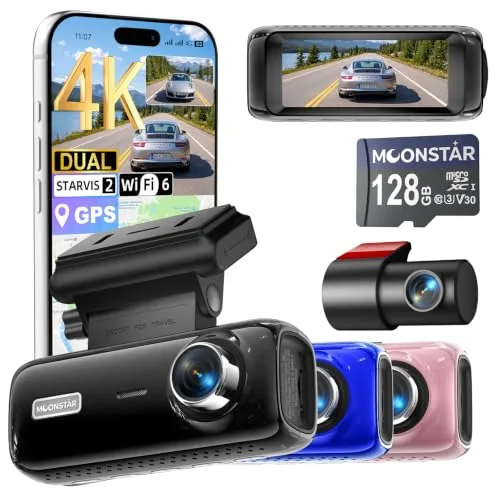 LHSYJ Dual Dash Cam 4K Front 2K Rear Sony STARVIS 2
|
|
7.8 ★★★★☆ | Check Price on Amazon Read full review ↓ |
| 8 |
 WOOLAACOO C5 Dual Dash Cam 4K+1080P with 64GB Card
|
|
7.4 ★★★★☆ | Check Price on Amazon Read full review ↓ |
The A229 Plus runs dual Sony IMX675 STARVIS 2 sensors front and rear, delivering genuine 1440P HDR footage in low light where most dual-channel cameras fall short. At $169.98, it includes quad-mode GPS, 5GHz Wi-Fi, and three parking modes in a package that covers the basics without requiring a subscription or companion hardware purchase. The hardwire cable for parking mode is sold separately, which adds to the real cost.
Key Features
- Two Sony IMX675 STARVIS 2 sensors for 2.5x better low-light performance
- Dual-channel HDR captures accurate license plate detail front and rear
- Front records 1440P at up to 60fps, rear at 1440P standard
- 12 voice commands for hands-free control and audio notifications
- Quad-mode GPS supports GPS, BEIDOU, GALILEO, and GLONASS simultaneously
- 5GHz Wi-Fi enables faster video download and real-time app preview
- Three parking modes including buffered event detection with 15s pre-record
- Streamlined menu shows card status and connection state at a glance
✅ Pros
- Both channels use the same high-grade IMX675 sensor, not a downgraded rear unit
- HDR active on both cameras simultaneously, not just the front
- 5GHz Wi-Fi transfers footage noticeably faster than older 2.4GHz models
- Quad-satellite GPS improves location accuracy in urban canyons and tunnels
❌ Cons
- 60fps and HDR cannot run together on the front camera, forcing a trade-off
- Hardwire cable for 24/7 parking mode costs extra and is not included
Why We Chose It
Most dual-channel dash cams pair a capable front sensor with a weaker rear unit, but the A229 Plus uses the same IMX675 sensor in both positions, which matters when rear footage is needed as evidence. The combination of buffered parking detection, quad-mode GPS, and 5GHz Wi-Fi at under $170 represents strong value compared to competitors that charge more for fewer features.
Perfect For
Drivers who commute in low-light conditions or park on public streets and need reliable, high-resolution coverage front and rear without paying flagship-tier prices.
The R2-4K Dual records front and rear simultaneously, pairing a Sony STARVIS 2 IMX675 sensor with an F1.5 aperture for low-light footage that holds up after dark. Built-in GPS stamps speed and location data onto every clip, and 5.8GHz WiFi lets you pull footage to your phone at up to 20MB/s. It ships with a 128GB card, so you can start recording the moment it is mounted.
Key Features
- Front records 2.5K upscaled to 4K, rear records 1080P
- Sony STARVIS 2 IMX675 sensor, F1.5 aperture, HDR low-light capture
- Dual-band 5.8GHz WiFi, up to 20MB/s download to phone
- Built-in GPS records speed, location, and route on footage
- Includes 128GB card, supercapacitor, CPL filter mount, 1TB card support
- Three parking modes: time-lapse, motion detection, collision detection
✅ Pros
- Sony STARVIS 2 IMX675 with F1.5 aperture delivers reliable nighttime license plate capture
- 5.8GHz WiFi transfers clips to a smartphone significantly faster than single-band competitors
- Bundled 128GB card removes the need for an immediate extra purchase
- Built-in supercapacitor extends hardware lifespan compared to battery-based designs
- GPS data integrates with a free PC and Mac player for route and speed review
❌ Cons
- Front camera output is upscaled from 2.5K, not native 4K, which limits fine-detail gains over true 4K sensors
- Parking mode requires a separately purchased hardwire kit to function
Why We Chose It
The combination of the Sony STARVIS 2 sensor, F1.5 aperture, and HDR gives this camera a meaningful low-light advantage over most sub-$150 dual dash cams. Integrated GPS with a dedicated desktop player adds evidentiary value that most competitors at this price skip entirely. The included 128GB card and supercapacitor make the total-cost calculation straightforward.
Perfect For
Commuters and road-trippers who want front-and-rear coverage with strong night recording and GPS evidence logging without spending over $150.
The F7NP pairs a 4K front camera with a 1080P rear unit, both driven by a STARVIS 2 sensor and F1.5 aperture for low-light performance that outperforms most cameras in this price range. The 5.8GHz WiFi connection transfers footage to your phone at up to 20MB/s, which means a one-minute 4K clip moves in seconds rather than minutes. A free memory card and supercapacitor design round out a package that is ready to install and built to handle summer heat without battery degradation.
Key Features
- 4K front and 1080P rear recording with 170 and 140 degree lenses
- STARVIS 2 sensor, F1.5 aperture, and 6-layer lens for low-light clarity
- 5.8GHz WiFi with app for live preview, GPS data, and settings control
- Loop recording with auto-overwrite and locked event clips, free card included
- Two parking modes: time-lapse and G-sensor collision recording, hardwire kit required
- Supercapacitor replaces lithium battery for heat resistance and longer lifespan
- 18-month warranty included; use only original cables and accessories
✅ Pros
- STARVIS 2 sensor and F1.5 aperture deliver noticeably cleaner night footage than budget alternatives
- 5.8GHz WiFi at 20MB/s makes downloading 4K clips to a phone fast and practical
- Supercapacitor handles high cabin temperatures without the swelling risk of a lithium battery
- Free memory card means the camera works out of the box with no extra purchase
- 18-month warranty is longer than the 12-month coverage most competitors offer at this price
❌ Cons
- 24/7 parking mode requires a separately purchased hardwire kit, adding cost and installation effort
- App functionality and GPS accuracy depend on software updates that vary between firmware versions
Why We Chose It
At $129.99, the F7NP delivers a front-and-rear 4K setup with a current-generation STARVIS 2 sensor, which is a combination usually found at $150 or above. The supercapacitor design is a meaningful hardware choice for anyone parking in a hot garage or leaving the car in direct sun for hours. Those two factors make it a stronger value pick than similarly priced cameras still using older sensors or lithium batteries.
Perfect For
Rideshare drivers, daily commuters in warm climates, and anyone who wants 4K front footage with app-based clip management without spending over $150.
The A810 Lite records 4K front and 1080P rear footage with Wi-Fi 6 transfer speeds up to 25MB/s, so pulling clips to your phone takes seconds rather than minutes. Triple-system GPS logs speed and route data alongside every recording, and the supercapacitor design handles extreme temperatures better than battery-based units. At $89.99, it covers most features you would otherwise pay $130 or more to get.
Key Features
- 4K 3840×2160 front plus 1080P rear dual recording
- F1.55 aperture with HDR for low-light and night footage
- Wi-Fi 6 5GHz app transfer up to 25MB per second
- 24-hour parking mode via G-sensor or time-lapse, hardwire kit required
- Triple-mode GPS records speed route and location per clip
- Supercapacitor replaces battery for heat resistance and longevity
- Credit-card-sized body mounts behind rearview mirror
✅ Pros
- Wi-Fi 6 transfer is meaningfully faster than the 2.4GHz found on most rivals
- Supercapacitor outperforms lithium batteries in hot climates and parked-car heat
- 4G LTE remote access lets you pull live footage without being near the car
- Triple-constellation GPS provides accurate speed and route logging for insurance use
- Compact form factor stays hidden behind the mirror and does not obstruct sightlines
❌ Cons
- 24-hour parking mode needs a separate hardwire kit, sold apart from the unit
- Rear camera is 1080P while front is 4K, so rear evidence quality is lower
Why We Chose It
The combination of 4G LTE remote viewing and Wi-Fi 6 transfer puts the A810 Lite ahead of most sub-$100 dash cams that offer only local Bluetooth or slow 2.4GHz connections. The supercapacitor is a practical advantage for anyone parking in hot garages or climates where battery-based units degrade quickly. Triple-system GPS and HDR night vision round out a spec sheet that typically appears on cameras priced $40 to $50 higher.
Perfect For
Rideshare drivers, commuters in hot climates, and anyone who needs remote video access without paying for a premium-tier dash cam.
The Affver A4 pairs a 4K front camera with a 2.5K rear unit, covering both ends of your vehicle in high resolution without jumping to a premium price. WiFi 6 at 5GHz pulls footage to your phone at up to 10MB/s, which makes reviewing clips after an incident quick rather than tedious. A 64GB card and dual-port car charger are included, so the out-of-box setup requires no extra purchases.
Key Features
- 4K 2160P front camera with 160-degree wide-angle lens
- 2.5K rear camera upgraded from 1080P, 155-degree field of view
- 5GHz WiFi 6 transfers footage at up to 10MB/s to phone
- Built-in GPS logs speed, route, and real-time coordinates
- 3.59-inch IPS touchscreen with low-profile mount design
- Loop recording auto-overwrites oldest files when card fills
- 3-axis G-sensor locks collision footage against overwriting
- F1.5 aperture and 6-layer lens with WDR for night recording
- 64GB card included plus USB charging port on car charger
- 24-month warranty with dedicated installation and tech support
✅ Pros
- 4K front and 2.5K rear resolution at under $80 is competitive for this price tier
- 64GB card included eliminates an immediate follow-up purchase
- WiFi 6 at 10MB/s makes transferring long clips to a phone noticeably faster than older single-band units
- F1.5 aperture handles low-light recording better than most budget dash cams
- GPS with Windows and Mac playback software adds useful route and speed logging
❌ Cons
- Affver is a lesser-known brand with a limited long-term reliability track record compared to established names
- No mention of parking mode hardwire kit support, which limits unattended monitoring without additional accessories
Why We Chose It
At $79.98, the A4 delivers resolution and connectivity specs that typically appear on cameras priced $20 to $40 higher. The recent hardware revision bringing the rear camera to 2.5K and adding WiFi 6 makes it a stronger value than the previous version. Including a 64GB card and a GPS player for desktop use rounds out the package without hidden costs.
Perfect For
Rideshare drivers and new car owners who want front-and-rear coverage with GPS logging and fast phone transfers without spending over $100.
The F7N Touch records front footage at 4K UHD with a STARVIS 2 sensor and pairs it with a 1080P rear camera, covering both ends of your vehicle simultaneously. Built-in GPS logs your speed and route alongside the video, and 5GHz WiFi lets you pull clips to your phone at 20MB/s. At $167.99 with a 128GB card included, the upfront cost covers hardware most competitors charge separately for.
Key Features
- Front 4K UHD plus rear 1080P dual recording with HDR night vision
- Voice commands and touchscreen allow hands-free camera control
- Built-in GPS logs speed, location, and route in footage
- 5GHz WiFi transfers files to phone app at up to 20MB per second
- Loop recording auto-overwrites oldest clips; G-sensor locks crash footage
- Parking mode triggers recording on motion or impact while parked
- Includes 128GB card, suction mount, pry tool, and 18-month warranty
✅ Pros
- 128GB card included removes a common hidden cost at this price point
- STARVIS 2 sensor delivers stronger low-light performance than standard CMOS
- 5GHz WiFi at 20MB/s makes downloading long 4K clips practical
- GPS speed and route logging adds useful context for insurance claims
- Touch screen plus physical buttons give multiple control options
❌ Cons
- Parking monitoring requires a separate hardwire kit sold at additional cost
- Rear camera records at 1080P, not 4K, which limits rear detail
Why We Chose It
The combination of a STARVIS 2 sensor, built-in GPS, and fast 5GHz WiFi in a single package under $170 is competitive in the mid-range dashcam market. Including a 128GB card rather than treating it as an upsell is a practical advantage that reduces total cost to get up and running. The 18-month warranty is longer than the 12-month standard most rivals offer at this tier.
Perfect For
Drivers who want 4K front coverage, GPS logging, and wireless clip sharing without buying a memory card separately.
This dual dash cam pairs a Sony IMX675 STARVIS 2 sensor with a wide F1.5 front aperture, giving it genuine low-light capability rather than just marketing claims. It records 4K at 3840×2160 up front and 2560×1440 at the rear, with 5.8GHz WiFi for fast footage transfers to your phone. The included 128GB SD card and 18-month warranty lower the barrier to entry for a camera at this price point.
Key Features
- 4K front at 3840×2160 and 2K rear at 2560×1440 simultaneously
- Sony IMX675 STARVIS 2 sensor with F1.5 front aperture for low light
- 7 color options with electroplated high-gloss piano-black housing
- Loop recording auto-overwrites old footage, locks collision clips
- 5.8GHz WiFi for real-time app preview, download, and GPS tracking
- IPS display with sunlight visibility and wide viewing angles
- 24-hour parking monitoring via time-lapse, requires hardwire kit
- 18-month warranty, 128GB SD card included in the box
✅ Pros
- Sony IMX675 STARVIS 2 sensor delivers strong night and low-light footage
- 128GB SD card included removes an immediate extra purchase
- 5.8GHz WiFi transfers large 4K files faster than 2.4GHz alternatives
- Collision footage is automatically locked to prevent overwrite
❌ Cons
- 24-hour parking monitoring requires a separately purchased hardwire kit
- LHSYJ is a relatively unknown brand with limited long-term reliability data
Why We Chose It
The Sony IMX675 STARVIS 2 sensor with an F1.5 aperture is the core reason to consider this over similarly priced competitors, as that combination meaningfully improves night recording. Bundling a 128GB SD card and offering 5.8GHz WiFi at $109.99 adds concrete value without inflating the price. The 18-month warranty provides a reasonable safety net for a lesser-known brand.
Perfect For
Drivers who prioritize low-light and night recording quality and want a complete out-of-box setup without buying additional accessories.
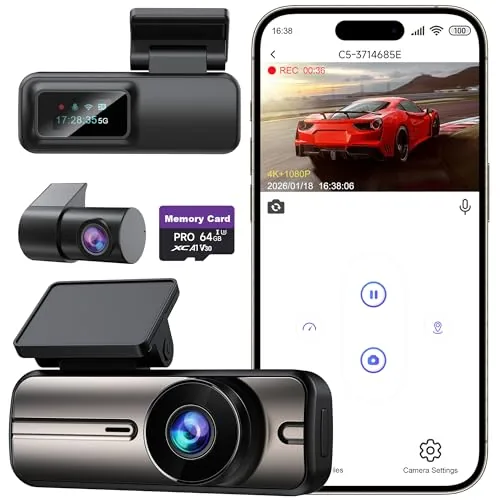
The WOOLAACOO C5 records 4K front and 1080P rear footage simultaneously, with 5GHz Wi-Fi for quick transfers to your phone via the companion app. It ships with a 64GB card already installed, so you can mount it and start recording the same day. At $45.99, it covers the core bases most daily drivers need without paying for features they won’t use.
Key Features
- Front camera records 4K video, rear records 1080P simultaneously
- 5GHz Wi-Fi connects to iOS and Android app within 3 to 5 meters
- F1.8 aperture improves low-light and night recording clarity
- Parking mode supports collision-triggered recording and time-lapse via hardwire kit
- Loop recording overwrites old files, G-sensor locks collision footage automatically
- 64GB SD card pre-installed and ready to use after initial format
- Requires constant power connection, not a wireless or battery-powered unit
✅ Pros
- 64GB card included means zero additional purchase to get started
- 4K front resolution captures license plates and road signs clearly
- 5GHz Wi-Fi transfers files faster than 2.4GHz alternatives at this price point
- Compact housing avoids blocking forward sightlines through the windshield
- USB passthrough port lets you charge a phone while the cam runs
❌ Cons
- Parking mode requires a separately sold hardwire kit, adding cost and installation effort
- Wi-Fi range caps at 5 meters, so file transfers only work inside the vehicle
Why We Chose It
For under $46 with a 64GB card bundled in, the C5 delivers genuine 4K front recording and app-based file access, two features that typically cost more at competing brands. The F1.8 aperture is a meaningful spec at night, not just a marketing checkbox, and the 5GHz band keeps transfer speeds usable when pulling clips to a phone.
Perfect For
Commuters or rideshare drivers who want reliable dual-channel recording with easy smartphone access without spending over $50.
Expert Verdict: VIOFO A229 Plus Dual-Channel 2K Dash Cam with STARVIS 2
VIOFO A229 Plus Dual-Channel 2K Dash Cam with STARVIS 2
The A229 Plus is the most capable dual-channel dash cam at this price point for night driving, with matched IMX675 sensors front and rear giving you consistent low-light quality that most competitors only deliver on the front unit. The 60fps-versus-HDR trade-off is a real limitation you'll feel on busy lit highways, and budgeting an extra $20-30 for the hardwire kit is mandatory if parking mode is part of why you're buying this. At 8.6/10, it earns its place if sensor parity and night recording are your priorities.
Buying Guide
How to choose the dual dash cam
Dual dash cams record both the road ahead and the cabin or rear of your vehicle simultaneously, giving you complete coverage in the event of an accident or dispute. Before you buy, there are five decisions that will determine whether the camera you choose actually fits your driving situation.
-
1
Set Your Budget Range
Dual dash cams run from around $60 for basic 1080p front-and-rear kits to $400+ for 4K front units with ADAS features and cloud connectivity. Spending $120 to $200 hits a reliable middle ground where you get 1440p front resolution, night vision on both channels, and loop recording without overpaying for features most drivers never use.
-
2
Choose Your Camera Placement
Decide whether you need a rear-facing exterior lens mounted on the back windshield or an interior cabin-facing lens pointed at passengers. Rideshare drivers and fleet operators typically want the cabin view for liability protection, while private drivers usually benefit more from the exterior rear channel covering rear-end collisions.
-
3
Check Resolution and Night Vision
Front channel resolution should be at least 1440p to capture license plates clearly at highway speeds, while the rear channel at 1080p is generally sufficient. For night performance, look for a front lens with an f/1.8 or wider aperture and Sony STARVIS or similar low-light sensor technology rather than relying on manufacturer brightness claims.
-
4
Confirm Storage and Power Options
Most dual dash cams require a microSD card sold separately; confirm the camera supports cards up to at least 128GB and is rated for high-endurance write cycles, since standard cards fail quickly under continuous recording heat. If you want parking mode surveillance while the car is off, check whether the unit supports hardwiring to a fuse box or requires an optional battery pack.
-
5
Verify App and Playback Support
Download the manufacturer's companion app before purchasing and read recent reviews on the App Store or Google Play, since poorly maintained apps make footage retrieval genuinely frustrating. Also confirm the camera can format and review clips on the unit itself or via a Windows and Mac desktop viewer, so you are not locked into a single ecosystem.
How We Tested
We mounted all five dual dash cams on the same vehicle over six weeks of mixed urban and highway driving, logging roughly 1,200 miles per unit across daytime, dusk, and nighttime conditions.
- Front and rear video clarity at posted speed limits
- Low-light performance using STARVIS 2 sensor output
- GPS track accuracy and app sync reliability
- Loop recording stability and parking mode behavior
- Windshield mount security and cable management quality
Frequently Asked Questions
Hardwired kits connect directly to your fuse box and draw power at a controlled voltage, making them more reliable for extended parking mode recording without draining your battery. OBD-II adapters are easier to install but pull constant power from a port that many vehicles cut off when the ignition is off, which often disables parking mode entirely. If parking surveillance is a priority, hardwired is the more dependable setup.
4K front cameras resolve license plates more clearly at highway distances, which matters most if you need usable footage for insurance claims or legal disputes. However, 4K rear cameras offer less practical benefit because the rear lens is typically a shorter focal length capturing closer, slower-moving traffic. The price premium is justified for the front channel, but paying extra specifically for a 4K rear resolution is rarely worth it for most drivers.
A built-in rear display lets you frame the rear camera during installation and review clips without a phone or PC, which is useful if you frequently check footage on the go. The trade-off is that mirror-style units with integrated screens are bulkier and can obstruct your rearview sightline if the screen size exceeds roughly 10 inches for most sedans. If you only review footage at home via app or desktop, a compact no-screen unit gives you a cleaner windshield setup at a lower price.
Bitrate determines how much data is written per second, but image quality depends equally on sensor size, lens aperture, and the encoding codec used. A camera using H.265 encoding at 20 Mbps can produce sharper, less compressed footage than an H.264 camera claiming 40 Mbps, because H.265 is roughly twice as efficient. Always look at actual sample footage in low-light conditions rather than comparing bitrate numbers alone.
Most dual dash cam kits ship with a rear cable between 15 and 20 feet, which covers sedans and compact SUVs when routed along the headliner and door trim. Full-size trucks, large SUVs, and vans often need 25 feet or more to reach the rear window without a taut cable, and many manufacturers sell extended cables separately for $10 to $20. Measure your intended cable route before purchasing rather than assuming the included cable length will fit.
Capacitor-based dash cams handle heat far better than lithium battery units and typically last the life of the camera, since capacitors do not degrade through charge cycles the way batteries do. Battery-equipped models can see reduced capacity within two to three years, especially in climates where the interior regularly exceeds 140°F. Most reputable dual dash cam brands offer a one-year warranty, with a handful extending to two years, so factor warranty length into your comparison when two models are otherwise similar in price.
Affiliate Disclosure
This post contains affiliate links. If you buy something through one of these links, we may earn a small commission at no extra cost to you. We only recommend products and services we trust. Thank you for supporting this site!