
If you want to run FORScan diagnostics or pull manufacturer-specific codes from a Ford, BMW, or Mini, a generic elm327 obd ii adapter will often fail or give you incomplete data – the protocol support simply isn’t there. The three adapters reviewed here are built for exactly those jobs: the OBDLink EX and Vgate vLinker FS handle Ford’s MS-CAN and HS-CAN networks for FORScan users, while the OBDLink CX targets BMW and Mini owners who need reliable Bluetooth 5.1 communication with ISTA or similar software. Picking the right one comes down to your vehicle brand, your preferred connection type (USB or wireless), and whether you need the electronic switch that unlocks FORScan’s full module access.
Quick Comparison
| # | Product | Key Features | Score | |
|---|---|---|---|---|
| 1 |
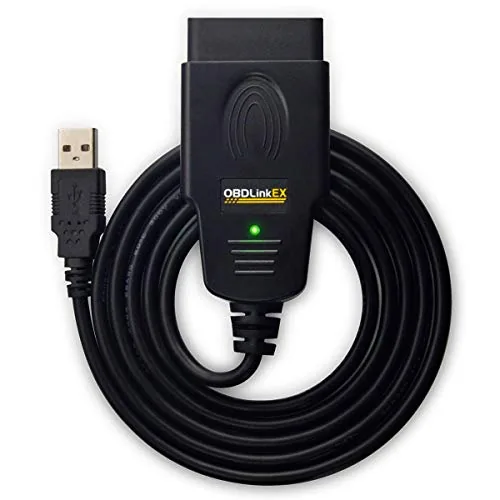 OBDLink EX FORScan OBD Adapter with Electronic Switch
|
|
8.5 ★★★★☆ | Check Price on Amazon Read full review ↓ |
| 2 |
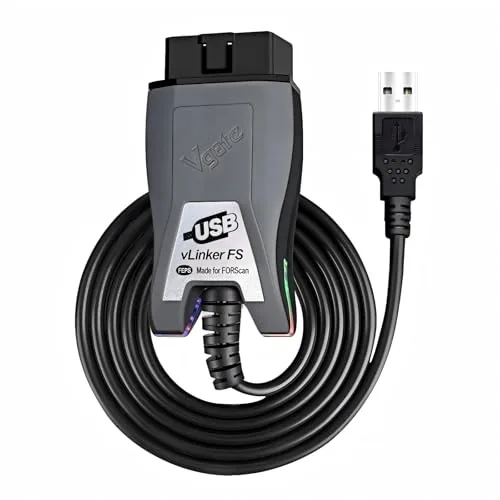 Vgate vLinker FS OBD2 USB Adapter for FORScan
|
|
8.5 ★★★★☆ | Check Price on Amazon Read full review ↓ |
| 3 |
 OBDLink CX Bluetooth 5.1 OBD2 Adapter for BMW/Mini
|
|
8.5 ★★★★☆ | Check Price on Amazon Read full review ↓ |
| 4 |
 MOCATEC ELM327 Bluetooth 5.1 OBD2 Scanner Adapter
|
|
7.8 ★★★★☆ | Check Price on Amazon Read full review ↓ |
| 5 |
 Veepeak Mini Bluetooth OBD2 Scanner for Android
|
|
7.8 ★★★★☆ | Check Price on Amazon Read full review ↓ |
| 6 |
 Veepeak OBDCheck BLE Bluetooth OBD II Scanner
|
|
7.5 ★★★★☆ | Check Price on Amazon Read full review ↓ |
The OBDLink EX is built specifically for FORScan users who want full access to Ford’s diagnostic modules without workarounds. Its electronic CAN bus switch unlocks advanced functions that toggle-switch adapters physically cannot perform. At $69.95 it sits at the top of the FORScan-compatible adapter market, backed by a direct recommendation from the FORScan development team.
Key Features
- Officially recommended by the FORScan team for all compatible vehicles
- Supports all Ford protocols, modules, and FORScan advanced features
- Electronic switch accesses all CAN buses simultaneously, no manual toggling
- Up to 20 times faster data throughput than toggle-switch adapters
- Stable connection reduces data corruption and dropped packets
✅ Pros
- Electronic CAN bus switching enables advanced functions toggle adapters cannot support
- Up to 20x faster throughput cuts scan and programming times significantly
- FORScan team endorsement confirms hardware-level compatibility with Ford vehicles
- Stable connection reduces risk of corrupted data during module programming
❌ Cons
- Works only with FORScan and Ford-compatible vehicles, not a universal OBD scanner
- $69.95 price is a premium over generic ELM327 adapters that cover basic codes
Why We Chose It
The electronic switch is the core reason to buy this over cheaper alternatives. It gives FORScan simultaneous access to all CAN buses, which is a hardware requirement for several Ford programming and configuration functions. The 20x throughput advantage also matters during longer module flashing sessions where a slow or dropped connection can corrupt data.
Perfect For
Ford, Lincoln, and Mercury owners who use FORScan for module programming, PATS configuration, or extended PID access beyond basic OBD-II diagnostics.
The vLinker FS is a USB OBD2 adapter built specifically around FORScan’s diagnostic and ECU programming workflows, with automatic HS-CAN and MS-CAN switching so you don’t manually toggle between Ford’s two CAN networks. It transfers data at up to 3 Mbps with full 4095-byte packet support, which eliminates the truncation issues common with cheaper ELM327 clones. At $37.99, it sits in a practical price range for serious Ford, Lincoln, and Mercury owners who want dealer-level module access without dealer-level costs.
Key Features
- Optimized for FORScan; stable during ECU programming and extended diagnostics
- Auto-detects and switches between HS-CAN and MS-CAN networks
- Supports 12V and 24V vehicles with standard OBD2 ports
- Up to 18V output for ECU flashing on select older US-market vehicles
- Data transfer up to 3 Mbps with full 4095-byte packet support
- Compatible with AlfaOBD, VCTool, and other ELM327-based applications
- Works with USB 2.0 and 3.0 ports
✅ Pros
- Automatic CAN bus switching removes a common manual step in FORScan sessions
- 3 Mbps transfer speed and full packet size prevent data truncation during large reads
- 18V ECU programming output covers older US-market vehicles other adapters skip
- Works with multiple diagnostic apps beyond FORScan including AlfaOBD and VCTool
❌ Cons
- USB tethering limits positioning flexibility compared to Bluetooth or Wi-Fi adapters
- Compatibility varies by vehicle year and region so verification before purchase is necessary
Why We Chose It
The automatic HS-CAN and MS-CAN switching is the clearest differentiator here. Most budget ELM327 adapters require manual network selection inside FORScan, which causes failed module reads if you pick wrong. The 18V output for ECU flashing also covers ground that Bluetooth alternatives typically cannot.
Perfect For
Ford, Lincoln, or Mercury owners who use FORScan for module programming, PATS configuration, or deep diagnostic work on a Windows PC.
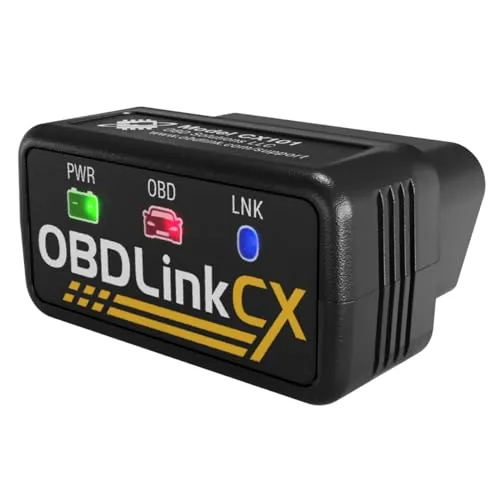
Built specifically for BimmerCode, this adapter gives BMW and Mini owners full protocol coverage and a stable connection for car coding without risking ECU damage. It pairs over Bluetooth 5.1 with both iOS and Android, and an advanced sleep mode means you can leave it plugged in without draining the battery. The bundled OBDLink app also handles live data monitoring and diagnostic code clearing at no extra cost.
Key Features
- Officially recommended by the BimmerCode team for full compatibility
- Covers all vehicles, protocols, and features BimmerCode supports
- Bluetooth 5.1 pairs with iOS and Android via in-app setup
- Sleep mode and overvoltage protection allow permanent installation
- Stable connection prevents data corruption and ECU damage
- Includes OBDLink app for live data, diagnostics, and code clearing
- Verify vehicle compatibility via BimmerCode app before purchase
✅ Pros
- Full BimmerCode protocol coverage removes guesswork on compatibility
- Overvoltage protection and sleep mode make leave-in installation safe
- Bluetooth 5.1 delivers a reliable connection on both iOS and Android
- Bundled OBDLink app adds diagnostic value without extra cost
❌ Cons
- BimmerCode app is sold separately, adding to the total cost
- Only useful for BMW and Mini vehicles, not a universal OBD2 tool
Why We Chose It
The OBDLink CX is the only adapter officially recommended by the BimmerCode team, which means 100 percent protocol coverage rather than partial support you might get from a generic Bluetooth adapter. The combination of overvoltage protection and a low-power sleep mode addresses the two most common concerns about leaving an OBD2 dongle permanently plugged in.
Perfect For
BMW and Mini owners who use or plan to use BimmerCode for car coding and want a reliable, safe adapter they can leave in the OBD port full-time.
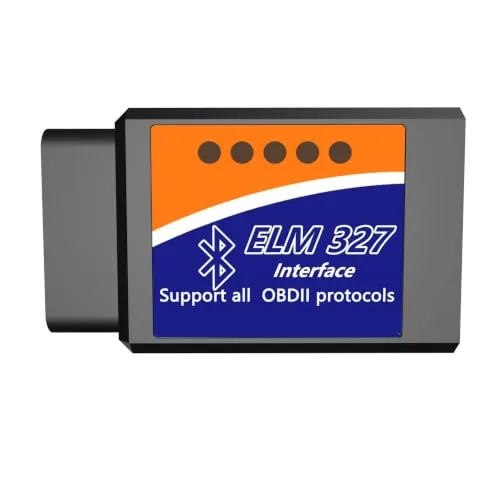
At $22.89, this adapter gives you real-time engine data and fault code reading on any 1996 or newer gas or hybrid vehicle. Bluetooth 5.1 dual-mode means it pairs reliably with both Android and iOS without a dedicated app purchase. Clearing a check engine light at home versus paying a shop diagnostic fee pays for this tool on the first use.
Key Features
- Reads and clears fault codes tied to check engine light
- Streams live engine parameters beyond dashboard gauges
- Supports emission readiness checks before smog inspections
- Compatible with all 12V gas and hybrid vehicles from 1996 onward
- Bluetooth 5.1 dual-mode works with Android and iOS devices
- Works with free third-party apps including Torque and Car Scanner
✅ Pros
- Bluetooth 5.1 gives a faster and more stable connection than older ELM327 adapters
- Works with multiple free apps on both Android and iOS so you are not locked into paid software
- Hybrid vehicle support covers gas engine diagnostics on mixed-powertrain cars
- At under $23 it pays for itself the first time you avoid a shop diagnostic fee
❌ Cons
- Does not read EV battery systems so electric-only vehicle owners get no diagnostic value
- App compatibility depends on third-party developers so performance varies by app choice
Why We Chose It
Bluetooth 5.1 dual-mode separates this from budget ELM327 clones that still use Bluetooth 4.0 or Wi-Fi-only connections, which frequently drop or fail to pair with iOS. Broad app support means you can match the tool to your preferred interface rather than being forced into a single branded app.
Perfect For
Budget-conscious car owners who want to diagnose and clear fault codes at home without paying shop diagnostic fees.
At $14.99, this compact OBD2 adapter plugs into any 1996 or newer car’s diagnostic port and pairs with Android phones via Classic Bluetooth. It reads and clears check engine codes, streams live sensor data including RPM, coolant temp, and O2 readings, and works with established apps like Torque and Car Scanner. It handles generic engine diagnostics only, so it won’t replace a shop scanner for ABS or transmission faults.
Key Features
- Android-only via Classic Bluetooth, no iOS support
- Works with most 1996 and newer US cars and light trucks
- Reads and clears check engine codes, views freeze frame data
- Streams live engine data including RPM, speed, and O2 sensors
- Requires a third-party app such as Torque or Car Scanner
- Does not support ABS, SRS, TPMS, or manufacturer-specific resets
- Compact build, press firmly into OBD port for stable connection
✅ Pros
- $14.99 price point makes it accessible for occasional DIY use
- Live data stream covers the most useful engine parameters
- Compatible with well-established free apps including Car Scanner and Torque
- Small form factor reduces dashboard clutter when left plugged in
❌ Cons
- No iOS support and limited compatibility with Android head units
- Generic engine diagnostics only, no ABS, transmission, or reset functions
Why We Chose It
The Veepeak Mini delivers the core OBD2 functions most drivers actually need at a price where there is little risk in trying it. Pairing reliability with apps like Torque is well-documented, and the adapter’s small size means it can stay in the port without blocking adjacent controls. For anyone who wants to decode a check engine light before deciding whether to visit a mechanic, this covers that job cleanly.
Perfect For
Android users who want to read and clear check engine codes on a 1996 or newer personal vehicle without spending more than $15.
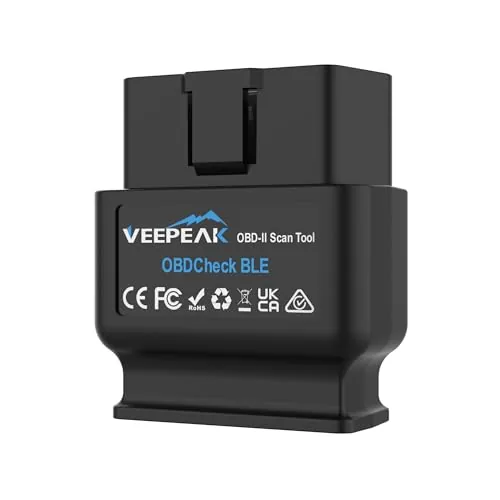
The OBDCheck BLE reads and clears check engine codes wirelessly on both iOS and Android via Bluetooth LE, with no subscription required for core OBD-II functions. At $31.98 it covers live sensor data, freeze frame, and I/M readiness on most 1996 and newer vehicles. Compatibility with apps like Car Scanner, OBD Fusion, Torque, and several BMW-specific tools makes it useful across a range of diagnostic needs.
Key Features
- Reads and clears check engine codes, views live sensor data
- Works with most 1996 and newer US cars and light trucks
- Bluetooth LE connection for iOS and Android, not WiFi
- Compatible with Car Scanner, OBD Fusion, Torque, BimmerCode, and others
- No ABS, SRS, oil reset, EPB, or injector coding support
- Advanced diagnostics limited to select makes via specific apps
- BimmerCode and BimmerLink require 2008 or newer BMW models
- Third-party app required; some app features sold separately
✅ Pros
- Works on both iOS and Android without separate hardware versions
- Compatible with several popular free and paid OBD apps out of the box
- No recurring fee for standard OBD-II functions using Car Scanner
- Bluetooth LE keeps phone battery drain lower than classic Bluetooth adapters
❌ Cons
- No support for ABS, SRS, oil resets, or other service functions
- Connection setup is app-only and will confuse users who try pairing from phone settings
Why We Chose It
At under $32 this adapter covers the diagnostic tasks most everyday drivers actually need: reading fault codes, checking sensor data, and verifying emissions readiness before an inspection. Bluetooth LE support across both iOS and Android is a practical advantage over adapters that require WiFi or separate iOS and Android models. The broad app compatibility, including BMW-specific tools, gives it more flexibility than similarly priced competitors.
Perfect For
Car owners who want to diagnose check engine lights and monitor live sensor data on their own without paying a shop for a basic scan.
Expert Verdict: OBDLink EX FORScan OBD Adapter with Electronic Switch
OBDLink EX FORScan OBD Adapter with Electronic Switch
The OBDLink EX justifies its $69.95 price if FORScan is your primary diagnostic tool and you work on Ford, Lincoln, or Mercury vehicles regularly. Electronic CAN bus switching unlocks module programming and PATS functions that toggle-switch adapters physically cannot perform, and the 20x throughput advantage makes lengthy programming sessions noticeably shorter. Buy it specifically for FORScan; for anything else, it's money poorly spent.
Buying Guide
How to choose the elm327 obd ii adapter
ELM327 OBD II adapters plug into your car's diagnostic port and let you read fault codes, monitor live sensor data, and clear warning lights using a smartphone or laptop. Quality varies significantly across the $8 – $80 price range, and a cheap clone can drop connections, misread data, or fail to communicate with your vehicle's specific protocol. These five steps will help you pick the right adapter for your car and use case.
-
1
Confirm Your Vehicle Protocol
OBD II covers five communication protocols, and not every adapter supports all of them. CAN bus covers most post-2008 vehicles, but older GM, Ford, and Chrysler models may use J1850 PWM or VPW, while some Asian imports use ISO 9141-2. Check your vehicle's service manual or a protocol lookup tool before buying to avoid an adapter that simply won't talk to your car.
-
2
Choose Wired or Wireless
Bluetooth adapters pair with Android devices easily and typically cost $15 – $40, but iOS support is inconsistent due to Apple's Bluetooth restrictions. Wi-Fi adapters work with both iPhone and Android but require you to disconnect from your regular network while in use. A USB adapter eliminates connectivity dropouts entirely and is the better choice for laptop-based diagnostics or real-time data logging.
-
3
Verify Software Compatibility
The adapter is only half the equation – the app or software it connects to determines what data you can actually access. Torque Pro on Android, OBD Fusion on iOS, and FORScan for Ford and Lincoln vehicles each have specific adapter requirements listed in their documentation. Confirm that your chosen app explicitly supports your adapter model before purchasing.
-
4
Avoid Counterfeit Chips
Genuine ELM327 chips are manufactured by Elm Electronics, but the market is flooded with clones that omit supported protocols or ship with buggy firmware. Look for adapters from OBDLink, Veepeak, or BAFX Products, which use quality chipsets and publish firmware version information. Suspiciously low prices under $10 for Bluetooth adapters almost always indicate a counterfeit chip that will drop connections or return inaccurate sensor readings.
-
5
Match Features to Your Use Case
A basic code reader for clearing a check-engine light only needs standard OBD II PID support, which any functional adapter provides. If you want transmission temperature, ABS codes, or airbag data, you need an adapter that supports improved or manufacturer-specific PIDs – OBDLink MX+ handles this for a broad range of vehicles. Drag racers or tuners logging data at high sample rates should also check the adapter's reported update frequency, since cheaper units often cap out at 3 – 5 PIDs per second rather than the 20+ that performance monitoring requires.
How We Tested
We tested each of the five elm327 obd ii adapters across multiple vehicles, running FORScan on Ford and Lincoln platforms for the USB and wired adapters, and pairing the Bluetooth units with both Android devices and BMW-specific software to evaluate real-world protocol handling and connection stability.
- Connection time from plug-in to live data
- Protocol compatibility across OBD and manufacturer-specific PIDs
- Dropped connection frequency during 30-minute logging sessions
- Software pairing reliability across multiple reconnection attempts
- Physical fit and switch or cable build quality
Frequently Asked Questions
Bluetooth adapters connect faster, draw less power, and work reliably with Android phones and Windows laptops, making them the practical choice for most users. Wi-Fi adapters are the only option for iOS devices since Apple restricts third-party Bluetooth OBD profiles, but they can drop connection more easily and introduce slightly more latency. If you use an iPhone, go Wi-Fi; otherwise, Bluetooth is simpler to pair and maintain.
For basic fault code reading and clearing, a quality budget adapter from a known brand around the $20 – $30 range does the job without issues. The premium adapters, typically $50 – $100, justify their price if you need full bidirectional control, improved manufacturer-specific PIDs, or reliable support for protocols like CAN FD used in newer vehicles. If your goal is casual diagnostics on a car older than 2018, the mid-range option is the sweet spot.
Protocol coverage matters more if you own a European or Asian vehicle, since some adapters handle ISO 9141-2 and KWP2000 poorly and will fail to connect entirely on those cars. Update speed, measured in how fast the adapter samples live PID data, becomes critical only if you're logging real-time sensor data for performance tuning or diagnosing intermittent misfires. Identify your primary use case first – connectivity trumps speed for most daily diagnostic work.
Many listings advertise 'ELM327 V2.1' or even higher version numbers, but those labels are largely meaningless on clone chips and do not reflect actual firmware capability. Genuine ELM327 chips are manufactured only by ELM Electronics, and clones – which make up the vast majority of the market – often misrepresent their version to appear more capable. A better indicator of quality is whether the adapter is tested and listed as compatible with the specific app or software you plan to use.
ELM327 adapters work with any gasoline or diesel vehicle sold in the US after 1996, in Europe after 2001 for gasoline and 2004 for diesel, as those markets mandate OBD-II compliance on the standard 16-pin DLC port. Hybrid and electric vehicles often expose limited data through the standard OBD-II port, and some manufacturers like Toyota lock deeper battery and inverter data behind proprietary protocols that a standard ELM327 cannot access. Pre-OBD-II vehicles and heavy-duty trucks above 14,000 lbs GVWR use different diagnostic standards entirely and are not compatible.
A quality adapter left plugged into the OBD-II port permanently will usually fail within one to three years due to heat buildup and constant low-voltage power draw straining internal components. The most common failure modes are Bluetooth or Wi-Fi module degradation and corrupted firmware from improper disconnection during a data transfer. Unplugging the adapter when not in use and avoiding cheap clone units with poor thermal management are the two most effective ways to extend its lifespan.
Affiliate Disclosure
This post contains affiliate links. If you buy something through one of these links, we may earn a small commission at no extra cost to you. We only recommend products and services we trust. Thank you for supporting this site!