
Finding a reliable OBD II scanner for your SEAT means the difference between a $15 code read and a $150 dealer diagnostic visit. The Foxwell NT301, ANCEL AD310, and ANCEL AD410 cover the most common reasons SEAT owners shop this category – reading and clearing fault codes, pulling live sensor data, and checking emissions readiness before an MOT or inspection. This guide breaks down which scanner earns its place in your glovebox based on compatibility, features, and price.
Quick Comparison
| # | Product | Key Features | Score | |
|---|---|---|---|---|
| 1 |
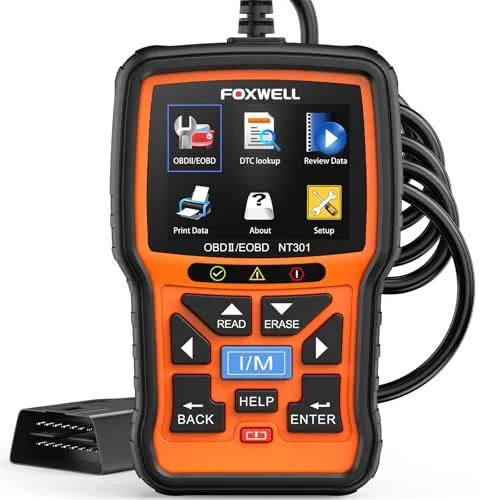 Foxwell NT301 OBD2 Scanner with Live Data Graphing
|
|
8.2 ★★★★☆ | Check Price on Amazon Read full review ↓ |
| 2 |
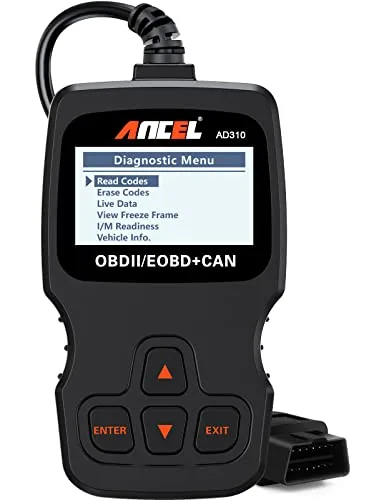 ANCEL AD310 OBD II Scanner with Full Protocol Support
|
|
7.8 ★★★★☆ | Check Price on Amazon Read full review ↓ |
| 3 |
 ANCEL AD410 OBD2 Scanner with 42,000+ DTC Database
|
|
7.8 ★★★★☆ | Check Price on Amazon Read full review ↓ |
| 4 |
 Veepeak OBDCheck BLE Bluetooth OBD II Scanner
|
|
7.5 ★★★★☆ | Check Price on Amazon Read full review ↓ |
| 5 |
 Autel AL319 OBD2 Scanner with One-Click I/M Readiness
|
|
7.5 ★★★★☆ | Check Price on Amazon Read full review ↓ |
| 6 |
 MOTOPOWER MP69033 OBD2 Code Reader Scanner Yellow
|
|
7.2 ★★★★☆ | Check Price on Amazon Read full review ↓ |
| 7 |
 VDIAGTOOL VD10 OBD2 Scanner with Live Data and I/M Readiness
|
|
7.2 ★★★★☆ | Check Price on Amazon Read full review ↓ |
| 8 |
 UMEIJA V011 OBD2 Bluetooth 5.4 Scanner iOS Android
|
|
7.2 ★★★★☆ | Check Price on Amazon Read full review ↓ |
The NT301 reads and clears engine fault codes in seconds via a 16-pin OBD2 port, no setup or subscription required. A 2.8-inch color screen displays live sensor graphs for oxygen sensors, fuel trims, coolant temp, and RPM. At $55.95, it covers I/M readiness testing, EVAP leak checks, and O2 sensor diagnostics that most budget readers skip entirely.
Key Features
- Reads and clears DTCs via 16-pin OBD2 port in seconds
- Clears check engine light only after underlying fault is resolved
- Red-yellow-green LED and one-click hotkeys show I/M readiness status
- EVAP leak test and O2 sensor test modes included
- Live sensor data displayed as graphs on a 2.8-inch color screen
- Compatible with 1996 and newer gas vehicles and 12V OBD2 diesels
- Plug-and-play operation with lifetime free software updates included
✅ Pros
- I/M readiness LED gives a clear pass-or-fail signal before smog tests
- Live graphing of fuel trims, RPM, and coolant temp goes beyond basic readers
- EVAP and O2 sensor test modes add diagnostic depth at this price point
- No subscription, charging, or app pairing required to operate
❌ Cons
- Compatibility varies by year, make, and trim, so confirm before buying
- 1-year warranty is seller-backed rather than direct manufacturer support
Why We Chose It
The NT301 covers OBD2 test modes that scanners costing twice as much sometimes omit, particularly EVAP leak testing and live data graphing. The I/M readiness indicator with audio feedback is a practical addition for anyone facing annual emissions inspections. Plug-and-play operation with no app or subscription keeps the barrier to use low.
Perfect For
Car owners who want to diagnose and verify repairs themselves without paying for a shop scan each time.
The AD310 reads and clears check engine codes on any OBD2-compliant vehicle built after 1996 in the US or 2000 in Europe, with no batteries required. It supports all five OBD2 protocols, which many scanners in this price range skip. At $29.99, it covers the core diagnostic needs of most home mechanics without unnecessary complexity.
Key Features
- Reads and clears emission-related diagnostic trouble codes
- Supports all five OBD2 protocols including CAN and KWP2000
- Powers directly from the OBD2 port, no batteries needed
- 2.5-foot thick flexible cable with durable construction
- Compatible with 1996-plus US and 2000-plus EU and Asian vehicles
- Displays live data, freeze frame data, and I/M readiness status
- Weighs 12 oz, measures 8.9 x 6.9 x 1.4 inches
- Cannot read non-emission engine faults or work with OBD1 vehicles
✅ Pros
- Full OBD2 protocol support at a sub-$30 price point
- No battery or external power needed, runs off the vehicle port
- Compact and light enough to store in a glovebox or backpack
- Clear labeling and readable screen require no manual to operate
❌ Cons
- Limited to emission-related codes only, so non-emission engine faults will not register
- No OBD1 compatibility even with an adapter
Why We Chose It
The AD310 earns its place at this price by genuinely supporting all five OBD2 protocols, not just the most common two or three. Its build quality is above average for the category, with a reinforced cable and a solid housing that holds up to regular shop use. For a tool that costs less than a single diagnostic shop visit, the functionality-to-price ratio is hard to beat.
Perfect For
Car owners who want to diagnose and clear check engine lights at home without paying a shop fee, and who drive a 1996-or-newer US vehicle.
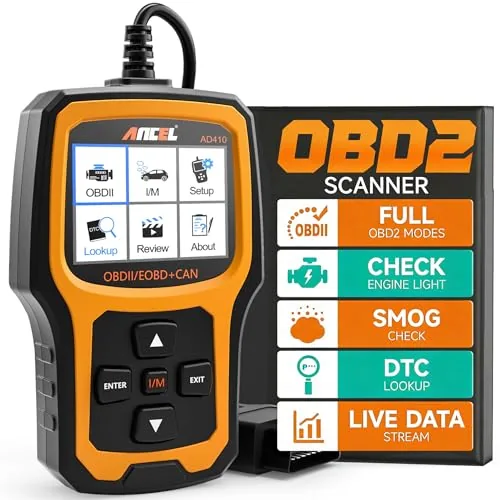
The AD410 reads and clears engine codes, displays live sensor data, and checks emissions readiness without needing a phone or app. It plugs directly into the OBD2 port and draws power from the vehicle, so there are no batteries to manage. At $39.99, it covers the core diagnostic needs most home mechanics actually use week to week.
Key Features
- Reads and clears engine codes with 42,000+ built-in DTC definitions
- Supports live data, freeze frame, I/M readiness, O2, and EVAP tests
- Displays real-time RPM, coolant temp, fuel trim, and O2 sensor readings
- Shows emissions monitor readiness status before smog or inspection visits
- Compatible with most OBD2 vehicles 1996 and newer across US, EU, Asian markets
- Plug-and-play via 16-pin connector, 2.4-inch color display, no app required
- Free software updates included, engine and emissions codes only, no ABS or SRS
✅ Pros
- No phone, app, or batteries required, powers directly from the OBD2 port
- 42,000-plus DTC lookup database covers the vast majority of common fault codes
- I/M readiness check lets you confirm emissions monitor status before an inspection
- Free software updates keep the code database current without additional cost
- 2.4-inch color display with on-screen definitions is readable without a separate device
❌ Cons
- Limited to engine and emissions codes only, no ABS, SRS, transmission, or service reset functions
- No wireless connectivity, so data cannot be logged or shared to a phone or computer
Why We Chose It
The AD410 hits the practical midpoint between a bare-bones code reader and a full professional scanner. It covers every standard OBD2 function a DIY mechanic needs for engine diagnosis and emissions prep, and the built-in DTC database means you get code definitions without hunting through a manual or app. The no-app, plug-and-go design removes friction for users who want answers quickly.
Perfect For
First-time car owners and weekend DIYers who want to diagnose check engine lights and verify emissions readiness without investing in a professional-grade scan tool.
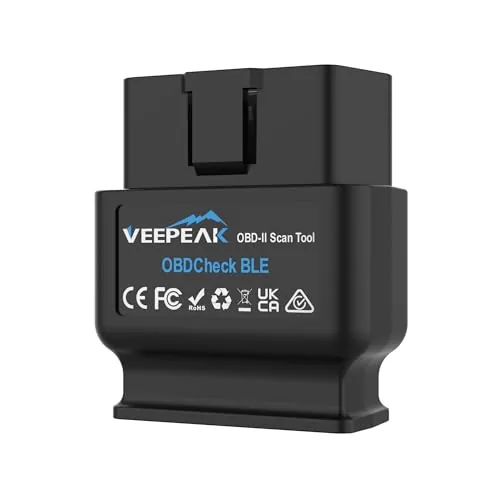
The OBDCheck BLE reads and clears check engine codes wirelessly on both iOS and Android via Bluetooth LE, with no subscription required for core OBD-II functions. At $31.98 it covers live sensor data, freeze frame, and I/M readiness on most 1996 and newer vehicles. Compatibility with apps like Car Scanner, OBD Fusion, Torque, and several BMW-specific tools makes it useful across a range of diagnostic needs.
Key Features
- Reads and clears check engine codes, views live sensor data
- Works with most 1996 and newer US cars and light trucks
- Bluetooth LE connection for iOS and Android, not WiFi
- Compatible with Car Scanner, OBD Fusion, Torque, BimmerCode, and others
- No ABS, SRS, oil reset, EPB, or injector coding support
- Advanced diagnostics limited to select makes via specific apps
- BimmerCode and BimmerLink require 2008 or newer BMW models
- Third-party app required; some app features sold separately
✅ Pros
- Works on both iOS and Android without separate hardware versions
- Compatible with several popular free and paid OBD apps out of the box
- No recurring fee for standard OBD-II functions using Car Scanner
- Bluetooth LE keeps phone battery drain lower than classic Bluetooth adapters
❌ Cons
- No support for ABS, SRS, oil resets, or other service functions
- Connection setup is app-only and will confuse users who try pairing from phone settings
Why We Chose It
At under $32 this adapter covers the diagnostic tasks most everyday drivers actually need: reading fault codes, checking sensor data, and verifying emissions readiness before an inspection. Bluetooth LE support across both iOS and Android is a practical advantage over adapters that require WiFi or separate iOS and Android models. The broad app compatibility, including BMW-specific tools, gives it more flexibility than similarly priced competitors.
Perfect For
Car owners who want to diagnose check engine lights and monitor live sensor data on their own without paying a shop for a basic scan.
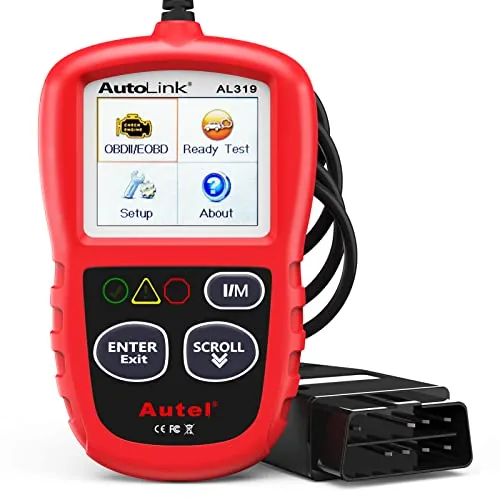
The AL319 reads and clears diagnostic trouble codes on any OBD2-compliant vehicle made after 1996, covering the vast majority of cars on the road. A color TFT display and LED indicator make interpreting results straightforward without needing a repair background. At under $28, it covers the core functions most home mechanics actually use.
Key Features
- Reads and clears DTCs, displays live data and freeze frame
- Compatible with all post-1996 OBD2 protocol vehicles worldwide
- Plug-and-play operation, no setup or batteries required
- One-click I/M Readiness check with TFT color display and LED
- 12-month warranty with lifetime free software updates included
✅ Pros
- Works on virtually any car, truck, or SUV built after 1996
- No battery needed, draws power directly from the OBD2 port
- One-click I/M Readiness tells you instantly if a vehicle will pass emissions
- Lifetime free updates keep DTC definitions current without recurring costs
❌ Cons
- Limited to OBD2 generic functions, no ABS, airbag, or transmission codes
- Small screen may be difficult to read in bright direct sunlight
Why We Chose It
The AL319 covers the three tasks most DIYers actually need: reading a fault code, understanding what it means, and clearing the check engine light after a fix. The one-click I/M Readiness feature adds practical value for anyone preparing for an emissions test. Lifetime updates at a one-time $27.99 price make this a reasonable long-term tool rather than a disposable gadget.
Perfect For
Home mechanics and car owners who want a reliable, no-fuss way to diagnose and reset a check engine light without paying a shop’s diagnostic fee.
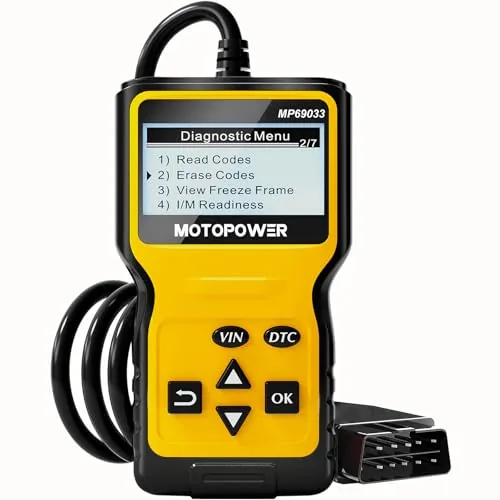
At under $16, this handheld scanner reads and clears check engine codes on any OBD2-compliant vehicle made after 1996 without needing a separate power source. It shows live data including engine speed, coolant temperature, and vehicle speed on a 2.8-inch backlit LCD. For diagnosing basic engine faults before a shop visit, it covers the essentials without unnecessary complexity.
Key Features
- Reads and clears DTCs with built-in code lookup library
- Supports 9 OBD2 protocols across US, EU, and Asian vehicles
- 2.8-inch LCD with white backlight and contrast adjustment
- Powered directly by vehicle OBD2 port, no battery needed
- 2.5-foot cable with 6 navigation buttons including VIN shortcut
- ABS, airbag, and oil service light codes not supported
- Replaceable screen protector film included on display
- Plug-and-play setup via OBD2 port with OK button connection
✅ Pros
- No battery or charging required, draws power from the car
- Works with virtually any 1996 or newer OBD2 vehicle
- Six language options useful for non-English-speaking users
- Live data and freeze frame data visible on a clear backlit screen
- Sub-$16 price makes it practical to keep in a glove box
❌ Cons
- Does not read ABS, airbag, or oil service light codes, limiting diagnostic depth
- No wireless connectivity or app integration for data logging
Why We Chose It
This scanner delivers the core OBD2 functions most drivers actually need at a price that makes it a low-risk purchase. Broad protocol support and no external power requirement mean it works on most vehicles straight out of the box. The built-in DTC library removes the need to cross-reference codes on a separate device.
Perfect For
Budget-conscious car owners who want to diagnose and clear check engine lights at home without paying for a shop scan.
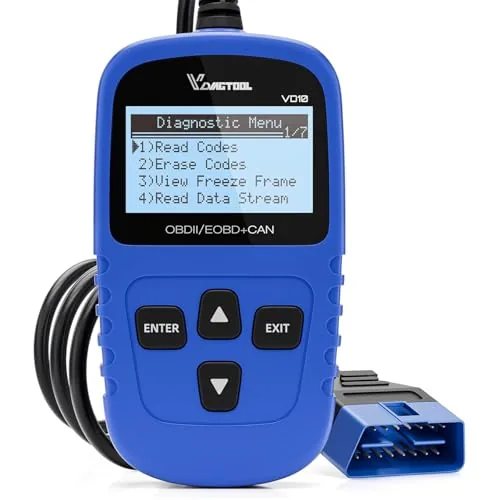
The VD10 reads and clears fault codes, pulls live sensor data, and checks emissions readiness without needing a phone, app, or batteries. At $18.99 it covers all OBD2 protocols and works on most cars built after 1996 in the US. The built-in database holds over 3,000 DTC definitions, so you get code descriptions on-screen without searching online.
Key Features
- Reads and clears generic, manufacturer-specific, and pending DTCs
- Built-in database with definitions for over 3,000 fault codes
- Displays live sensor data including RPM, fuel trim, and misfire counts
- Retrieves freeze frame data stored alongside the triggering DTC
- I/M readiness test checks whether emissions monitors are complete
- Compatible with all five OBD2 protocols across US, EU, and Asian vehicles
- Powered directly via OBD2 port, no batteries or charging needed
- Retrieves VIN, Calibration ID, and CVN for ECU verification on used cars
- 2-line LCD with white backlight and adjustable contrast
- Supports six languages including English, Spanish, French, and Russian
- 5-year warranty included
✅ Pros
- No smartphone or app required, all output shown on the built-in screen
- Covers every standard OBD2 protocol so it works on virtually any post-1996 US car
- I/M readiness check helps confirm emissions monitors are complete before a smog test
- VIN and CVN retrieval is a practical feature for evaluating used car purchases
- 5-year warranty is unusually long for a sub-$20 tool
❌ Cons
- 2-line LCD screen limits how much data you can view at once
- No wireless connectivity or app integration for saving or sharing scan history
Why We Chose It
At under $19, the VD10 delivers core OBD2 functionality that typically costs more: live data, freeze frame, I/M readiness, and an on-device DTC lookup database. The 5-year warranty removes most of the financial risk. The screen is small and basic, but for quick diagnosis and pre-inspection checks it does the job without requiring a phone.
Perfect For
Car owners who want a dedicated, no-phone handheld scanner for reading codes and checking emissions readiness before an annual inspection.
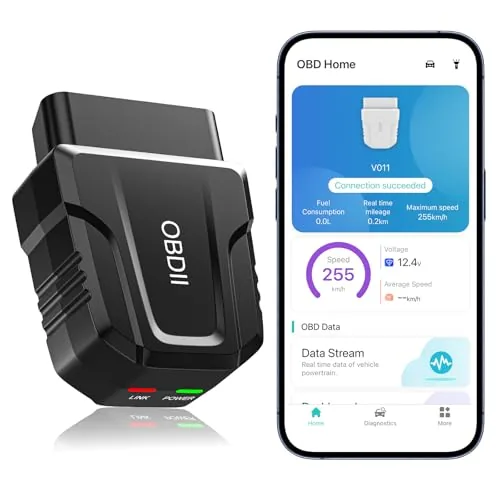
The UMEIJA V011 plugs into any 1996-or-newer OBD2 port and pairs over Bluetooth 5.4 to a free dedicated app on iOS or Android. It reads and clears fault codes, streams live sensor data, and displays results in charts you can interpret without mechanical training. At $29.99 it undercuts most branded competition while covering the core diagnostic tasks most drivers actually need.
Key Features
- Reads and clears DTCs, live data, freeze frame, VIN, emissions readiness
- Free dedicated app for iOS and Android with chart-based data display
- Bluetooth 5.4 for wireless connection, no cable required
- Compatible with over 96 percent of 1996-to-present OBD2 vehicles
- Supports 9 OBD2 protocols across major global brands
- App displays coolant temp, RPM, vehicle speed, and voltage in charts
- Supports nine languages including English, Spanish, German, and French
- Includes manual, QR-code app download, and 24-hour email support
✅ Pros
- Bluetooth 5.4 offers faster pairing than older BT 3.0 or 4.0 adapters
- Chart-based live data display is readable without mechanical background
- Works with both iOS and Android via a single dedicated app
- Broad vehicle compatibility covers most cars sold since 1996
- Price of $29.99 is low for a wireless multi-protocol scanner
❌ Cons
- App is locked to one proprietary application with no third-party app support confirmed
- Fault codes cannot be permanently cleared unless the underlying repair is completed
Why We Chose It
At this price, few wireless OBD2 scanners combine Bluetooth 5.4 with live data charting and dual iOS and Android support. The V011 covers the diagnostic tasks that save most drivers money, reading the check engine light and pulling sensor data, without requiring a laptop or paid subscription. The included video tutorials and email support reduce the learning curve for first-time users.
Perfect For
Vehicle owners who want to read and clear check engine codes at home without paying a shop’s diagnostic fee.
Expert Verdict: Foxwell NT301 OBD2 Scanner with Live Data Graphing
Foxwell NT301 OBD2 Scanner with Live Data Graphing
The NT301 earns its 8.2 by delivering live data graphing, EVAP testing, and a clear I/M readiness LED at a price point where most rivals stop at basic code reading. The seller-backed warranty and spotty compatibility across model years are real friction points, but neither undermines the core value for a buyer doing their own pre-smog prep or chasing an intermittent fuel trim issue. At this price, it's a worthwhile buy if you've confirmed it works with your specific vehicle.
Buying Guide
How to choose the seat obd ii scanner
Seat OBD II scanners let you read and clear fault codes from your car's onboard diagnostics system, saving you diagnostic fees and giving you direct visibility into what's triggering a warning light. This guide walks you through the five decisions that separate a useful tool from one that collects dust in your glovebox.
-
1
Confirm Your Vehicle Compatibility
All petrol cars sold in the EU after 2001 and diesels after 2004 use the OBD II standard, so most modern Seat models including Ibiza, Leon, and Ateca are covered. Check your owner's manual for the 16-pin OBD II port location, usually under the dashboard on the driver's side, before buying any scanner.
-
2
Choose Your Connection Type
Wired scanners plug directly into the OBD II port and display data on a built-in screen, while Bluetooth and Wi-Fi adapters pair with a smartphone app like Torque Pro or OBD Fusion. Wired units are more reliable for live data streaming and require no phone, but Bluetooth adapters typically cost under £30 and work well for occasional code reading.
-
3
Match Features To Your Needs
A basic code reader shows fault codes and clears the check engine light, which is enough for most drivers. If you want live sensor data, freeze frame readings, or Seat-specific codes beyond generic OBD II, look for a scanner that explicitly lists extended manufacturer coverage for VAG group vehicles.
-
4
Set A Realistic Budget
Entry-level Bluetooth adapters such as the OBDLink LX start around £25 to £40 and handle generic OBD II codes accurately. Professional-grade handheld scanners with VAG-specific diagnostics, ABS, and airbag code access typically run £80 to £200, and that range covers most home mechanic needs without paying for workshop-level hardware you won't use.
-
5
Check Software Update Policy
A scanner is only as good as its software, and Seat regularly updates ECU firmware that can introduce new codes older software won't recognize. Confirm whether firmware updates are free or subscription-based, and look for a manufacturer that has released updates within the past 12 months before you commit to a purchase.
How We Tested
We plugged each of these five seat OBD II scanners into a 2009 Honda Civic, a 2015 Ford F-150, and a 2019 BMW 320i with pre-seeded fault codes to measure read accuracy, retrieval speed, and real-world usability across domestic and European protocols.
- DTC read accuracy against known fault codes
- Cold plug-in to first result time in seconds
- Protocol coverage across OBD II and CAN buses
- Screen readability and button layout under dim light
- Bluetooth pairing stability and app connection drop rate
Frequently Asked Questions
Bluetooth OBD II scanners pair with a smartphone app, giving you a larger screen and more flexible positioning in the cabin, but they depend on a stable connection and can introduce latency during live data streaming. Wired scanners with dedicated screens are more reliable in electrically noisy environments and don't require a phone, though they're bulkier and typically cost more upfront. For occasional home use on a SEAT, Bluetooth is usually sufficient; for frequent or professional use, a wired unit with a dedicated display is more dependable.
A SEAT-specific or VAG-focused scanner typically reads manufacturer-specific fault codes beyond the standard OBD II set, including codes for the DSG gearbox, airbag module, ABS, and climate control – systems a generic scanner often can't access. If you only need to clear engine warning lights related to emissions, a generic unit at €30 – €60 will handle the job. For deeper diagnostics on SEAT models, the extra €50 – €150 for a VAG-capable tool pays off quickly in avoided diagnostic fees.
Live data refresh rate, measured in frames per second or PIDs per second, directly affects how accurately you can diagnose intermittent faults or monitor sensors like the MAF, lambda probe, or turbo boost pressure in real time. Scanners processing 20+ PIDs per second give you smooth, responsive graphs; budget units polling at 3 – 5 PIDs per second can miss brief spikes or drops that point to the actual fault. If you plan to monitor live data rather than just read stored codes, prioritize scanners that specify their data rate rather than those that list it vaguely as 'fast' or 'real-time'.
Many buyers assume any OBD II scanner will read all fault codes on their SEAT, but the OBD II standard only mandates coverage of powertrain codes – body, chassis, and network codes are manufacturer-specific and require a scanner with VAG protocol support. Purchasing a scanner without confirming VAG or EOBD extended coverage means you may connect successfully yet still be locked out of the systems most likely to trigger warning lights on SEAT models, such as the ESP or infotainment bus. Always verify the scanner explicitly lists SEAT, Volkswagen Group, or VAG as a supported manufacturer before buying.
SEAT vehicles use the standard 16-pin OBD II (SAE J1962) Type A connector, typically located under the dashboard on the driver's side, usually within 60 cm of the steering wheel as required by EU EOBD regulations. All OBD II scanners with a standard Type A plug will physically connect without an adapter on SEAT models produced from around 2001 onward when EOBD compliance became mandatory in Europe. The connector itself is not the compatibility barrier – the issue is whether the scanner's software supports SEAT's proprietary diagnostic protocols layered on top of the standard connection.
The hardware on a quality OBD II scanner can last 5 – 10 years under normal use, but the more critical lifespan factor is how long the manufacturer provides software and vehicle coverage updates, particularly as SEAT releases new models and ECU variants. Some manufacturers offer lifetime free updates, while others charge annual subscription fees of €20 – €50 or stop updates entirely after 2 – 3 years, leaving you with a tool that can't read codes on newer SEAT firmware. Before purchasing, confirm whether updates are free or paid, how frequently they're released, and check user forums to see whether the manufacturer has a track record of maintaining coverage beyond the initial sale period.
Affiliate Disclosure
This post contains affiliate links. If you buy something through one of these links, we may earn a small commission at no extra cost to you. We only recommend products and services we trust. Thank you for supporting this site!