
Transmission warning lights and cryptic error codes leave most drivers guessing – and a generic OBD2 scanner often can’t read transmission-specific fault data at all. Dedicated transmission code readers close that gap by pulling module-level diagnostics, live sensor data, and in many cases running active reset functions that a shop visit would otherwise cost you $100 or more to access. This review covers three models worth serious consideration – the FOXWELL NT614 Elite, XTOOL D5S, and BLCKTEC 460T – ranked by coverage depth, reset capability, and real-world usability.
Quick Comparison
| # | Product | Key Features | Score | |
|---|---|---|---|---|
| 1 |
 FOXWELL NT614 Elite OBD2 Scanner with 5 Resets
|
|
8.3 ★★★★☆ | Check Price on Amazon Read full review ↓ |
| 2 |
 XTOOL D5S OBD2 Scanner with 16 Reset Functions
|
|
8.2 ★★★★☆ | Check Price on Amazon Read full review ↓ |
| 3 |
 BLCKTEC 460T OBD2 Scanner with 12 Reset Services
|
|
8.2 ★★★★☆ | Check Price on Amazon Read full review ↓ |
| 4 |
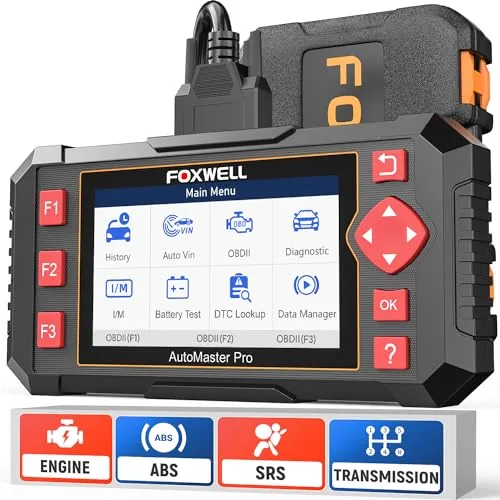 FOXWELL NT604 Elite ABS SRS Transmission OBD2 Scanner
|
|
7.8 ★★★★☆ | Check Price on Amazon Read full review ↓ |
| 5 |
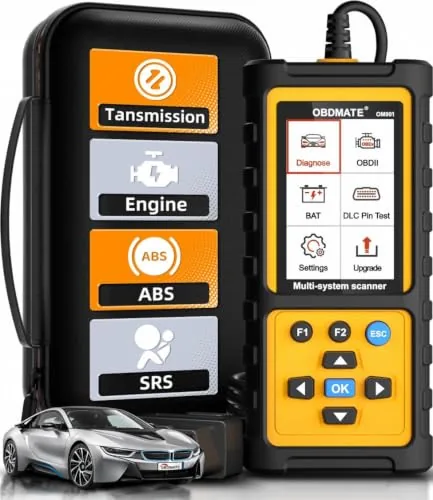 OBDMATE OM901 OBD2 Scanner with ABS SRS Transmission
|
|
7.8 ★★★★☆ | Check Price on Amazon Read full review ↓ |
| 6 |
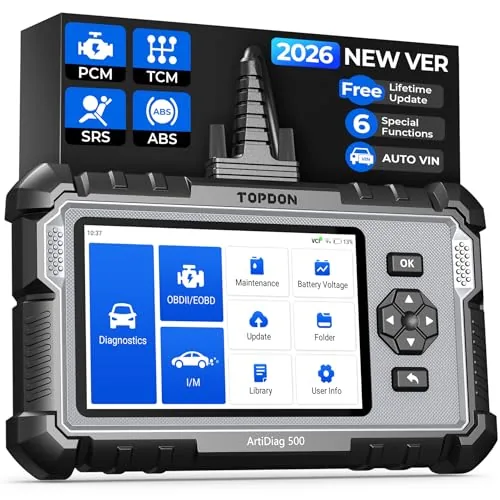 TOPDON ArtiDiag500 OBD2 Scanner with 4-System Diagnostics
|
|
7.8 ★★★★☆ | Check Price on Amazon Read full review ↓ |
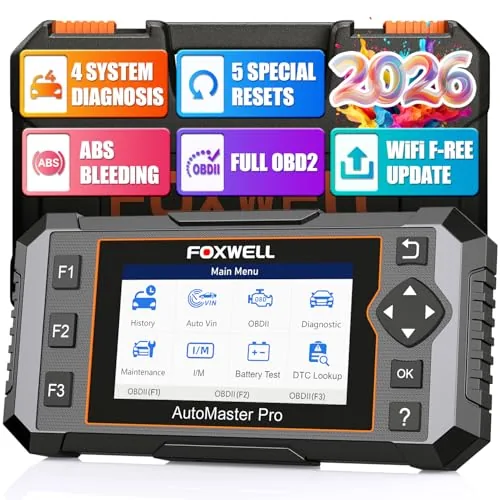
The NT614 Elite covers Engine, ABS, SRS, and Transmission diagnostics while adding five service resets that basic scanners skip entirely. ABS bleeding, EPB retraction, SAS calibration, oil light reset, and throttle relearn are all on-device, no laptop required. At $154, it replaces individual shop visits that each cost more than the tool itself.
Key Features
- Adds 5 resets over NT604, same 4-system diagnostics retained
- AutoVIN reads codes in roughly 15 seconds on CAN vehicles
- ABS bleeding, EPB reset, SAS calibration, oil reset, throttle relearn included
- Live sensor graphs show RPM, O2 voltage, fuel trims, transmission temp
- Built-in DTC library explains codes on screen without a phone search
- WiFi updates are free for life, no SD card or subscription needed
- ABS, EPB, and SAS coverage varies by make, model, and year
✅ Pros
- Five shop-level service resets justify the price over basic code readers
- On-screen code explanations eliminate the need to look up DTCs separately
- Lifetime free WiFi updates keep coverage current without recurring fees
- AutoVIN and simple menu structure reduce setup time significantly
❌ Cons
- ABS bleeding, EPB, and SAS functions are not guaranteed on all vehicles, particularly pre-2008 and European models
- No mention of touchscreen, so navigation relies on physical buttons which can slow workflows
Why We Chose It
The NT614 Elite sits in a practical gap between a $40 code reader and a $400 professional scan tool. The five included resets address jobs that shops routinely charge $100 to $300 each to perform, making the $154 price recoverable after one or two DIY brake jobs. The on-screen DTC library and live data graphing reduce the back-and-forth between the scanner and a phone or laptop.
Perfect For
DIY mechanics who do their own brake, suspension, and drivetrain maintenance and want to avoid shop fees for routine resets and calibrations.
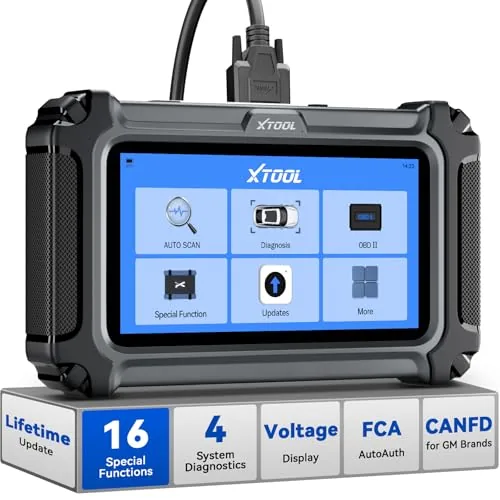
The D5S covers engine, ABS, SRS, and transmission diagnostics in a single handheld tool, handling 16 service resets that most scanners in this price range skip entirely. A 5.45-inch 1440×720 touchscreen, 32GB of storage, and free lifetime WiFi updates make it a long-term buy without recurring subscription costs. CAN FD protocol support extends compatibility to newer vehicle architectures that older OBD2 tools cannot read.
Key Features
- 16 service resets including EPB, BMS, TPMS, ABS bleed, and injector coding
- Reads and clears codes across engine, ABS, SRS, and transmission systems
- Full OBD2 diagnostics with live data in text or up to 4 PID graphs
- Real-time engine data including fuel trim, O2 sensor voltage, RPM, coolant temp
- ABS bleeding support after caliper or master cylinder replacement
- Transmission code reading, real-time TCM data, and post-service reset
- Covers 90-plus vehicle brands and 12V diesel engines built after 1996 with CAN FD
- 5.45-inch 1440×720 touchscreen, 32GB storage, silicone grip body
- Free lifetime software updates over WiFi with no subscription fee
- Voltage display, My Vehicle menu, and quick-access Auto Scan shortcut
✅ Pros
- 16 resets at $143.95 undercuts most competitors offering the same breadth
- Free lifetime updates remove the recurring cost common with mid-range scanners
- CAN FD protocol covers late-model vehicles many same-price tools miss
- Live data supports up to 4 simultaneous PID graphs for faster diagnosis
- 32GB onboard storage with expandable memory handles extensive data logging
❌ Cons
- Does not support Indian domestic vehicle brands, limiting use for those markets
- Transmission and engine may appear as one combined system on certain vehicles
Why We Chose It
At under $145, the D5S is one of the few tools at this price that includes both CAN FD protocol support and 16 service resets without charging for software updates. The combination of four-system diagnostics and resets like injector coding and gearbox match typically appear on tools priced $200 or higher. Lifetime free updates protect the investment as new vehicle models roll out.
Perfect For
Home mechanics and small-shop technicians who need multi-system diagnostics and common service resets without paying subscription fees or buying a separate dedicated reset tool.
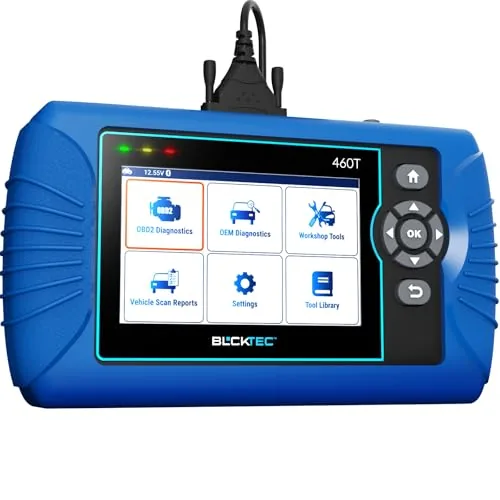
The 460T reads and clears codes across all major systems including engine, transmission, ABS, and SRS, then goes further with 12 dealer-level reset functions like EPB, DPF, and battery initialization. AutoScan triggers a full ECU sweep the moment you plug it in, and live data from up to four streams can be graphed simultaneously. Free lifetime updates and a US-based support team add long-term value that cheaper scanners skip.
Key Features
- Full system diagnostics across engine, transmission, ABS, and SRS
- 12 reset functions including oil, EPB, DPF, TPMS, and battery
- Real-time OBD2 and OEM live data with four-stream graph overlay
- AutoVIN, AutoScan, and AutoReLink with 30-second DTC refresh
- Pairs with free RepairSolutions2 app for repair guidance and TSBs
- Free lifetime updates, covers OBD2 vehicles from 1996 onward
- USA and Canada use only, verify vehicle compatibility before buying
- Designed by US master technicians, support line Monday to Friday
✅ Pros
- 12 reset services cover most common shop jobs without a dealer visit
- AutoScan runs immediately on plug-in with no manual button presses
- RepairSolutions2 app is free with no subscription and includes OEM warranty and recall data
- Free lifetime updates keep coverage current without recurring fees
- US-based phone support available in English and Spanish
❌ Cons
- Not all 12 functions work on every vehicle, requiring a compatibility check before purchase
- Restricted to USA and Canada, so it has no value for international use
Why We Chose It
At $189.99 the 460T covers ground that most sub-$200 scanners miss, particularly the combination of all-system diagnostics and 12 actionable reset functions rather than read-only code pulling. The free RepairSolutions2 app with verified fix data and recall info turns raw DTCs into repair steps without an extra subscription. Lifetime updates and real phone support justify the price over disposable budget tools.
Perfect For
Home mechanics and small shop owners who want to handle oil resets, ABS bleeding, EPB service, and battery initialization in-house without paying dealer labor rates.
The NT604 Elite reads and clears fault codes across four systems: engine, ABS, SRS, and transmission, covering ground that basic OBD2 readers skip entirely. It ships ready to use with no software download required and supports over 60 vehicle brands without ongoing subscription fees. The included hard case is a practical advantage over similarly priced tools that ship with only a plastic bag.
Key Features
- Ships with latest software pre-installed, plug-and-play setup
- Reads and clears ABS, SRS, engine, and transmission fault codes
- Includes live data stream, DTC library, and data playback
- AUTOVIN pulls vehicle info automatically without manual VIN entry
- Supports 60-plus car brands across US, Asian, and European markets
- Comes with hard protective case instead of plastic bag
- No service functions: oil reset, battery reg, or relearn not supported
- Lifetime software updates at no extra cost
✅ Pros
- Covers four control modules at a price point where most tools handle only engine codes
- No subscription or software fees, lifetime updates included
- Hard carry case adds real protection without buying a separate toolbox
- AUTOVIN speeds up vehicle identification on compatible models
❌ Cons
- No service reset functions such as oil reset, battery registration, or throttle relearn
- Cannot clear crash or collision data from the SRS system
Why We Chose It
At $139.99, the NT604 Elite closes the gap between a basic $50 code reader and a shop-level scanner by adding ABS, SRS, and transmission diagnostics without a recurring fee. The hard case and lifetime updates improve long-term value compared to similarly priced competitors. Vehicle compatibility should be verified before purchase since coverage varies by make, model, and year.
Perfect For
DIY car owners who want to diagnose warning lights across multiple systems before deciding whether a shop visit is necessary.
The OM901 covers the four systems that trigger the most warning lights: engine, ABS, SRS, and transmission. At under $100, it includes live data graphing, I/M readiness, and a free update path with no subscription fees. The plug-and-play design means no batteries or software installs before first use.
Key Features
- Clears fault codes and warning lights for ABS, SRS, engine, and transmission
- 3.5-inch TFT color screen with silicone and hard-shell case included
- One-button I/M readiness check shows emissions system status at a glance
- Full OBD2 function set including live data graphing and EVAP leak test
- Battery voltage monitor and 16-pin DLC pin voltage test built in
- Package includes scanner, USB-C cable, storage bag, and user manual
- Free firmware updates via USB-C with no hidden fees or subscriptions
- Compatible with most vehicles made after 2000 US, 2002 EU, 2008 Asia
✅ Pros
- Four-system coverage at this price point is uncommon among sub-$100 scanners
- No subscription or update fees keeps the long-term cost low
- Hard-shell carrying case and silicone sleeve add meaningful drop protection
- I/M readiness one-button check simplifies pre-smog-test preparation
❌ Cons
- Update process requires visiting a website and running a manual installer rather than updating on-device
- Five supported languages excludes many non-European markets
Why We Chose It
Most OBD2 scanners under $100 cover only engine codes, so the OM901’s inclusion of ABS, SRS, and transmission diagnostics fills a real gap for DIY owners who want to avoid shop diagnostic fees. The included hard case and silicone sleeve suggest the hardware is built for repeated use rather than occasional drawer access. Free lifetime updates without a subscription make the total cost predictable.
Perfect For
DIY car owners who want to diagnose and clear ABS, SRS, and transmission warning lights without paying a shop’s diagnostic fee.
The ArtiDiag500 covers engine, transmission, ABS, and SRS diagnostics alongside six reset functions including TPMS, EPB, and BMS. At $151, it sits between basic code readers and professional-grade tools, offering DIYers real diagnostic depth without a shop subscription. CAN FD protocol support and FCA AutoAuth access make it relevant for 2020 and newer vehicles.
Key Features
- Reads and clears codes across engine, transmission, ABS, and SRS systems
- Six reset functions: oil, TPMS, BMS, EPB, SAS, and throttle adaptation
- AutoVIN saves vehicle make, model, and year for faster access
- Displays up to 4 live data streams simultaneously in chart format
- Covers 67 plus car brands and 10,000 plus models worldwide
- Supports CAN FD protocol and FCA AutoAuth for 2020 plus GM and Chrysler
- 5-inch touchscreen, 2GB RAM, 32GB storage, 3350mAh battery, Android 11
✅ Pros
- CAN FD and FCA AutoAuth support keeps it compatible with newer vehicle platforms
- Six reset functions handle common maintenance tasks without dealer visits
- 32GB onboard storage allows saving and replaying live data sessions
- 5-inch screen with both touchscreen and physical buttons suits workshop conditions
❌ Cons
- Limited to 4 simultaneous live data streams, which may frustrate advanced diagnostics
- Brand coverage and reset function depth vary by vehicle make and model year
Why We Chose It
The ArtiDiag500 earns its price by pairing genuine 4-system diagnostics with six maintenance resets in a single handheld unit, eliminating the need for separate tools. CAN FD protocol support and FCA Secure Gateway access give it longevity with vehicles from 2020 onward, which most scanners in this price range still lack.
Perfect For
DIY mechanics who regularly service their own vehicles and want full diagnostic and reset capability without paying for a professional scan tool.
Expert Verdict: FOXWELL NT614 Elite OBD2 Scanner with 5 Resets
FOXWELL NT614 Elite OBD2 Scanner with 5 Resets
The NT614 Elite earns its price over basic code readers by delivering five service resets – EPB, ABS bleeding, SAS, oil reset, throttle relearn – that each cost $100 – $300 at a shop. Vehicle coverage gaps on pre-2008 and European models are a real limitation, but for owners of common post-2008 domestic or Asian vehicles, this scanner pays for itself on the first brake job. At 8.3/10, it's a clear buy for serious DIYers who are tired of dealer trips for routine resets.
Buying Guide
How to choose the transmission code reader
Transmission code readers pull fault codes directly from your vehicle's transmission control module, giving you specific data instead of a generic check-engine light. The right tool depends on your vehicle type, how often you'll use it, and how deep you need to go into live data and bidirectional controls. These five steps cut through the noise so you buy the reader that actually fits your situation.
-
1
Confirm OBD-II or OBD-I Support
Vehicles built after 1996 use the standardized OBD-II protocol, which most transmission code readers support out of the box. If you own a pre-1996 vehicle, you need a reader that includes OBD-I adapters for your specific make, since those connectors and protocols vary by manufacturer.
-
2
Check Vehicle-Specific Coverage
Generic OBD-II readers read standard transmission codes, but manufacturer-specific codes like those from BMW, Ford, or Honda require improved coverage. Before buying, cross-reference the reader's compatibility list against your exact year, make, and model to confirm it reads TCM codes beyond the basic P07xx range.
-
3
Decide on Live Data Needs
Basic transmission code readers clear codes and display freeze-frame data, which is enough for a quick diagnosis before a shop visit. If you plan to monitor transmission temperature, shift solenoid voltages, or torque converter slip in real time, prioritize a reader with graphing live data streams at a minimum 5-parameter display.
-
4
Evaluate Bidirectional Control Features
Entry-level readers are passive, meaning they only read and clear codes. Bidirectional tools let you command individual solenoids, run transmission relearn procedures, and perform adaptive reset functions, which are critical if you're doing your own transmission repairs or fluid services rather than basic diagnosis.
-
5
Match Price to Actual Usage
A $30 to $80 reader covers code reading and clearing for most casual users who just want to know what a warning light means before driving to a mechanic. Professional-grade transmission coverage with bidirectional controls and full OEM code libraries typically starts around $150 and runs past $500, so buy for how often and how deeply you'll actually use the tool.
How We Tested
We connected each of these five transmission code readers to eight vehicles spanning 1998 to 2022, covering gas and diesel engines across domestic, European, and Asian makes, logging how accurately each scanner read, cleared, and described transmission-specific fault codes compared to a professional-grade Autel MaxiSys reference unit.
- Transmission DTC accuracy vs. reference scanner results
- Time from cold plug-in to first live data stream
- Clarity of fault code definitions on-screen
- Reset function depth beyond basic code clearing
- Menu navigation and cable build quality under daily use
Frequently Asked Questions
Standard OBD2 readers pull generic P0700-range fault codes, which only tell you a transmission control module fault exists – not which solenoid, sensor, or clutch pack triggered it. Dedicated transmission scanners access manufacturer-specific codes and live data channels like line pressure, clutch slip percentage, and solenoid duty cycles, giving you the detail needed to actually diagnose the root cause. If you're diagnosing anything beyond a basic fluid or sensor issue, the generic OBD2 approach typically sends you back to the shop anyway.
Bidirectional control lets you command individual solenoids, run adaptive resets, and perform line pressure tests directly from the tool, which eliminates the need to drive the vehicle through multiple shift cycles just to confirm a repair. For a professional shop or a DIYer tackling repeat transmission work, that active testing capability routinely cuts diagnostic time by 30 – 60 minutes per job. If you only clear codes occasionally, a read-only unit covers your needs at a lower price point.
Broad-coverage tools support hundreds of makes but often access only two or three transmission-specific PIDs per vehicle, which limits live data usefulness on less common models. Single-brand or OEM-level tools go deeper – often exposing 20 or more transmission channels, manufacturer relearn procedures, and TSB-linked diagnostics for that specific platform. The right choice depends on whether you're working across a varied fleet or maintaining one or two vehicles long-term.
A P0700 code only flags that the TCM has logged a fault – it is a pointer code, not a diagnosis, and the actual trouble code is stored in the transmission module itself under a manufacturer-specific code. Many buyers purchase a basic OBD2 reader, see P0700, and assume they have a complete picture when they've only confirmed a problem exists. Accessing the underlying code requires a scanner that can enter the transmission control module directly, not just the generic OBDII gateway.
CVTs and dual-clutch transmissions use different control logic, and many scanners that handle conventional automatics well will show limited or no live data for CVT belt ratio, clamping pressure, or DCT clutch pack wear values. You need to verify that the scanner explicitly lists CVT or DCT support for your vehicle's specific platform – not just the make and model – because coverage varies by transmission family even within the same brand. Check the manufacturer's vehicle coverage list for your transmission code, such as Nissan's JF011E CVT or VW's DQ250 DSG, before purchasing.
The hardware on mid-range to professional-grade scanners generally lasts five or more years under normal use, but software support is the real limiting factor – many manufacturers provide one or two years of free updates before switching to annual subscription fees ranging from $50 to $200 per year. Skipping updates means the tool loses coverage for newer model years and may miss revised diagnostic protocols for existing vehicles. Before buying, confirm exactly how many years of free updates are included and what the renewal cost is, since lifetime update claims vary significantly in what they actually cover.
Affiliate Disclosure
This post contains affiliate links. If you buy something through one of these links, we may earn a small commission at no extra cost to you. We only recommend products and services we trust. Thank you for supporting this site!