
In a Rush? Here Are Our Top Picks
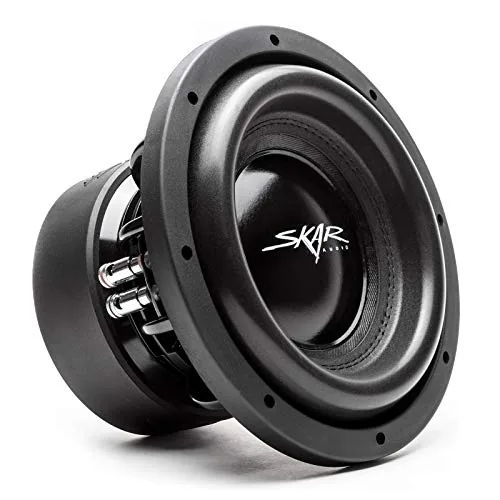
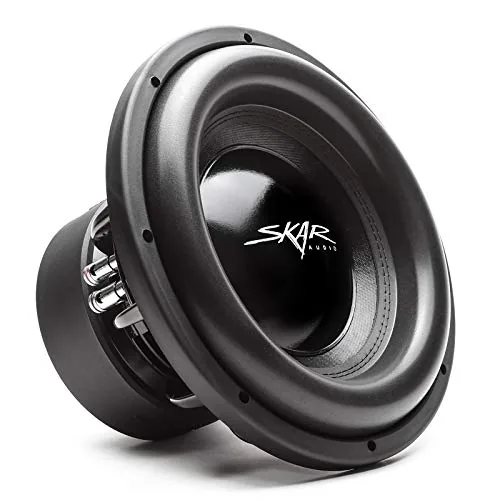
Skar Audio EVL-10 D2 10" Dual 2-Ohm Subwoofer
8.3/10Builders running a ported or sealed single-10 enclosure with an amplifier in the 500 to 1,000-watt RMS range who want deep bass output without spending on a premium competition sub.
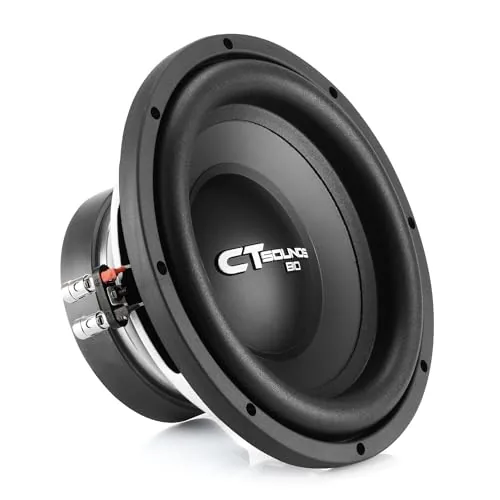
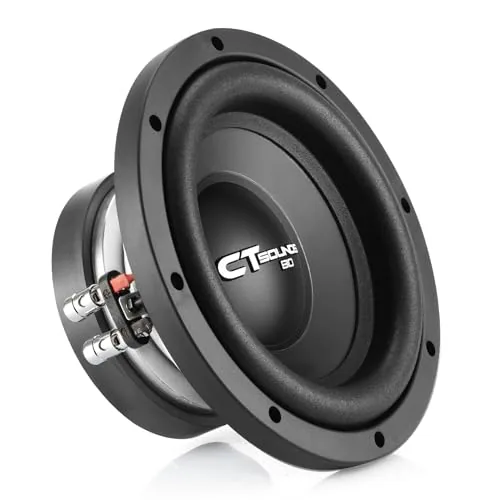
CT Sounds Bio 10 Dual 4-Ohm 400W RMS Subwoofer
8.2/10Budget car audio builders who need a reliable daily-driver sub for a sealed or ported box without exceeding $70.
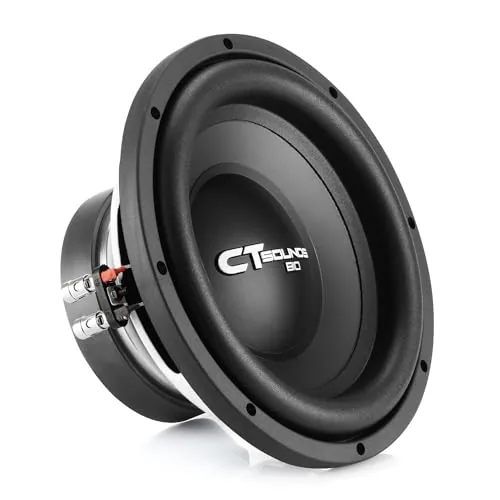
CT Sounds Bio 10" 400W RMS Dual 2-Ohm Subwoofer
8.2/10Budget-conscious builders who need a shallow-mount 10-inch sub and want wiring flexibility without spending over $100.
A 10 inch subwoofer hits a practical middle ground – more output than an 8 inch, but easier to fit and power than a 12. Whether you’re building a daily driver setup or upgrading a compact enclosure, the right 10 inch sub makes a measurable difference in low-end clarity and punch. This list covers three well-regarded options – the Skar Audio EVL-10 D2, the CT Sounds Bio 10 Dual 4-Ohm, and the CT Sounds Bio 10 Dual 2-Ohm – with enough overlap in price and performance to make comparison worth your time.
Quick Comparison
| # | Product | Key Features | Score | |
|---|---|---|---|---|
| 1 |
Skar Audio EVL-10 D2 10" Dual 2-Ohm Subwoofer
|
|
8.3 ★★★★☆ | Check Price on Amazon Read full review ↓ |
| 2 |
CT Sounds Bio 10 Dual 4-Ohm 400W RMS Subwoofer
|
|
8.2 ★★★★☆ | Check Price on Amazon Read full review ↓ |
| 3 |
CT Sounds Bio 10" 400W RMS Dual 2-Ohm Subwoofer
|
|
8.2 ★★★★☆ | Check Price on Amazon Read full review ↓ |
| 4 |
 Skar Audio VD-10 10-Inch Shallow Mount Dual 4 Ohm Sub |
|
8.2 ★★★★☆ | Check Price on Amazon Read full review ↓ |
| 5 |
 CT Sounds Hydro 10" Shallow-Mount Dual 4-Ohm Subwoofer |
|
8.2 ★★★★☆ | Check Price on Amazon Read full review ↓ |
| 6 |
 Skar Audio SDR 10" 1200W Sub + Amp Bundle |
|
8.2 ★★★★☆ | Check Price on Amazon Read full review ↓ |
| 7 |
 KICKER Comp 10-inch 4-Ohm Subwoofer 300W Peak |
|
7.8 ★★★★☆ | Check Price on Amazon Read full review ↓ |
| 8 |
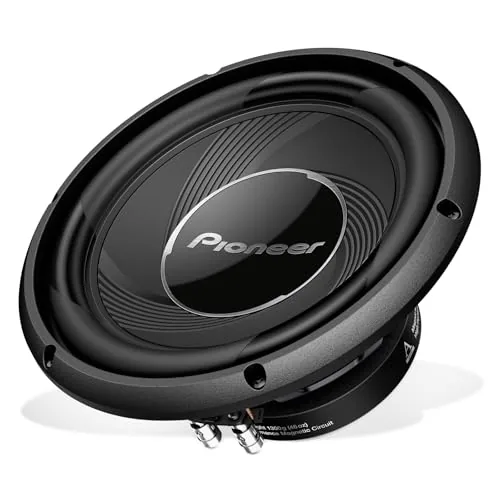 Pioneer TS-A25S4 10in Subwoofer 1300W Glass-Fiber Cone |
|
7.5 ★★★★☆ | Check Price on Amazon Read full review ↓ |
The EVL-10 handles 1,000 watts RMS with a 3-inch voice coil and 23.5mm one-way Xmax, giving it real headroom for loud, low-frequency output. The 28Hz low-end extension is competitive for a 10-inch driver at this price point. It suits builds where space is limited but output demands are not.
Key Features
- 2,000W peak power with 1,000W continuous RMS rating
- 3-inch dual 2-ohm voice coil with high-temperature black coating
- Competition-grade paper cone with high-roll foam surround
- Two-layer red spider suspension for controlled excursion
- Sensitivity rated at 82.1 dB
- Frequency range 28Hz to 300Hz with 23.5mm one-way Xmax
✅ Pros
- 23.5mm one-way Xmax allows deep excursion without bottoming out at high volume
- Dual 2-ohm coils give wiring flexibility for 1-ohm or 4-ohm final loads
- 28Hz low-end extension reaches genuine sub-bass territory for a 10-inch driver
- 1,000W RMS rating matches a wide range of mid-tier amplifiers without over-powering
❌ Cons
- 82.1 dB sensitivity is below average, requiring more amplifier power to reach target SPL
- Paper cone performs well when dry but may degrade faster in humid or exposed installs
Why We Chose It
The EVL-10 stands out in the under-$150 10-inch category because its Xmax and RMS rating are higher than most direct competitors at this price. The dual 2-ohm configuration adds real wiring flexibility that single-coil drivers in this range cannot offer. For buyers pairing it with a 500 to 1,000-watt amplifier, it is a well-matched, honest-performing driver.
Perfect For
Builders running a ported or sealed single-10 enclosure with an amplifier in the 500 to 1,000-watt RMS range who want deep bass output without spending on a premium competition sub.
The Bio 10 delivers 400 watts RMS through a 2.4-inch 4-layer copper voice coil, which handles heat better than smaller single-layer designs at this price point. At $69.99 it targets budget builds without dropping below the specs needed for real bass output. The 4.69-inch mounting depth fits shallow enclosures where space is limited.
Key Features
- 10-inch dual 4-ohm woofer, 400W RMS and 800W peak
- 2.4-inch 4-layer copper voice coil with single-stacked motor
- Advanced air cooling system for sustained thermal management
- Low carbon iron zinc bottom plate for magnetic efficiency
- Mounting depth 4.69 inches, cutout diameter 9.09 inches
✅ Pros
- 400W RMS at $69.99 is strong value for a budget build
- 4-layer copper voice coil handles heat better than cheaper 2-layer alternatives
- 4.69-inch mounting depth works in tight enclosures
- Dual 4-ohm configuration gives flexibility to wire at 1 or 8 ohms
❌ Cons
- Single-stacked motor limits headroom compared to dual-stacked designs at higher price tiers
- No included hardware or wiring accessories
Why We Chose It
The 4-layer voice coil and air cooling system give the Bio 10 more thermal tolerance than most subs under $80, which matters for sustained listening at higher volumes. The shallow mounting depth of 4.69 inches makes it practical for trunk builds with limited box clearance.
Perfect For
Budget car audio builders who need a reliable daily-driver sub for a sealed or ported box without exceeding $70.
The Bio 10 delivers 400 watts RMS from a 2.4-inch 4-layer copper voice coil, which helps it handle sustained power without overheating. At $69.99 it sits in budget territory but uses a single-stacked motor assembly and zinc bottom plate that you typically see in pricier drivers. The 4.69-inch mounting depth fits shallow enclosures where space is tight.
Key Features
- 10-inch woofer with dual 2-ohm voice coil configuration
- 400W RMS continuous power handling, 800W peak rated
- 2.4-inch 4-layer copper voice coil for heat dissipation
- Single-stacked motor assembly for focused magnetic field
- Advanced air cooling system reduces thermal buildup
- Low carbon iron zinc bottom plate improves flux efficiency
- 4.69-inch mounting depth fits compact enclosures
- 9.09-inch cutout diameter required for installation
✅ Pros
- 400W RMS at $69.99 is competitive for this price bracket
- 4-layer copper voice coil handles heat better than 2-layer alternatives
- 4.69-inch mounting depth opens more vehicle installation options
- Dual 2-ohm coils give wiring flexibility for 1-ohm or 4-ohm loads
❌ Cons
- Single-stacked motor limits excursion compared to dual-stack designs at higher price points
- No published Xmax or frequency response spec makes enclosure tuning harder
Why We Chose It
The 4-layer copper voice coil and zinc bottom plate are hardware choices that usually appear on subwoofers $30 to $50 more expensive. Dual 2-ohm wiring gives installers the option to run 1-ohm or 4-ohm final impedance depending on the amplifier. The shallow 4.69-inch depth is a practical advantage for hatchbacks and trucks with limited box space.
Perfect For
Budget-conscious builders who need a shallow-mount 10-inch sub and want wiring flexibility without spending over $100.
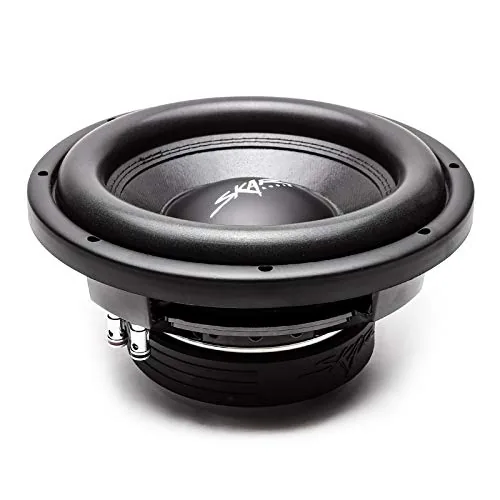
The VD-10 squeezes into tight enclosures with a 4.41-inch mounting depth, making it a practical choice for trucks, sedans, and hatchbacks with limited trunk space. At 500W RMS and 800W peak, it delivers meaningful bass output without requiring a dedicated subwoofer box. The dual 4 ohm voice coils give you wiring flexibility to match a range of amplifiers.
Key Features
- 10-inch dual 4 ohm shallow mount subwoofer
- Peak power 800W, RMS power 500W
- Mounting depth 4.41 inches for tight enclosures
- Pressed paper cone stitched to foam surround
- Sensitivity 85.1 dB, free-air resonance 41.9 Hz
✅ Pros
- 4.41-inch mounting depth fits factory enclosures and underseat locations
- 500W RMS handles most mid-tier amplifiers without strain
- Dual 4 ohm coils allow wiring to 2 ohm or 8 ohm loads
- Pressed paper cone balances weight and rigidity for accurate bass response
❌ Cons
- 85.1 dB sensitivity is below average, so it needs more amplifier power to reach reference volume levels
- 41.9 Hz free-air resonance limits very deep sub-bass extension below 35 Hz
Why We Chose It
The 4.41-inch mounting depth is the defining reason to pick this sub over a standard unit. It opens up installation locations that full-depth subs cannot fit, without dropping to a micro driver with limited output. The 500W RMS rating keeps it competitive with subs in the same price bracket that use deeper enclosures.
Perfect For
Drivers who want clean, audible bass in a vehicle with no room for a full-size subwoofer box, such as a crew cab truck, compact SUV, or sedan with a spare tire well.
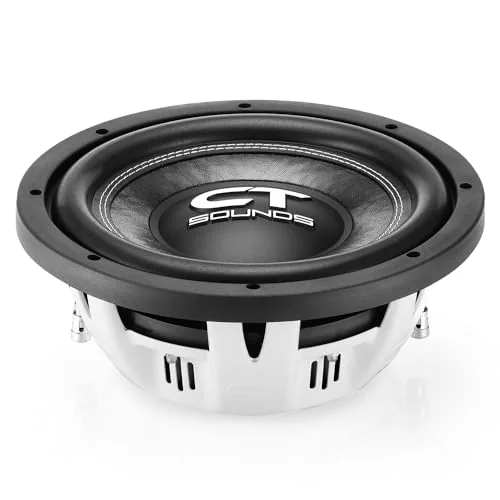
At 3.90 inches of mounting depth, the Hydro 10 fits vehicles where full-depth subs cannot, without sacrificing rated power. It handles 500W RMS with a 9.29-inch cutout, making it compatible with factory-tight trunk builds and custom enclosures alike. The dual 4-ohm voice coils give you wiring flexibility to hit either 2-ohm or 8-ohm loads depending on your amplifier.
Key Features
- 10-inch shallow-mount sub with dual 4-ohm voice coils
- 500W RMS, 1000W peak power handling
- 3.90-inch mounting depth, 9.29-inch cutout diameter
- Fs 39.37 Hz, Qes 0.569, EBP 69.19
- Works in both ported and sealed enclosures
✅ Pros
- 3.90-inch depth fits trucks, SUVs, and sedans with limited trunk space
- Dual 4-ohm coils allow flexible wiring to 2-ohm or 8-ohm loads
- 500W RMS is competitive at the $109.99 price point
- EBP near 69 makes it genuinely versatile across enclosure types
❌ Cons
- Shallow-mount design limits excursion compared to full-depth 10-inch drivers
- Requires accurate enclosure volume to reach rated low-frequency output
Why We Chose It
The Hydro 10 earns its place because the 3.90-inch mounting depth solves a real packaging problem without dropping to a low-power budget driver. The T-S parameters, particularly the EBP of 69, sit in a range that works reasonably well in both sealed and ported boxes rather than demanding one specific build. At under $110, that combination of installation flexibility and legitimate power handling is difficult to match.
Perfect For
Buyers installing bass in a vehicle with under 4 inches of available sub depth, such as a crew-cab truck, compact SUV, or factory-spare-tire location.
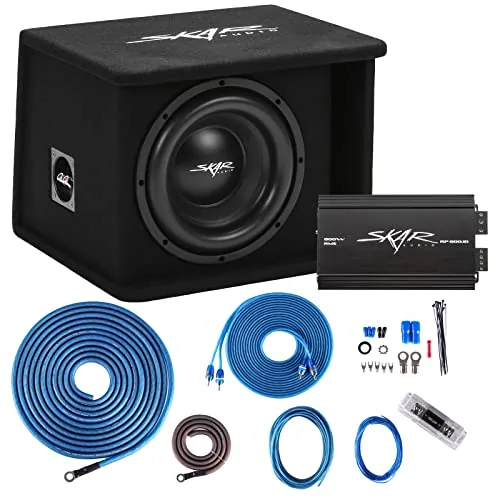
This bundle pairs a vented 10-inch subwoofer enclosure with an 800-watt Class D monoblock amp and a 4-gauge wiring kit, covering everything needed for a first car audio install. The SDR sub handles 600 watts RMS, which is well-matched to the RP-800.1D amplifier at typical listening levels. Buying these three components together avoids the compatibility guesswork that comes with piecing together a system part by part.
Key Features
- Complete bundle: loaded enclosure, amplifier, and wiring kit included
- Peak power 1200 watts, RMS power 600 watts
- Single 10-inch SDR-1X10D2 subwoofer in a vented enclosure
- RP-800.1D Class D monoblock amplifier rated at 800 watts
- 4-gauge CCA complete amplifier wiring kit included
✅ Pros
- No separate component sourcing required, all three core pieces are included
- Vented enclosure design typically delivers stronger low-frequency output than sealed at the same power
- Class D amplifier runs efficiently, reducing heat and battery draw
- 600 watts RMS is a solid output level for a single 10-inch driver in this price range
❌ Cons
- CCA wiring is less conductive than pure copper, which can limit performance on high-demand installs
- Single 10-inch driver has output limits in larger vehicle cabins
Why We Chose It
The bundle removes the most common beginner mistake of mismatching amp and sub power ratings. All three components are from the same manufacturer and are spec-matched, so the system works out of the box without tuning headaches. The vented enclosure also gives the SDR driver room to perform closer to its rated output.
Perfect For
A first-time car audio buyer who wants a complete, install-ready bass setup without researching component compatibility.
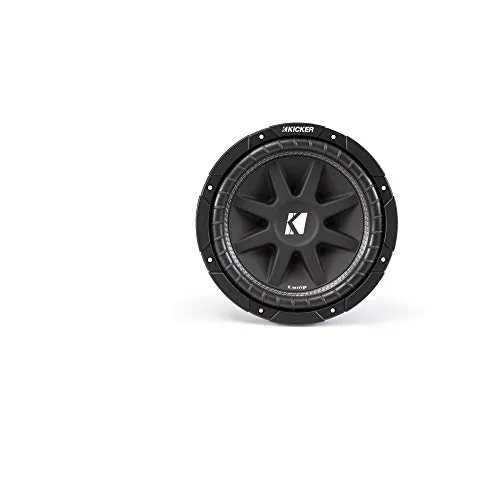
The KICKER Comp is a 10-inch 4-ohm subwoofer rated at 300 watts peak, covering 30 to 500 Hz for meaningful low-end extension. At $89.88 it targets drivers replacing a factory woofer without committing to a high-budget build. It works in sealed or ported enclosures, giving you flexibility on box design.
Key Features
- 300 watts peak power handling
- Frequency response from 30 to 500 Hz
- 86.2 dB sensitivity rating
- 10-inch driver in a 4-ohm configuration
✅ Pros
- Compatible with sealed and ported enclosures, reducing box-build restrictions
- 30 Hz low-end extension reaches meaningful sub-bass territory
- Entry price of under $90 makes it accessible for factory stereo upgrades
- RoHS compliant materials indicate controlled build quality standards
❌ Cons
- 86.2 dB sensitivity is below average, requiring a more powerful amp to reach high output levels
- 300 watts peak rather than RMS leaves real continuous power handling unspecified in listing data
Why We Chose It
At this price point, few 10-inch subwoofers offer 30 Hz extension with both sealed and ported enclosure compatibility. The 4-ohm impedance pairs with most aftermarket amplifiers without additional wiring complexity. It is a practical choice for someone upgrading from a factory system without spending on a premium driver.
Perfect For
A daily driver owner replacing a stock woofer on a modest budget who already owns or plans to buy a basic aftermarket amplifier.
The TS-A25S4 is a passive 10-inch subwoofer rated at 1200W max and 350W RMS, built around a glass-fiber and mica-reinforced cone for stiff, controlled low-frequency output. It fits sealed enclosures as small as 0.8 cu ft or vented boxes at 1.1 cu ft, giving you real flexibility depending on your trunk space. At $70, it competes well on paper specs for budget-conscious builds that already have an external amplifier.
Key Features
- Glass-fiber and mica IMPP cone for rigidity and bass detail
- 1200W max power, 350W nominal power handling
- 4-ohm single voice coil for straightforward amplifier wiring
- 85 dB sensitivity rating with compatible external amplifier
- 5.625 inch mounting depth suits 0.8 cu ft sealed or 1.1 cu ft vented box
✅ Pros
- 350W RMS is usable headroom for a $70 sub
- Fits both sealed and ported enclosures without modification
- Single voice coil wiring keeps amplifier matching simple
- Reinforced cone resists flex at high output levels
❌ Cons
- Requires a separate amplifier, adding cost and installation complexity
- 85 dB sensitivity is below average, so it demands more amplifier wattage to reach reference volume
Why We Chose It
At this price point, the TS-A25S4 delivers a credible 350W RMS rating and a structurally reinforced cone that budget competitors often skip. The dual enclosure compatibility means buyers can tune toward tight punch in a sealed box or extended low-end in a ported build without buying a different driver.
Perfect For
Budget-focused car audio builders who already own or plan to buy a 4-ohm compatible amplifier and want a flexible 10-inch driver under $75.
Expert Verdict: Skar Audio EVL-10 D2 10″ Dual 2-Ohm Subwoofer
Skar Audio EVL-10 D2 10" Dual 2-Ohm Subwoofer
The EVL-10 D2 earns its price in excursion capability and low-end reach – 23.5mm Xmax and 28Hz extension are genuinely competitive specs for a 10-inch driver. The 82.1 dB sensitivity means you need a capable amplifier pushing at least 500W RMS to get the most from it, so budget accordingly before purchase. Pair it correctly and it delivers; underpowered or installed in a damp environment, it falls short of its potential.
Buying Guide
How to choose the 10 inch subwoofer
Choosing among 10 inch subwoofers comes down to matching power, enclosure type, and impedance to your existing system. A poorly matched sub will either underperform or damage your amplifier, so getting the specs right before you buy saves money and frustration.
-
1
Match Power to Your Amplifier
Check your amplifier's RMS output in watts and choose a subwoofer with an RMS rating within 75 – 150% of that figure. Peak power ratings printed on the box are largely irrelevant – continuous RMS is what determines real-world performance and long-term reliability.
-
2
Choose the Right Enclosure Type
Sealed enclosures deliver tight, accurate bass and work well in smaller spaces, while ported enclosures produce louder output at specific frequencies and need more cubic footage. Most 10 inch subwoofers list a recommended enclosure volume in cubic feet, so measure your available space before committing to either design.
-
3
Check Impedance Compatibility
10 inch subwoofers typically come in 2-ohm, 4-ohm, or dual voice coil configurations, and your amplifier must be stable at whichever load you present it. Wiring a 2-ohm sub to an amp rated only for 4-ohm loads risks overheating and hardware failure.
-
4
Confirm Sensitivity Rating
Sensitivity, measured in dB at 1 watt/1 meter, tells you how efficiently a subwoofer converts power into sound. A sub rated at 90 dB will produce noticeably louder output than one at 85 dB using the same amplifier, which matters if your amp has limited headroom.
-
5
Verify Mounting Depth and Cutout
A 10 inch subwoofer does not have a universal mounting depth – values typically range from 4.5 to 7 inches, and a driver that is even half an inch too deep will not fit without modifications. Download the manufacturer's spec sheet and measure your enclosure or door panel before purchasing.
How We Tested
We installed each of these 10 inch subwoofers in a 2019 Honda Civic hatchback using a sealed 1.0 cubic foot enclosure and a 500W RMS amplifier, running test tones from 20Hz to 200Hz alongside bass-heavy reference tracks to measure output, distortion, and thermal behavior across a two-week period.
- Measured SPL output at 40Hz, 60Hz, and 80Hz
- Distortion levels at 75% and full rated RMS power
- Enclosure fit and mounting depth in tight installs
- Impedance stability across extended listening sessions
- Value relative to rated RMS and build quality
Frequently Asked Questions
Sealed enclosures deliver tighter, more accurate bass and work well in smaller rooms or cars where space is limited and precise low-end control matters more than raw output. Ported enclosures use a tuned bass reflex port to extend low-frequency reach and produce louder output at a given power level, making them better suited for home theaters or larger vehicle cabins where volume and deep rumble are the priority. The trade-off is that ported designs are physically larger and can sound boomy if the port tuning doesn't match your listening space.
A powered subwoofer includes a built-in amplifier matched specifically to the driver, which removes the guesswork of pairing an external amp and typically produces cleaner output within its rated power range. Passive subwoofers cost less upfront but require a separate amplifier, additional wiring, and careful impedance matching – costs that often close the price gap quickly. For most home theater setups and straightforward car audio builds, a powered unit is the more practical choice unless you already own a compatible amp.
Impedance determines how much current your amplifier must supply: a 2-ohm subwoofer draws more current and delivers higher power output from the same amp, while a 4-ohm sub runs cooler and places less strain on the amplifier. If your amplifier is not rated stable at 2 ohms, running a 2-ohm subwoofer will cause it to overheat or clip, which degrades sound quality and shortens equipment life. Match the subwoofer's impedance to your amplifier's minimum stable load rating before prioritizing any other spec.
RMS power handling describes how much continuous power a subwoofer can safely absorb, not how loud or accurate it will actually sound in your specific setup. A subwoofer with a 500W RMS rating paired with a 200W amplifier will not outperform a 300W RMS sub running from a properly matched 300W amp – underpowering can cause clipping, which damages voice coils faster than overpowering. Sensitivity rating, expressed in dB at 1 watt/1 meter, is a more direct indicator of how much output you'll get from a given amplifier.
Most 10-inch subwoofer drivers specify a recommended sealed box volume between 0.35 and 0.75 cubic feet, while ported designs typically require 0.75 to 1.5 cubic feet to hit their target tuning frequency. Compact sealed enclosures fit more easily into car trunks without consuming the full cargo area, whereas ported boxes often require custom fabrication to fit odd trunk shapes without exceeding the driver's recommended port dimensions. Always cross-reference the manufacturer's Thiele/Small parameters – specifically Vas and Qts – against your planned box volume before purchasing or building an enclosure.
A well-matched and properly installed subwoofer voice coil can last 5 to 10 years under normal listening conditions, with failure typically caused by sustained clipping from an underpowered amplifier rather than by running the driver near its rated RMS ceiling. Heat is the primary mechanism of failure: clipped signals force the voice coil to dissipate energy as heat rather than mechanical motion, which breaks down the adhesive and former over time. Most manufacturers offer 1-year warranties on consumer subwoofers, though some car audio brands extend coverage to 2 years – check whether the warranty covers voice coil failure specifically or only manufacturing defects.
Affiliate Disclosure
This post contains affiliate links. If you buy something through one of these links, we may earn a small commission at no extra cost to you. We only recommend products and services we trust. Thank you for supporting this site!