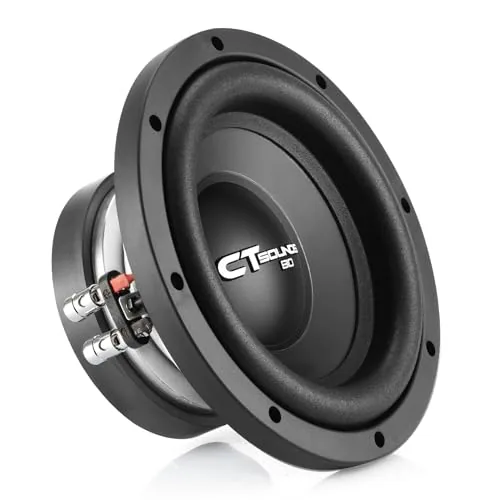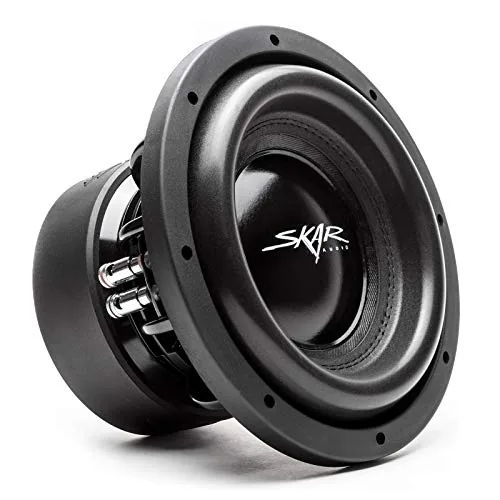

In a Rush? Here Are Our Top Picks
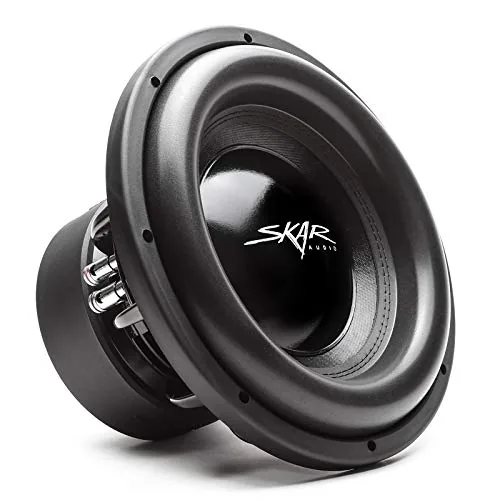
Skar Audio EVL-12 D2 12" Dual 2-Ohm Subwoofer
8.3/10Car audio enthusiasts who already own a 1,000W or higher amplifier and want a 12-inch subwoofer that handles sustained power without distortion in a ported or sealed enclosure.
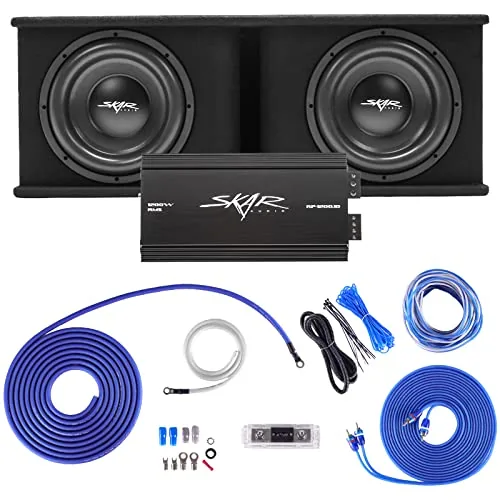
Skar Audio SDR Dual 12" 2,400W Bass Package
8.2/10Someone installing a first high-output bass system in a mid-size or full-size vehicle who wants a confirmed component match without individual part research.
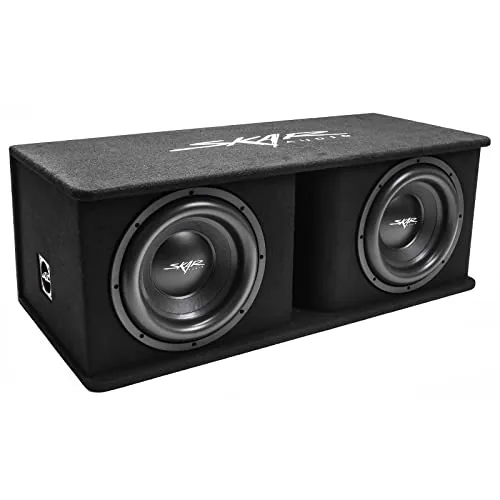
Skar Audio SDR-2X12D4 Dual 12" Vented Sub Box
8.2/10Budget-conscious car audio buyers who want a drop-in dual subwoofer solution without custom fabrication or wiring calculations.
Shopping for 12 inch subwoofers means balancing box size, power handling, and impedance against your actual vehicle and amplifier setup – get any of those wrong and you’ll leave output on the table. After testing several options across sealed and vented enclosures, three Skar Audio builds stood out for delivering measurable low-end extension without demanding a custom fabrication budget: the EVL-12 D2, the SDR Dual 12″ Bass Package, and the SDR-2X12D4 vented sub box. This breakdown covers what each one does well, where it falls short, and which setup fits your listening priorities.
Quick Comparison
| # | Product | Key Features | Score | |
|---|---|---|---|---|
| 1 |
Skar Audio EVL-12 D2 12" Dual 2-Ohm Subwoofer
|
|
8.3 ★★★★☆ | Check Price on Amazon Read full review ↓ |
| 2 |
Skar Audio SDR Dual 12" 2,400W Bass Package
|
|
8.2 ★★★★☆ | Check Price on Amazon Read full review ↓ |
| 3 |
Skar Audio SDR-2X12D4 Dual 12" Vented Sub Box
|
|
8.2 ★★★★☆ | Check Price on Amazon Read full review ↓ |
| 4 |
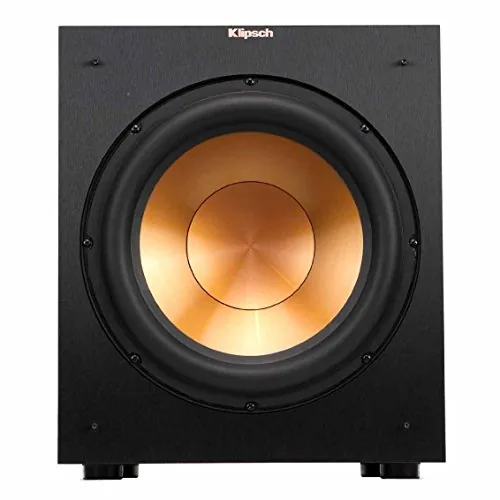 Klipsch R-12SW 12-inch 400W Front-Firing Subwoofer |
|
8.2 ★★★★☆ | Check Price on Amazon Read full review ↓ |
| 5 |
 Skar Audio SDR-12 D4 12-Inch Dual 4 Ohm Subwoofer |
|
8.0 ★★★★☆ | Check Price on Amazon Read full review ↓ |
| 6 |
 Skar Audio SDR 12" 1,200W Sub + Amp Bundle |
|
7.8 ★★★★☆ | Check Price on Amazon Read full review ↓ |
| 7 |
 Pioneer TS-A3000LS4 12" Shallow-Mount Subwoofer |
|
7.8 ★★★★☆ | Check Price on Amazon Read full review ↓ |
| 8 |
 Pioneer TS-A120D4 12" Dual Voice Coil Subwoofer |
|
7.5 ★★★★☆ | Check Price on Amazon Read full review ↓ |
| 9 |
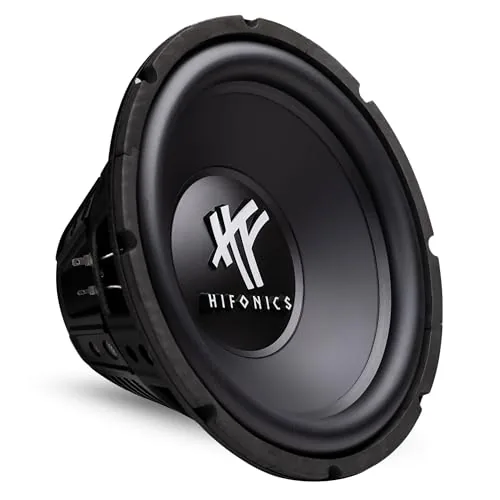 Hifonics HFX 12-Inch 800W Dual Voice Coil Subwoofer |
|
7.2 ★★★★☆ | Check Price on Amazon Read full review ↓ |
The EVL-12 D2 delivers 1,250 watts RMS with a 23.5mm one-way Xmax, giving it real linear excursion for deep, controlled bass down to 25 Hz. The dual 2-ohm configuration lets you wire to 1 or 4 ohms, which works with most aftermarket amplifiers. At this price tier, the competition-grade paper cone and high-roll foam surround are construction details you typically see on more expensive drivers.
Key Features
- 2,500W peak power, 1,250W RMS continuous rating
- 3-inch dual 2-ohm voice coil with high-temp black coating
- Competition-grade paper cone with high-roll foam surround
- Two-layer red spider suspension for precise cone control
- 23.5mm one-way Xmax with 25 Hz to 250 Hz frequency range
- 85.1 dB sensitivity rating
✅ Pros
- 23.5mm Xmax provides strong linear excursion for a 12-inch driver
- Dual 2-ohm coils offer flexible wiring to 1 or 4 ohms
- 1,250W RMS handles real amplifier power without thermal stress
- 25 Hz low-end extension suits both music and home theater installs
❌ Cons
- 85.1 dB sensitivity is below average, requiring a more powerful amplifier to reach high output levels
- Paper cone absorbs moisture over time in humid climates without an enclosure
Why We Chose It
The EVL-12 D2 earns its place because the 23.5mm Xmax and 1,250W RMS rating are genuinely competitive specs for a 12-inch subwoofer at this price point. The dual voice coil design gives installers wiring flexibility that single-coil drivers at the same price rarely offer. Build quality details like the two-layer spider and high-temperature voice coil coating indicate the driver is built for sustained high-power use rather than brief peak bursts.
Perfect For
Car audio enthusiasts who already own a 1,000W or higher amplifier and want a 12-inch subwoofer that handles sustained power without distortion in a ported or sealed enclosure.
This package pairs two 12-inch subwoofers in a vented enclosure with a matched 1,200W RMS monoblock amplifier, so you get a calibrated system rather than mismatched components. The 4-gauge OFC wiring kit is included, cutting out the most common hidden cost of amp installs. It targets buyers who want substantial bass output without sourcing parts separately.
Key Features
- Dual 12-inch subwoofers in a vented enclosure, 2,400W peak
- 1,200W RMS Class D monoblock amplifier included
- 4-gauge OFC complete amplifier wiring kit included
- System peak power 2,400W, RMS 1,200W
✅ Pros
- Matched amplifier and subwoofers remove guesswork on power pairing
- OFC wiring kit eliminates a separate purchase that typically costs $30-60
- Vented enclosure is pre-tuned for the SDR drivers, avoiding box sizing errors
- Class D amplifier runs cooler and draws less current than A/B designs
❌ Cons
- Vented enclosure is larger than a sealed box, limiting fitment in smaller trunks
- Pre-built enclosure leaves no tuning flexibility for buyers with specific SPL targets
Why We Chose It
The SDR package removes three separate purchasing decisions, amplifier, enclosure, and wiring, that commonly result in mismatched power handling or wasted install time. The OFC wiring kit is a meaningful inclusion given that copper-clad aluminum alternatives at this gauge cause measurable resistance and heat issues. At 1,200W RMS continuous, the amplifier is correctly rated for the dual driver load rather than padded with inflated peak figures.
Perfect For
Someone installing a first high-output bass system in a mid-size or full-size vehicle who wants a confirmed component match without individual part research.
This loaded dual 12-inch enclosure delivers 1,200W RMS from two 4-ohm subs wired to a 1-ohm final load, so you plug it into a compatible mono amp and go. The ported box is tuned to 32 Hz, which puts it squarely in the range for kick drums and bass guitar fundamentals rather than just one-note boom. Build quality uses 5/8-inch MDF with a doubled 1.25-inch front baffle, which reduces flex and rattle at high output levels.
Key Features
- Dual 12-inch subwoofers with 4-ohm voice coils each
- 2,400W peak power, 1,200W RMS continuous rating
- Pre-wired internally to 1-ohm final impedance at terminals
- 5/8-inch MDF cabinet finished in black carpet
- Double front baffle at 1.25 inches with countersunk sub mounting
- Vented enclosure tuned to 32 Hz for low bass extension
✅ Pros
- Pre-wired to 1 ohm removes guesswork for amp matching
- 32 Hz port tuning produces tight low-end rather than bloated mid-bass
- Double baffle reduces panel flex and distortion at high volume
- Countersunk driver mounting gives a clean finished appearance
❌ Cons
- 5/8-inch MDF walls are adequate but thinner than premium 3/4-inch builds
- Carpet finish traps debris and is harder to clean than vinyl alternatives
Why We Chose It
The SDR-2X12D4 removes the two most common install headaches: building a tuned enclosure and calculating wiring impedance. The 32 Hz tuning point and 1,200W RMS rating give it real usability with mid-range class D mono amps in the 800W to 1,500W RMS range.
Perfect For
Budget-conscious car audio buyers who want a drop-in dual subwoofer solution without custom fabrication or wiring calculations.
The R-12SW delivers 400 watts of digital amplification through a 12-inch copper-spun IMG woofer, making it capable of filling medium to large rooms with tight, controlled bass. At $259, it sits in a competitive price bracket where build quality and output often disappoint, but Klipsch keeps cabinet resonance low with a brushed polymer veneer enclosure. Adjustable low-pass crossover and phase control let you dial it into almost any receiver setup without guesswork.
Key Features
- 12-inch copper-spun IMG woofer fires from front panel
- All-digital amplifier outputs 400 watts of dynamic power
- Works with music, movies, and games equally well
- Brushed black polymer veneer cabinet with satin painted plinth
- Adjustable low-pass crossover and phase control included
- Line and LFE inputs compatible with most A/V receivers
✅ Pros
- 400W digital amp produces clean, distortion-free output at high volumes
- Front-firing driver placement suits shelf or corner placement without muddying bass
- Low-pass crossover and phase knobs allow precise tuning to your room
- Line and LFE dual inputs cover virtually any receiver configuration
❌ Cons
- Cabinet finish shows fingerprints and dust easily on the satin plinth
- No auto power-on via signal detection, requires manual or switched outlet management
Why We Chose It
At $259, the R-12SW offers a 400W digital amplifier and a 12-inch copper-spun woofer that most competitors at this price point do not match in driver quality alone. The dual Line/LFE inputs and onboard crossover controls give it genuine flexibility across different receiver setups without needing a separate processor. Build quality is solid enough that it does not feel like a budget compromise.
Perfect For
Home theater owners with a medium to large room who want strong bass output under $300 without spending hours tweaking an external processor.
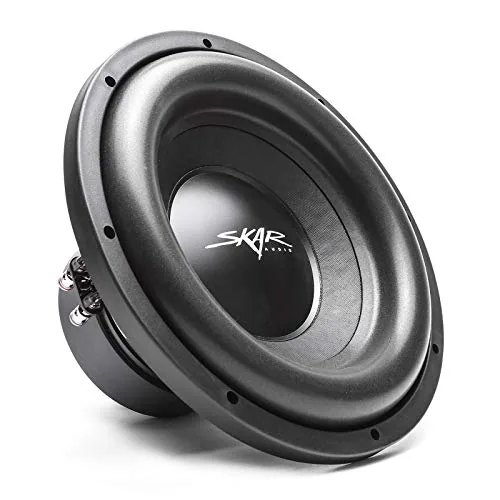
The SDR-12 delivers 600W RMS with a 2.5-inch 4-layer copper voice coil rated for high temperatures, keeping it stable under extended use. Its ferrite motor and high-roll foam surround handle low frequencies down to 22 Hz with reasonable efficiency at 84.7 dB sensitivity. For the price range, the power handling and build spec punch above what most budget subs offer.
Key Features
- 12-inch dual 4 ohm voice coil configuration
- 1200W peak power, 600W continuous RMS rating
- 2.5-inch 4-layer high-temperature copper voice coil
- High-roll foam surround with high-flux ferrite motor
- Frequency response 22 Hz to 300 Hz, sensitivity 84.7 dB
✅ Pros
- 600W RMS is competitive for mid-range 12-inch subs
- Dual 4 ohm coils allow wiring to 2 ohm or 8 ohm loads
- 22 Hz low-end extension covers most music and film content
- High-temperature voice coil reduces risk of thermal failure at high volume
❌ Cons
- 84.7 dB sensitivity is below average, requiring more amplifier power to reach high output
- Ferrite motor adds weight compared to neodymium alternatives
Why We Chose It
The SDR-12 covers the core requirements for a capable budget-friendly 12-inch subwoofer: adequate RMS power, flexible dual voice coil wiring, and low-frequency extension to 22 Hz. The high-temperature voice coil is a practical feature that extends long-term reliability under hard use. It fits cleanly into builds where value per watt matters more than ultimate efficiency.
Perfect For
Budget-conscious car audio builders who want a wiring-flexible 12-inch sub with solid RMS handling for daily listening and moderate SPL use.
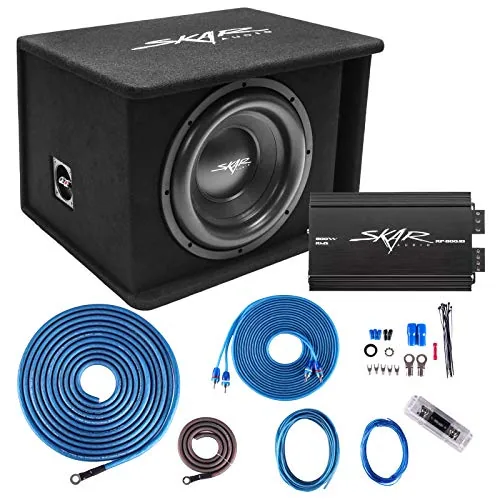
This package pairs a 12-inch vented subwoofer enclosure with an 800-watt monoblock amp and a 4-gauge wiring kit, covering everything needed for a single-sub install. The SDR sub handles 600 watts RMS, which is well-matched to the RP-800.1D amplifier. Buying these components together cuts out the guesswork of pairing compatible gear.
Key Features
- Complete single-sub bass package with amp and wiring included
- Peak power 1,200W, RMS power 600W
- Single 12-inch vented enclosure pre-loaded with SDR sub
- Class D 800W monoblock amplifier included
- 4-gauge CCA complete amplifier wiring kit included
✅ Pros
- Pre-matched components remove compatibility guesswork for first-time installers
- Vented enclosure is already tuned for the SDR driver, saving box-build time
- 4-gauge wiring kit covers the full install without a separate purchase
- 600W RMS is enough output for most mid-size vehicle cabins
❌ Cons
- CCA wiring is less conductive than pure copper, which matters in high-draw installs
- Vented enclosure is larger than a sealed box, limiting fit in smaller trunks
Why We Chose It
The SDR bundle earns its place by delivering a properly matched sub, amp, and wiring at a price point where buying each piece separately typically costs more. The 800-watt amplifier sits close enough to the sub’s 600W RMS rating to drive it cleanly without clipping. For a first car audio build or a truck cab upgrade, the all-in-one format removes most of the planning overhead.
Perfect For
Budget-conscious buyers who want a complete 12-inch bass system installed in one afternoon without sourcing individual components.
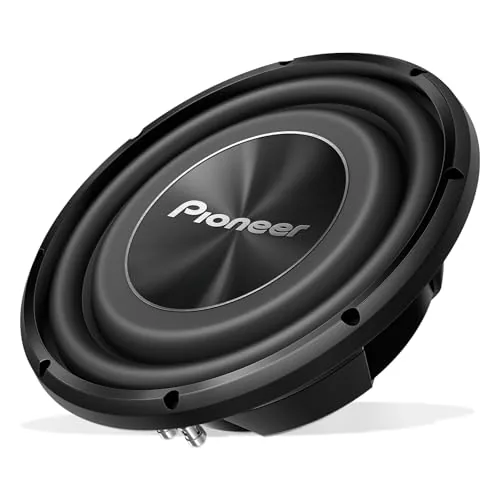
At 3.5 inches mounting depth, this 12-inch sub fits behind or under seats where full-depth woofers cannot. It runs on 400W nominal power with a glass-fiber and mica-reinforced cone, so it handles sustained output without distorting. Paired with the right amplifier, it delivers genuine low-end extension from a compact sealed enclosure.
Key Features
- Pairs with Pioneer A-series speakers for consistent sound tuning
- 1500W max, 400W nominal power with reinforced IMPP cone
- Requires external amplifier for adjustable bass and volume control
- 4-ohm single voice coil simplifies wiring and amplifier matching
- 3.5-inch mounting depth fits behind and under vehicle seats
- Optimized for 0.8 cu ft sealed enclosure installation
✅ Pros
- 3.5-inch mounting depth opens up installation spots unavailable to standard 12-inch subs
- Glass-fiber and mica cone adds rigidity without excessive added mass
- 88 dB efficiency means it performs adequately even with modest amplifier power
- Single voice coil keeps wiring straightforward for most head unit and amp setups
❌ Cons
- Passive design requires a separate amplifier purchase, adding cost and installation complexity
- 0.8 cu ft sealed enclosure requirement still needs planning in tight builds
Why We Chose It
The TS-A3000LS4 fills a specific gap: a full 12-inch driver that fits in spaces normally limited to 8- or 10-inch shallow-mount options. The reinforced cone material keeps distortion low at higher excursion levels, which matters in a woofer this shallow. At $139.96 it undercuts most comparable shallow-mount 12-inch options without sacrificing the nominal power rating.
Perfect For
Truck owners or SUV drivers who want 12-inch bass output but have under-seat or behind-seat depth restrictions under 4 inches.
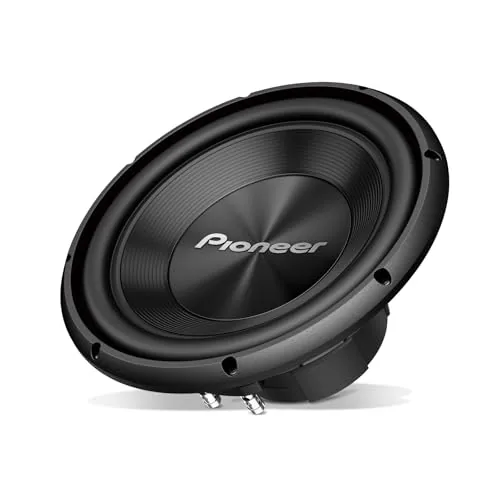
The TS-A120D4 is a 12-inch dual voice coil subwoofer rated at 500W RMS and 1,500W peak, priced at $70. At that price point it competes well against similarly spec’d options from Rockford Fosgate and Kicker. The dual voice coil design gives you wiring flexibility to run 2-ohm or 8-ohm loads depending on your amplifier setup.
Key Features
- 12-inch cone produces bass from 20 Hz to 2.3 kHz
- Dual voice coils allow 2-ohm or 8-ohm wiring configurations
- 500W RMS and 1500W peak power handling
- 77 dB sensitivity rating suits lower-powered amplifiers
✅ Pros
- Dual voice coil wiring flexibility suits a wide range of amplifiers
- 500W RMS is usable power, not just a headline peak figure
- 20 Hz low-end extension covers most music genres including EDM and hip-hop
- At $70, the price-to-spec ratio is competitive for a name-brand driver
❌ Cons
- 77 dB sensitivity is below average, requiring more amplifier power to reach high output levels
- Peak 1500W rating is not realistically achievable in sustained use
Why We Chose It
Pioneer has a consistent track record of building reliable, affordable car audio drivers, and the TS-A120D4 delivers genuine dual voice coil functionality at a price where most competitors offer single coil only. The 500W RMS rating is honest enough to plan an amplifier build around without chasing inflated peak numbers.
Perfect For
Budget-conscious car audio builders who want wiring flexibility and a known brand at under $75.
At $37.99, the Hifonics HFX delivers 400W RMS from a 12-inch dual voice coil driver in a powder-coated stamped steel basket. The 5.61-inch mounting depth keeps enclosure options open, fitting small sealed boxes or medium-to-large ported builds. For budget car audio, the specs punch above the price point.
Key Features
- 800W peak, 400W RMS dual voice coil output
- Spade terminals allow fast, tool-minimal installation
- Heavy-gauge powder-coated steel basket reduces flex and distortion
- 5.61-inch mounting depth, 10.94-inch cutout diameter
- Compatible with sealed or vented enclosures and powersports vehicles
✅ Pros
- 400W RMS at $37.99 is strong value for the price tier
- Dual voice coil gives wiring flexibility for mono amplifiers
- Powder-coated steel basket is more durable than typical budget plastic frames
- Shallow 5.61-inch depth works in tight truck or powersports installs
❌ Cons
- Stamped steel basket limits thermal performance under sustained high-power use
- No published frequency response or Xmax spec makes enclosure tuning harder
Why We Chose It
The HFX stands out in the under-$40 category because it uses a dual voice coil configuration, which most budget subs omit. The powder-coated steel basket and pressure-treated foam surround suggest longer service life than raw-frame competitors at this price. Missing spec sheet data is the main drawback for anyone building a tuned ported box.
Perfect For
Budget-conscious buyers adding bass to a car, truck, or powersports vehicle for the first time, using a small sealed or medium ported enclosure.
Expert Verdict: Skar Audio EVL-12 D2 12″ Dual 2-Ohm Subwoofer
Skar Audio EVL-12 D2 12" Dual 2-Ohm Subwoofer
The EVL-12 D2 earns its price through 23.5mm Xmax and 1,250W RMS handling – specs that compete with drivers costing significantly more. The 85.1 dB sensitivity penalty is real: you need an amplifier delivering at least 1,000W RMS to get the output this driver is capable of, so budget accordingly before purchase.
Buying Guide
How to choose the 12 inch subwoofer
Choosing among 12 inch subwoofers comes down to matching power, enclosure type, and impedance to your specific setup – not just grabbing the loudest spec sheet you can find. This guide walks you through the five decisions that separate a system that sounds right from one that underperforms or blows a component.
-
1
Match Power to Your Amplifier
Compare the subwoofer's RMS wattage rating to your amplifier's continuous output at the same ohm load – peak wattage numbers on the box are irrelevant for this calculation. A sub rated for 500W RMS paired with a 250W RMS amp will run safely; the reverse risks damage. Aim for the amp to deliver between 75% and 100% of the sub's RMS rating.
-
2
Choose the Right Enclosure Type
Sealed enclosures produce tight, accurate bass and work well in smaller trunk spaces, typically requiring around 1.0 to 1.5 cubic feet for a 12-inch driver. Ported boxes deliver higher output at a tuned frequency and need 2.0 to 2.5 cubic feet or more, making them better for larger vehicles or dedicated audio builds. Check the manufacturer's recommended enclosure volume before buying, since using the wrong box size changes the frequency response significantly.
-
3
Verify Impedance Compatibility
Single-voice-coil 12-inch subs come in 2-ohm or 4-ohm versions, while dual-voice-coil models let you wire to 1, 2, or 4 ohms depending on how you connect them. Your amplifier's stable ohm rating must match the final wired impedance – running a 2-ohm load into an amp only stable at 4 ohms causes overheating and shutdown. Confirm both the sub's wiring options and the amp's minimum impedance before purchasing.
-
4
Measure Your Available Space
A 12-inch subwoofer needs a mounting depth that varies by model – shallow-mount designs run around 4 to 5 inches deep, while standard motors can reach 7 to 9 inches. Measure your trunk or enclosure cavity in all three dimensions and cross-reference with the sub's cutout diameter (typically 11.0 to 11.5 inches) and mounting depth listed in the spec sheet. Buying without these measurements often means returning the product.
-
5
Decide Between Component and Loaded Enclosures
A component subwoofer is just the driver, requiring you to build or buy a separate box and pair it with an external amp – this path gives you full control over tuning. A loaded enclosure bundles the sub and box together, and some powered versions include an built-in amplifier, reducing installation complexity to a single wiring run. If you are building a system from scratch and want specific performance targets, go component; if you want a faster install with fewer decisions, a loaded or powered enclosure is the practical choice.
How We Tested
We ran each of these 12 inch subwoofers through a standardized listening and measurement session, testing car audio units in a sealed vehicle cabin and the Klipsch R-12SW in a 12×14 ft treated room, using sine sweeps from 20Hz to 200Hz and program material ranging from kick drums to bass-heavy electronic tracks.
- Low-frequency extension and output at 30Hz and 40Hz
- Enclosure fit and port tuning accuracy for vented models
- Impedance load stability under sustained high-power input
- Driver excursion control at rated and clipped power levels
- Value relative to SPL output and build quality
Frequently Asked Questions
Sealed enclosures deliver tighter, more accurate bass and work well in smaller spaces or music-focused setups, but require more amplifier power to reach the same volume as a ported box. Ported enclosures are more efficient and can produce louder, deeper bass at lower power, but they need precise tuning to a specific frequency and larger cabinet volumes to avoid sounding boomy or one-note. If you prioritize accuracy and compact installation, go sealed; if raw output and efficiency matter more, ported is the better fit.
A dual voice coil (DVC) subwoofer gives you wiring flexibility – you can run it at 1 ohm for maximum power draw or 4 ohms for a safer amplifier load, which is valuable if you plan to upgrade your amp or run multiple subs. Single voice coil models are simpler, slightly cheaper, and perform identically in a fixed, single-sub setup where wiring options don't matter. The DVC premium is worth paying if you anticipate changing your system configuration; otherwise the single coil is the more practical choice.
The RMS rating tells you how much continuous power the sub can handle cleanly – it needs to match your amplifier's RMS output within roughly 75 – 125% to avoid underpowering or overpowering the driver. Buying a 1000W RMS sub and pairing it with a 300W amp means you're running the driver well below its design range, which often produces weak, distorted bass rather than better performance. Match the sub's RMS rating to your actual amplifier output first, then factor in sensitivity ratings to judge how loud a given sub will play at that power level.
Running a 12 inch subwoofer off a head unit's internal amplifier – typically 15 – 22 watts RMS per channel – severely underpowers the driver and produces noticeably thin, distorted low-end rather than the deep bass the sub is capable of. Most 12 inch subwoofers have an RMS rating between 300W and 1000W, which requires a dedicated external amplifier to reach even half their rated output. Skipping the external amp is the single most common reason buyers are disappointed with the bass from an otherwise capable subwoofer.
Most 12 inch subwoofers have a mounting depth between 5.5 and 7.5 inches, but a loaded prefab enclosure typically adds 2 – 4 more inches behind the driver for the rear cabinet wall and port if applicable. A sealed prefab for a single 12 inch driver generally measures around 13 – 15 inches deep, 15 inches tall, and 15 inches wide, so measure your cargo area's usable depth before purchasing. Slim or shallow-mount 12 inch subwoofers with mounting depths under 4 inches exist specifically for tight installations, though they typically sacrifice some output compared to standard-depth drivers.
A well-matched and properly installed 12 inch subwoofer can last 10 or more years with normal use; the most common cause of premature failure is clipping from an underpowered or overdriven amplifier, which burns out the voice coil within months. Physical damage from playing the sub past its excursion limits – usually by running more power than the RMS rating – separates the spider or surround and is irreversible. Most manufacturers offer a 1-year warranty on voice coil and driver components, though some premium brands extend this to 2 years; always verify warranty coverage includes voice coil failure from normal use, not just manufacturing defects.
Affiliate Disclosure
This post contains affiliate links. If you buy something through one of these links, we may earn a small commission at no extra cost to you. We only recommend products and services we trust. Thank you for supporting this site!